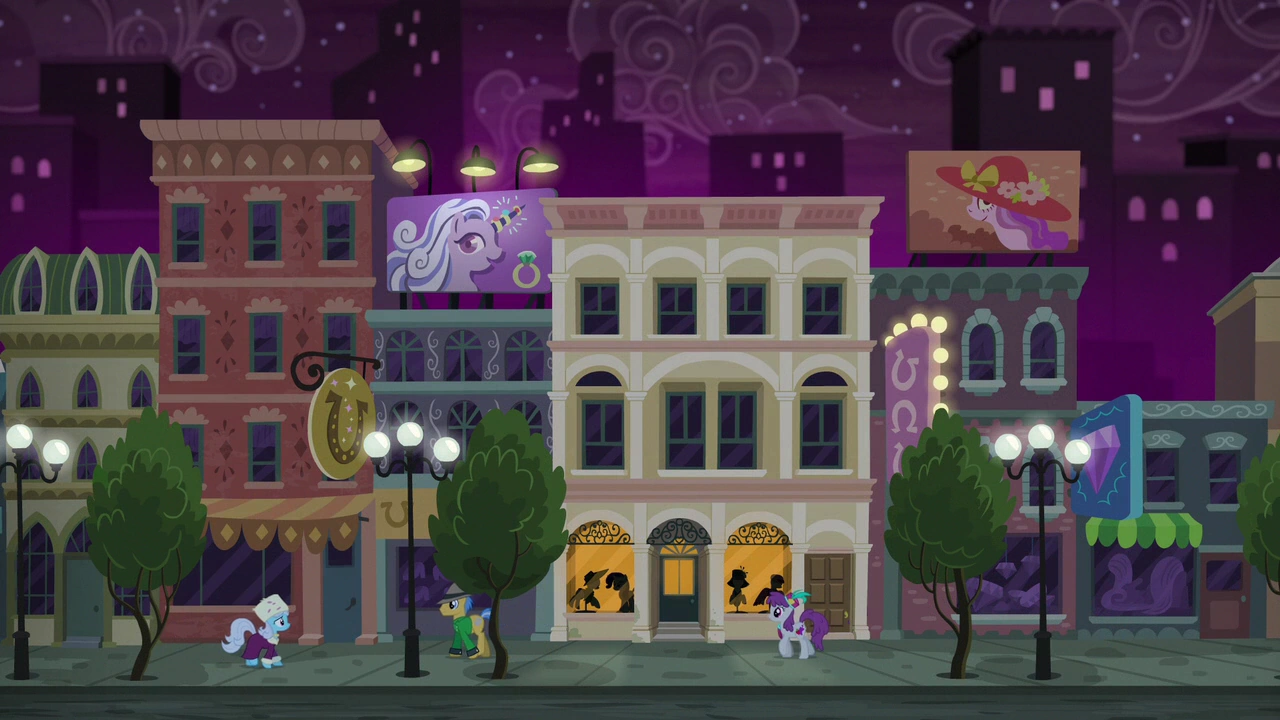
Manehattan's third arson attack in a month has left residents on edge, with historic buildings targeted and community leaders demanding swift action. The latest blaze, which destroyed a century-old community center, has reignited fears of a growing pattern of criminal activity in the once-thriving neighborhood. Authorities have launched an investigation, but questions linger: Who is behind these attacks, and what does it say about the city's ability to protect its cultural heritage?
The fires have struck three distinct locations in recent weeks, each with a story that underscores the neighborhood's deep ties to Equestrian history. The first blaze, which gutted the historic Carousel Theater in late October, sparked immediate outrage. The second, a warehouse fire that damaged a beloved artisan bakery, drew comparisons to the city's 1998 fire that nearly erased the old Ponyville Market. Now, the third incident—a fire that reduced the Manehattan Community Center to smoldering rubble—has left residents grappling with the possibility that these attacks are not random.
"This isn't just about property damage," said Copper Gauge, chief of the Manehattan Fire Department. "It's a clear sign that someone is targeting our community's legacy. We need to get to the bottom of this, and fast." Gauge, a seasoned officer with over two decades on the force, emphasized that the city's arson investigation unit is working around the clock to identify suspects. "We’ve traced the accelerants to a rare chemical compound, which suggests this wasn’t an accident. Someone is doing this intentionally."
The community's frustration is palpable. Penny Ledger, a local historian and longtime resident, described the fires as "a slap in the face to everything this neighborhood stands for." Ledger, whose family has lived in Manehattan since the early 1900s, pointed to the city's cultural significance as a hub for pony artisans and writers. "These buildings aren’t just structures—they’re part of our identity. To see them burned down is like watching our history erased."
The first fire, at the Carousel Theater, had been a symbol of resilience. Built in 1912, the theater had survived two world wars, a Great Depression, and the 1998 fire that left it in ruins. A crowdfunding campaign raised over 50,000 bits to rebuild it, and the restored theater became a cultural landmark. Now, its charred remains sit in a crater of ash and debris.
"Every time we think we’ve made progress, something like this happens," said Sable Nightshade, a city council member representing Manehattan. "This isn’t just about crime—it’s about neglect. The city has been underfunding our historic preservation programs for years, and now we’re paying the price." Nightshade, known for her fiery rhetoric and advocacy for marginalized neighborhoods, called for immediate action. "We need to increase funding for fire prevention, hire more officers, and hold those responsible accountable. This can’t go on."
The fires have also disrupted the local economy. Small businesses, many of which are family-owned, have been forced to close temporarily. Ember Cask, owner of the Hearth & Hoof Bakery, which was damaged in the second fire, described the toll on her family. "We’ve been here for three generations. Now, we’re wondering if we’ll be able to stay. The insurance won’t cover everything, and the stress is taking a toll."
Community leaders have responded with a mix of solidarity and frustration. A spontaneous gathering at the Manehattan Town Hall saw dozens of residents demand answers from city officials. "We’ve had enough of empty promises," said Bramble Stitch, a local activist and founder of the Manehattan Preservation Society. "If the city isn’t willing to protect its own history, who will?"
The investigation has uncovered some troubling patterns. The accelerants used in the fires, a mix of industrial-grade chemicals, suggest a level of forethought and access that points to organized efforts. Preliminary reports indicate that the fires were set in the early hours of the morning, with no witnesses. Surveillance footage from nearby businesses shows no clear suspects, though one camera captured a shadowy figure fleeing the scene of the third fire.
Meanwhile, the city’s police department has announced increased patrols in the area. Mayor Luna Vixen, a former law enforcement officer, acknowledged the gravity of the situation. "We are treating this as a priority. Every resource is being directed to solve this case and prevent further incidents." However, residents remain skeptical. "Words don’t mean much when buildings are burning down," said Ledger. "We need results, not promises."
The fires have also sparked a broader conversation about inequality and neglect in Manehattan. While the neighborhood is home to some of Equestria’s most iconic cultural sites, it also faces systemic challenges. Rising housing costs, underfunded schools, and a lack of public services have left many residents feeling abandoned. "These fires are a symptom of a deeper problem," said Iron Press, a local business owner and community organizer. "If the city isn’t willing to invest in its people, it won’t be able to protect its history."
As the investigation continues, the community remains divided. Some call for stricter laws and harsher penalties for arsonists, while others argue that the city must address the root causes of poverty and neglect. The question remains: Will the fires serve as a wake-up call, or will they become a symbol of the city’s failures? For now, Manehattan’s residents are left to navigate a crisis that threatens not just their homes, but their sense of identity.
The city’s response will be critical in determining whether the neighborhood can recover. But as the ashes of the third fire settle, one thing is clear: the flames have left more than just destruction in their wake. They’ve ignited a firestorm of questions about justice, neglect, and the future of a community on the brink.
The city’s response will be critical in determining whether the neighborhood can recover. But as the ashes of the third fire settle, one thing is clear: the flames have left more than just destruction in their wake. They’ve ignited a firestorm of questions about justice, neglect, and the future of a community on the brink.
The investigation into the fires has taken a troubling turn. Forensic experts have identified a pattern in the accelerants used, which are not commonly found in residential or commercial settings. The chemical compound, a mixture of industrial-grade solvents and accelerants, suggests a level of knowledge and access that points to organized efforts. Preliminary reports from the Manehattan Fire Department indicate that the fires were set with precision, targeting not just buildings but specific landmarks with historical and cultural significance.
“This is more than just arson,” said Iron Press, a local business owner and community organizer. “These attacks are calculated. Someone wants to send a message, and they’re using our heritage as a weapon.” Press, who has been vocal about the city’s neglect of its marginalized districts, argued that the fires are a symptom of deeper systemic issues. “If the city isn’t willing to protect its people, it won’t be able to protect its history. These fires are a call to action—either we invest in our neighborhoods, or we lose them.”
The community has not been idle. In the wake of the third fire, a coalition of residents, activists, and local leaders formed the Manehattan Preservation Alliance, a grassroots organization dedicated to protecting the neighborhood’s cultural landmarks. The group has already begun rallying support for a public referendum on increased funding for fire prevention and historic preservation. “We’re not just fighting for buildings,” said Sable Nightshade, a city council member and member of the alliance. “We’re fighting for the future of our neighborhood. If we let these fires continue, we’re losing more than just history—we’re losing our identity.”
The city’s response has been a mix of rhetoric and action. Mayor Luna Vixen announced a series of emergency measures, including the deployment of additional fire units to Manehattan and a temporary moratorium on construction permits in the area to prevent further vulnerabilities. However, critics argue that these steps are insufficient. “We need more than temporary fixes,” said Penny Ledger, the local historian. “We need a long-term strategy that addresses the root causes of these attacks. If we don’t invest in our communities, we’ll never stop them.”
The economic impact of the fires has been severe, particularly for small businesses that have struggled to recover from previous incidents. Ember Cask, the owner of the Hearth & Hoof Bakery, described the toll on her family business. “We’ve been here for three generations, but now we’re wondering if we’ll be able to stay. The insurance won’t cover everything, and the stress is taking a toll.” Cask’s bakery, which was damaged in the second fire, is one of many small businesses forced to close temporarily or permanently. The loss of these businesses has not only affected the local economy but also the community’s sense of place.
Meanwhile, the fires have sparked a broader conversation about inequality and neglect in Manehattan. While the neighborhood is home to some of Equestria’s most iconic cultural sites, it also faces systemic challenges. Rising housing costs, underfunded schools, and a lack of public services have left many residents feeling abandoned. “These fires are a symptom of a deeper problem,” said Iron Press. “If the city isn’t willing to invest in its people, it won’t be able to protect its history.”
As the investigation continues, the community remains divided. Some call for stricter laws and harsher penalties for arsonists, while others argue that the city must address the root causes of poverty and neglect. The question remains: Will the fires serve as a wake-up call, or will they become a symbol of the city’s failures? For now, Manehattan’s residents are left to navigate a crisis that threatens not just their homes, but their sense of identity.
The city’s response will be critical in determining whether the neighborhood can recover. But as the ashes of the third fire settle, one thing is clear: the flames have left more than just destruction in their wake. They’ve ignited a firestorm of questions about justice, neglect, and the future of a community on the brink.