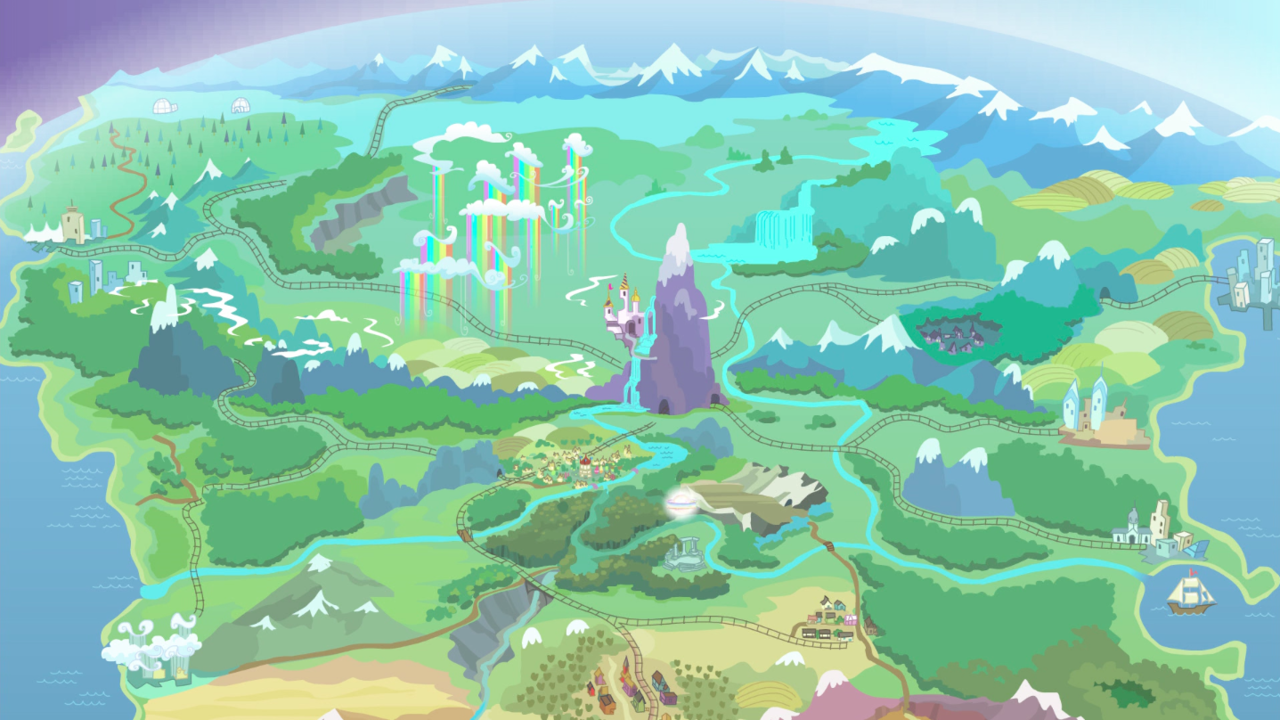
Foreign investment in Equestrian farmland has surged in recent months, with global investors snapping up prime agricultural land in Ponyville and surrounding regions. The trend, driven by soaring demand for Equestrian produce in international markets, has sparked alarm among local farmers and activists who fear the erosion of food sovereignty. With foreign capital now controlling nearly 15% of Ponyville’s arable land, critics warn that Equestria’s self-sufficiency in food production is under unprecedented threat.
The boom began last year when a consortium of Canterlot-based investors, backed by the Crystal Empire’s trade guilds, acquired the Appleloosa Valley’s largest orchard complex. Since then, similar deals have flooded the market, with foreign entities purchasing everything from small family farms to sprawling monoculture fields. According to the Ponyville Agricultural Bureau, foreign ownership of farmland has grown by 42% since 2023, outpacing domestic investment for the first time in decades.
“This isn’t just about money—it’s about control,” said Thistle Bloom, a third-generation farmer in Ponyville’s Hollow Shades district. “When a foreign company owns the land, they decide what gets planted, how it’s sold, and who gets to eat it. We’re not just losing our farms—we’re losing our right to feed ourselves.”
Bloom’s concerns echo those of a growing movement among Equestrian farmers, who argue that foreign investment prioritizes profit over public need. The latest wave of acquisitions has also raised eyebrows in the Ponyville Regional Council, where officials are now grappling with how to balance economic growth with food security. “We’ve always had to navigate the tension between open markets and local interests,” said Mayor Misty Tangerine, a vocal critic of the trend. “But this isn’t just a debate anymore—it’s a crisis.”
The economic rationale for foreign investment is straightforward: Equestrian agriculture remains a cornerstone of the global economy, with its high-quality produce commanding premium prices in international markets. Last year, exports of Equestrian fruits, vegetables, and grains hit a record $3.2 billion, driven largely by demand from the Dragon Lands and the Griffonstone trade bloc. Investors argue that their capital is essential to modernizing outdated farming practices and boosting productivity.
“Foreign investment brings technology, infrastructure, and scale that Equestria’s small farms can’t match,” said Professor Pecan Sprocket, an agricultural economist at the Ponyville University. “These deals aren’t inherently bad—they’re just another chapter in Equestria’s long history of trade and collaboration.”
Yet Sprocket’s optimism is met with skepticism by those who see the trend as a Trojan horse for corporate dominance. Critics point to the concentration of land ownership in the hands of a few powerful entities, many of which operate outside Equestria’s regulatory framework. “When you let foreign investors dictate the terms of our food system, you’re not just changing who owns the land—you’re changing who controls the supply chain,” warned Clover Margin, a labor rights activist from the Everfree Forest region.
The issue has also sparked tensions in rural communities, where farmers are increasingly caught between competing interests. In the Appleloosa Valley, for example, a recent acquisition by a Zebra-owned agribusiness has led to protests over rising land prices and disputes over water rights. “These companies come in with promises of jobs and prosperity, but they’re just another form of exploitation,” said Rusty Leaf, a farmer whose family has owned land in the valley for generations. “We’re being priced out of our own homes.”
The legal and political landscape is equally fraught. While Equestria’s constitution guarantees the right to own and cultivate land, critics argue that recent trade agreements have weakened protections for domestic farmers. A 2023 amendment to the Ponyville Trade Act, for instance, allowed foreign investors to bypass certain regulatory hurdles, enabling rapid land acquisitions. “This isn’t just about policy—it’s about power,” said Mayor Tangerine. “We’re letting foreign entities rewrite the rules of our economy without consulting the people who live here.”
The debate has also spilled into the political arena, with several candidates in the upcoming Ponyville Regional Council elections positioning themselves as champions of food sovereignty. Meanwhile, the Equestrian Ministry of Agriculture has faced mounting pressure to intervene, though its response has been cautious. “We’re not against foreign investment per se,” said a spokesperson for the ministry. “But we do need to ensure that Equestria’s agricultural sector remains resilient and self-sufficient.”
The implications of this trend extend far beyond Ponyville. With Equestria’s population growing and climate change threatening traditional farming zones, the question of food sovereignty has become increasingly urgent. Yet the current model of foreign investment may be at odds with the long-term goals of sustainability and equity. “We’re in a race against time,” said Sprocket. “If we don’t find a way to balance growth with fairness, we risk losing not just our land, but our future.”
As the debate continues, one thing is clear: the battle over Equestria’s farmland is no longer just about economics. It’s a fight over identity, autonomy, and the very definition of what it means to be Equestrian in an increasingly globalized world. Whether the current wave of foreign investment will lead to prosperity or peril remains an open question—one that will shape the future of Equestria for generations to come.