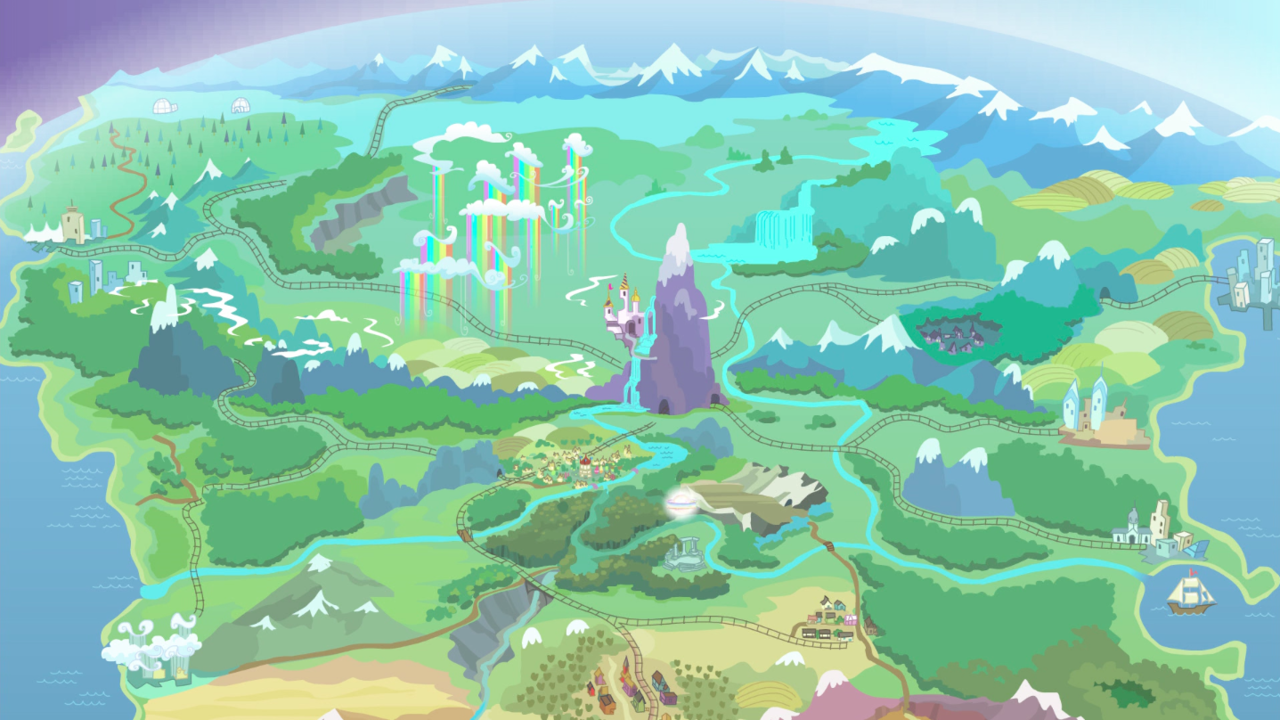
Foreign investment in Equestrian farmland has surged in recent months, raising alarms among local farmers and activists about the erosion of food sovereignty. According to the latest report from the Ponyville Agricultural Council, over 15% of prime farmland in the region has been acquired by foreign entities in the past year, sparking fears of corporate monopolization and loss of local control.
The trend is particularly pronounced in the Appleloosa Valley, where a consortium of Crystal Empire investors recently purchased 2,300 acres of land from the Thistle Thorne family, a long-standing local farming dynasty. Thorne, 42, who now works as a part-time hay harvester for the new corporate operation, described the shift as "a slow strangulation of our traditions."
"I’ve watched my family’s land bought out by a Crystal Empire corporation. Now we’re paying rent for our own crops, and the profits go to foreign investors," Thorne said, her voice tinged with frustration. "These aren’t just fields—they’re our heritage. When the last Thorne plows the soil, who will remember where the apples came from?"
The influx of foreign capital has been driven by Equestria’s recent agricultural modernization policies, which incentivize large-scale land purchases through tax breaks and infrastructure grants. While proponents argue these measures boost productivity and global competitiveness, critics warn they prioritize profit over communal needs.
"Land ownership isn’t just about crops—it’s about power," said Mayor Clover Leaf of Ponyville, a vocal advocate for local control. "When foreign entities control the means of production, they control the narrative. We’re not just growing food—we’re growing dependency."
Leaf’s concerns are echoed by the Everfree Research Institute, which recently released a study warning that over 30% of Equestria’s arable land is now under foreign ownership. The report highlights a troubling trend: while foreign investors often promise job creation and modernization, the long-term consequences for food sovereignty and rural communities remain unclear.
"Global capital is a double-edged sword," said Dapple Mire, an agricultural economist at the institute. "These investments can bring innovation, but they also risk displacing small-scale farmers and homogenizing local food systems. The question is whether Equestria’s policies are protecting its citizens or selling out its future."
The Crystal Empire, a major player in the farmland acquisition boom, has defended its investments as mutually beneficial. A spokesperson for the empire’s agricultural division, Poniesworth Industries, stated in a recent press release: "Our goal is to strengthen Equestria’s food security through sustainable, scalable solutions. We’re not here to take—just to grow."
But for many farmers, the reality on the ground tells a different story. In the town of Saddlestock, a recent land sale to a group of Canterlot-based investors sparked a protest involving over 100 residents. The land in question, owned by the Harvest Moon cooperative, was sold for a fraction of its estimated market value, prompting accusations of sweetheart deals and regulatory capture.
"We’re not against progress, but we’re against being pushed aside," said Sable Nightshade, a third-generation farmer and protest organizer. "When the government opens the gates to foreign investors, it’s not just about land—it’s about who gets to decide what’s planted and who gets to eat it."
The debate has also drawn attention from international observers. The Griffonstone Trade Council recently expressed concern over Equestria’s growing reliance on foreign capital for its agricultural sector, warning that unchecked investment could destabilize regional food markets. Meanwhile, the Dragon Lands have quietly increased their own farmland acquisitions, raising eyebrows among Equestrian analysts.
For now, the government appears to be walking a tightrope between economic growth and local accountability. The Ministry of Agriculture has announced plans to introduce a new regulatory framework for farmland acquisitions, but critics argue the timeline is too slow and the provisions too vague.
"Regulation is a start, but it’s not a solution," said Mire. "We need a paradigm shift—one that prioritizes food sovereignty over foreign capital. Otherwise, we’ll be exporting our future to the highest bidder."
As the debate intensifies, one thing remains clear: the battle over Equestria’s farmland is not just about crops. It’s about identity, power, and the future of a nation that once prided itself on self-sufficiency. Whether the current wave of foreign investment will strengthen or undermine Equestria’s agricultural independence remains an open question—one that will shape the land and its people for generations to come.