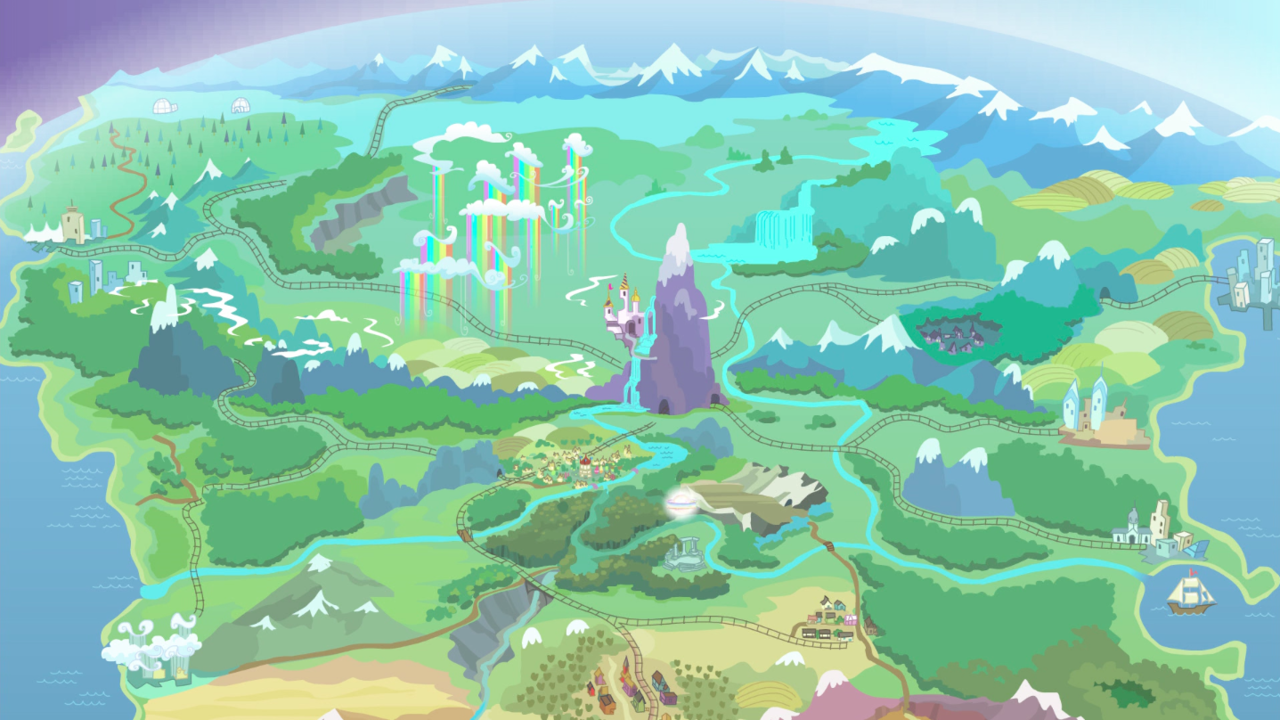
Cloudsdale, Equestria — A surge in foreign investment in Equestrian farmland has ignited fierce debates over food sovereignty, as local farmers and activists warn that foreign ownership could undermine traditional agricultural practices and threaten Equestria’s self-sufficiency. Recent data from the Ministry of Agriculture reveals a 37% increase in cross-border land deals since 2023, with investors from the Crystal Empire, Manehattan, and even the Dragon Lands acquiring thousands of acres of prime farmland.
The trend has alarmed rural communities, where many fear that foreign investors prioritize profit over sustainable farming. “These deals are not just about land—they’re about control,” said Sable Nightshade, a third-generation Ponyville farmer and member of the Equestrian Agrarian Coalition. “When foreign entities own the soil, they dictate what’s grown, how it’s harvested, and who benefits. That’s a direct threat to our food sovereignty.”
The concerns are not unfounded. In the Badlands region, a coalition of foreign investors recently purchased 2,400 acres of farmland from the Appleloosa Valley Cooperative, a collective of small-scale farmers. The deal, valued at 12 million bits, included a clause allowing investors to prioritize cash crops like enchanted sugarcane over traditional staples like hay and grains. “We’re worried about the long-term impact on our ecosystem and food security,” said Dusty Verdict, a local agronomist. “If we start relying on imported goods, we risk destabilizing our entire agricultural economy.”
The Profit Motive vs. Local Stewardship
Proponents of foreign investment argue that the influx of capital is a boon for Equestria’s struggling rural economy. “These investments bring much-needed funding, infrastructure, and technology to regions that have been neglected for decades,” said Copper Gauge, a financial analyst based in Manehattan. “Foreign investors are modernizing outdated farming techniques and creating jobs that local farmers couldn’t sustain on their own.”
Gauge’s claims are echoed by the Equestrian Economic Development Council, which recently hailed the rise of “international agribusiness partnerships” as a key driver of growth. “We’re not just talking about land deals—we’re talking about innovation,” said Council spokesperson Apple Bloom Dusk. “Foreign investors are introducing advanced irrigation systems, magical soil enhancers, and precision farming techniques that could revolutionize Equestrian agriculture.”
Yet, critics argue that the benefits are skewed. Many of the deals favor large-scale agribusinesses over smallholders, displacing traditional farmers. In the village of Windfall Margin, 43% of the town’s farmland has been sold to foreign entities in the past two years, leaving local residents to compete for dwindling resources. “We’re being pushed out of our own land,” said Clover Margin, a Windfall resident and former farmer. “These deals are structured to favor the investors, not the people who’ve farmed here for generations.”
Legal and Cultural Challenges
The legal framework governing foreign land ownership has also come under scrutiny. A 2023 law passed by the Equestrian Parliament allowed foreign entities to acquire farmland under the condition that they “contribute to national food security.” However, activists argue the law is too vague and lacks protections for local farmers.
“This law is a loophole for exploitation,” said Rarity Vell, a legal scholar at the Canterlot Institute of Law. “It doesn’t specify what ‘food security’ means or how foreign investors are held accountable. We’re essentially handing over our agricultural future to outsiders without proper oversight.”
Cultural tensions are also emerging. In the Crystal Empire, where the government has aggressively promoted foreign investment as a path to economic growth, some citizens are questioning the ethics of exporting their land. “The Crystal Empire has always prided itself on self-sufficiency,” said Prince Diamond Sparkle, a regional official. “But we’re seeing a shift toward collaboration. This isn’t just about money—it’s about mutual benefit.”
The Road Ahead
As the debate intensifies, Equestria’s leaders face a critical choice: embrace foreign investment to modernize agriculture or prioritize local control to safeguard food sovereignty. Protests have already erupted in Ponyville and Appleloosa, with demonstrators demanding stricter regulations on foreign land acquisitions.
The Ministry of Agriculture has announced a public consultation on the issue, but critics say it’s too little, too late. “We need concrete action—not just talk,” said Sable Nightshade. “If we don’t protect our land, we risk losing not just our farms, but our way of life.”
For now, the balance of power remains precarious. Foreign investors continue to acquire land, while local farmers fight to preserve their heritage. As the sun sets over the rolling hills of Equestria, one question looms: Can a nation built on harmony and cooperation navigate the complexities of globalization without sacrificing its soul?
---
Sources:
- Sable Nightshade, Ponyville farmer and Equestrian Agrarian Coalition member
- Rarity Vell, legal scholar at Canterlot Institute of Law
- Copper Gauge, financial analyst in Manehattan
- Apple Bloom Dusk, spokesperson for Equestrian Economic Development Council
- Clover Margin, Windfall resident and former farmer
- Prince Diamond Sparkle, regional official in Crystal Empire