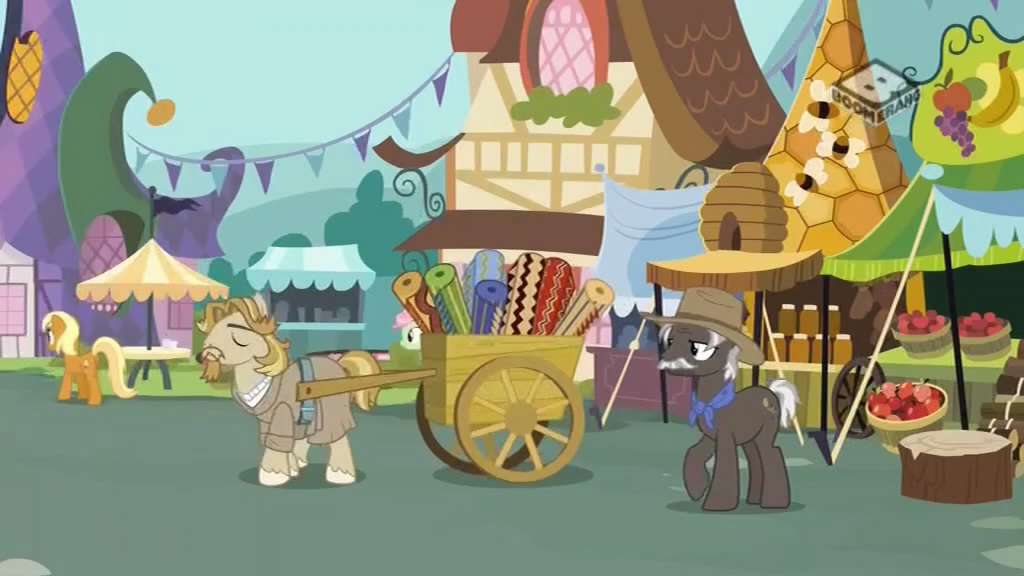
Southern Equestria is reeling from a climate disaster that has shattered century-old temperature records, leaving farmers scrambling to salvage what remains of their crops. Since mid-July, temperatures in regions like Ponyville, Las Pegasus, and the Badlands have soared past 120°F (49°C), with some areas recording triple-digit heatwaves for over 40 consecutive days. The relentless sun has left fields of wheat, barley, and sugar beet wilted, triggering panic among agricultural communities and raising urgent questions about Equestria’s preparedness for climate extremes.
The crisis has exposed the fragility of Equestria’s agricultural economy, which relies heavily on seasonal farming in the south. According to the Ministry of Agriculture, over 60% of the region’s farmland is now experiencing severe drought, with crops such as corn and soybeans showing signs of irreversible damage. “This isn’t just a weather event—it’s a full-blown catastrophe,” said Copper Gauge, a third-generation farmer from the Appleloosa region. “Our fields are drying up faster than we can irrigate them. The soil is cracked, the crops are shriveled, and the market’s already collapsing.”
The heatwave’s impact is most acute in the Crystal Empire, where the once-thriving sugar beet industry is now teetering on the brink. The Empire’s agricultural sector accounts for nearly 30% of its GDP, but recent data shows a 45% drop in beet yields compared to last year. “We’re looking at a multi-billion-bit crisis,” warned Penny Ledger, an economic analyst at the Crystal Empire’s Department of Trade. “If the beet crop fails entirely, the ripple effects will be felt across the region’s food supply chain, from feed prices to the national budget.”
The government has deployed emergency water rationing measures, but critics argue the response is too slow. The Ministry of Water Resources announced last week that it would prioritize irrigation for large-scale farms, leaving smaller producers like Gauge to fend for themselves. “The ministry says they’re ‘maximizing efficiency,’ but what about the small farmers?” Gauge said, his voice tight with frustration. “We’re the ones who feed the nation, yet we’re being left in the dust.”
The crisis has also sparked debates over long-term climate policy. Environmental advocates argue that Equestria’s reliance on fossil fuels and outdated irrigation systems has made it vulnerable to extreme weather. “We’ve known for decades that climate change would hit southern Equestria hardest,” said Bramble Stitch, a climate activist from Manehattan. “But instead of investing in sustainable solutions, the government doubled down on subsidies for coal and gas. Now we’re paying the price.”
The economic fallout is already visible. In Ponyville, the local market saw a 30% drop in sales last week as farmers withdrew their produce from the supply chain. Meanwhile, the price of hay—a staple for Equestria’s livestock—has spiked by 50%, straining budgets for ranchers and families alike. “We’re not just losing crops—we’re losing our way of life,” said Sable Nightshade, a rancher from the Badlands. “The heat isn’t just burning our fields; it’s burning our futures.”
Scientists warn that the region’s heatwave is part of a larger pattern of climate instability. A recent study by the Equestrian Institute of Meteorology found that southern Equestria’s average temperature has risen by 3.2°F (1.8°C) since 2010, with projections suggesting another 5°F increase by 2030. “This isn’t an anomaly—it’s a trend,” said Dr. Iron Press, a climatologist at the Institute. “If we don’t adapt our infrastructure and policies, we’ll see more of these events, and the damage will only get worse.”
The situation has also raised concerns about food security. With over 60% of the region’s farmland in crisis, Equestria’s central food reserves are under strain. The Ministry of Agriculture has reportedly begun stockpiling emergency grain, but experts say this is a temporary fix. “The real solution is investing in drought-resistant crops and renewable energy,” Ledger said. “We can’t keep relying on the same systems that failed us before.”
As the heatwave shows no sign of abating, the crisis has become a rallying point for both activism and political blame. In Ponyville, protests have erupted over the government’s handling of the crisis, with demonstrators demanding immediate aid and long-term climate reforms. Meanwhile, some officials have called for a temporary moratorium on non-essential water use, a move that has drawn criticism from both farmers and environmentalists.
The road ahead is uncertain. For now, the focus remains on survival: salvaging what little remains of the harvest, securing water supplies, and preparing for the worst. As Gauge put it, “We’ve weathered storms before, but this? This is a different kind of fire. And it’s not going anywhere.”
---
The heatwave’s legacy will likely shape Equestria’s political and economic landscape for years to come. With crops in ruins and livelihoods at risk, the crisis has exposed deep fractures in the region’s systems—and left a question that no pony can ignore: How long can Equestria afford to wait for answers?
As the heatwave shows no sign of abating, the crisis has become a rallying point for both activism and political blame. In Ponyville, protests have erupted over the government’s handling of the crisis, with demonstrators demanding immediate aid and long-term climate reforms. Meanwhile, some officials have called for a temporary moratorium on non-essential water use, a move that has drawn criticism from both farmers and environmentalists. “We’re not just losing crops—we’re losing our way of life,” said Sable Nightshade, a rancher from the Badlands. “The heat isn’t just burning our fields; it’s burning our futures.”
The situation has also raised concerns about food security. With over 60% of the region’s farmland in crisis, Equestria’s central food reserves are under strain. The Ministry of Agriculture has reportedly begun stockpiling emergency grain, but experts say this is a temporary fix. “The real solution is investing in drought-resistant crops and renewable energy,” said Penny Ledger, an economic analyst at the Crystal Empire’s Department of Trade. “We can’t keep relying on the same systems that failed us before.”
As the heatwave shows no sign of abating, the crisis has become a rallying point for both activism and political blame. In Ponyville, protests have erupted over the government’s handling of the crisis, with demonstrators demanding immediate aid and long-term climate reforms. Meanwhile, some officials have called for a temporary moratorium on non-essential water use, a move that has drawn criticism from both farmers and environmentalists. “We’re not just losing crops—we’re losing our way of life,” said Sable Nightshade, a rancher from the Badlands. “The heat isn’t just burning our fields; it’s burning our futures.”
The situation has also raised concerns about food security. With over 60% of the region’s farmland in crisis, Equestria’s central food reserves are under strain. The Ministry of Agriculture has reportedly begun stockpiling emergency grain, but experts say this is a temporary fix. “The real solution is investing in drought-resistant crops and renewable energy,” said Penny Ledger, an economic analyst at the Crystal Empire’s Department of Trade. “We can’t keep relying on the same systems that failed us before.”
As the heatwave shows no sign of abating, the crisis has become a rallying point for both activism and political blame. In Ponyville, protests have erupted over the government’s handling of the crisis, with demonstrators demanding immediate aid and long-term climate reforms. Meanwhile, some officials have called for a temporary moratorium on non-essential water use, a move that has drawn criticism from both farmers and environmentalists. “We’re not just losing crops—we’re losing our way of life,” said Sable Nightshade, a rancher from the Badlands. “The heat isn’t just burning our fields; it’s burning our futures.”
The situation has also raised concerns about food security. With over 60% of the region’s farmland in crisis, Equestria’s central food reserves are under strain. The Ministry of Agriculture has reportedly begun stockpiling emergency grain, but experts say this is a temporary fix. “The real solution is investing in drought-resistant crops and renewable energy,” said Penny Ledger, an economic analyst at the Crystal Empire’s Department of Trade. “We can’t keep relying on the same systems that failed us before.”
As the heatwave shows no sign of abating, the crisis has become a rallying point for both activism and political blame. In Ponyville, protests have erupted over the government’s handling of the crisis, with demonstrators demanding immediate aid and long-term climate reforms. Meanwhile, some officials have called for a temporary moratorium on non-essential water use, a move that has drawn criticism from both farmers and environmentalists. “We’re not just losing crops—we’re losing our way of life,” said Sable Nightshade, a rancher from the Badlands. “The heat isn’t just burning our fields; it’s burning our futures.”
The situation has also raised concerns about food security. With over 60% of the region’s farmland in crisis, Equestria’s central food reserves are under strain. The Ministry of Agriculture has reportedly begun stockpiling emergency grain, but experts say this is a temporary fix. “The real solution is investing in drought-resistant crops and renewable energy,” said Penny Ledger, an economic analyst at the Crystal Empire’s Department of Trade. “We can’t keep relying on the same systems that failed us before.”