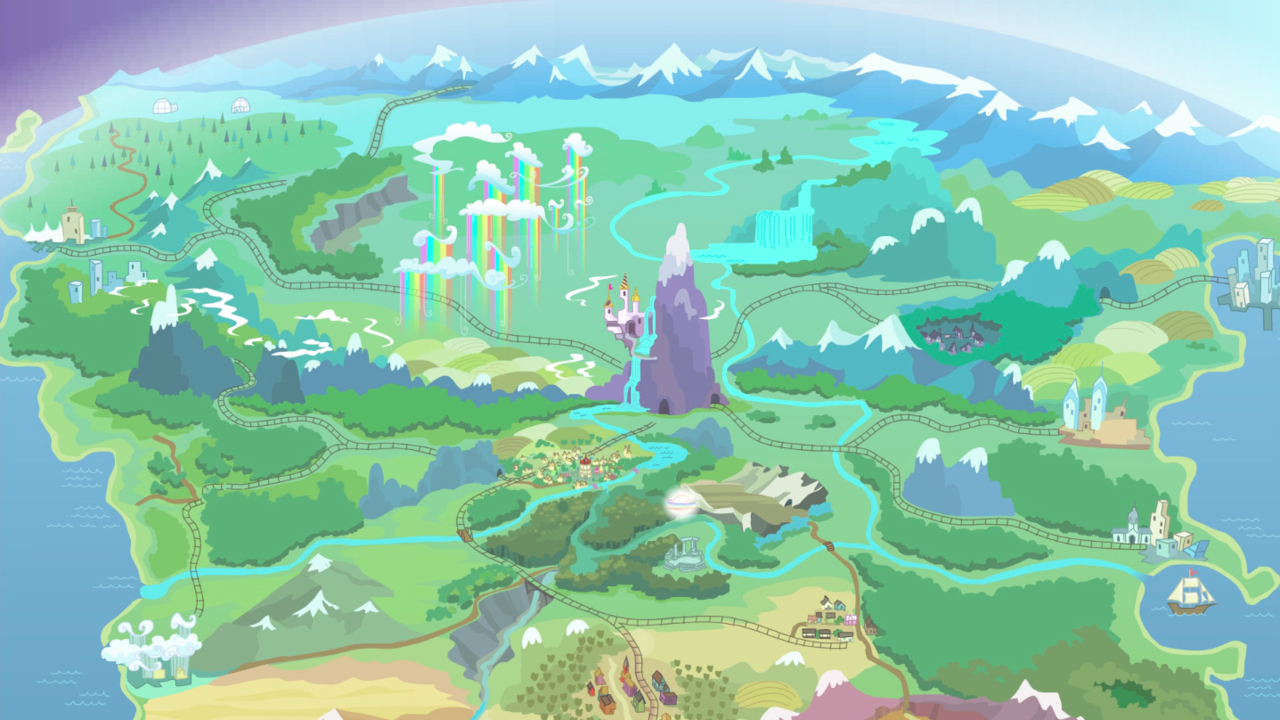
Southern Equestria’s agricultural nightmare has turned into a full-blown crisis, with drought-driven protests erupting across the region and calls for urgent climate action mounting. As temperatures remain above 120°F for an unprecedented 50 days, the Ministry of Agriculture’s emergency irrigation efforts have been met with skepticism, while farmers in the Crystal Empire and Badlands report that their crops are beyond salvation. The situation has ignited widespread frustration, with activists demanding accountability for Equestria’s climate preparedness—and some ponies taking matters into their own hooves.
The Ministry of Agriculture announced last week that it would allocate an additional 200,000 bits to emergency irrigation projects, but critics argue the funds are too little, too late. Thistle Vane, a regional water rights officer in Las Pegasus, called the response “a slap on the hoof.” “We’re trying to pour water into a desert,” Vane said, her voice laced with frustration. “The aquifers are depleted, the reservoirs are empty, and the government is still debating who gets priority access. Meanwhile, our farmers are watching their fields turn to dust.”
Vane’s words echo those of Ember Blaze, a third-generation wheat farmer in the Badlands, whose fields have been reduced to cracked earth. “We’ve been told to ‘adapt’ to climate change for years, but when the heat hits, there’s no plan B,” Blaze said. “The Ministry’s irrigation projects are a Band-Aid. We’re losing everything—our livelihoods, our traditions, our way of life.”
The crisis has reached a breaking point in the Crystal Empire, where the sugar beet industry is on the brink of collapse. According to a leaked report from the Empire’s Department of Trade, beet yields have dropped by 55% this season, with 70% of the region’s farmland now classified as “irreversibly damaged.” The economic fallout has been stark: the Empire’s GDP is projected to shrink by 12% this quarter, with ripple effects felt across Equestria’s trade networks.
Penny Ledger, the economic analyst from the original report, warned that the beet crisis could trigger a chain reaction. “The Crystal Empire’s agricultural sector is a linchpin for regional commerce,” Ledger said. “If the beet crop fails entirely, we’re looking at a multi-billion-bit crisis that will strain supply chains, raise food prices, and destabilize local economies.”
Protests have erupted in response to the government’s perceived inaction. In Ponyville, a coalition of farmers and activists blocked the main road to the Ministry of Agriculture, demanding immediate intervention. “We’re not asking for handouts—we’re asking for a plan,” said Sable Nightshade, a protest organizer. “This isn’t just about crops. It’s about survival. If we don’t act now, we’ll lose everything.”
The Ministry’s response has been to double down on its existing policies, including a controversial “water rationing” system that prioritizes large agribusinesses over small-scale farmers. Critics argue this approach exacerbates inequality, leaving independent farmers like Copper Gauge, the Appleloosa farmer from the original article, in dire straits. “The Ministry claims they’re helping the most vulnerable,” Gauge said, “but the only vulnerable ponies left are the ones who can’t afford to pay for water.”
Amid the chaos, some are calling for a broader reckoning with Equestria’s climate policies. Dusk Hollow, an environmental economist at the University of Canterlot, warned that the crisis is a wake-up call. “Equestria’s leaders have long dismissed climate change as a distant threat,” Hollow said. “But now, we’re seeing the consequences of that complacency. The question is: will they finally take action, or will they wait until the fields are barren?”
The situation shows no sign of abating. With temperatures expected to remain above 115°F through mid-August, the agricultural sector faces an existential threat. Meanwhile, the protests continue to grow, with demands for accountability, transparency, and systemic change. As the crisis deepens, one thing is clear: Southern Equestria’s farmers are no longer waiting for solutions—they’re demanding them.
The Ministry of Agriculture has yet to release a formal update on its emergency measures, and with the region’s water reserves dwindling, the coming weeks will be critical. For now, the only certainty is that the heatwave has left a scar on Equestria’s landscape—and its future.
The Ministry of Agriculture’s latest emergency measures, however, have done little to quell the growing unrest. Last week, officials announced the launch of a “water rationing” system designed to prioritize large agribusinesses over small-scale farmers, a policy that has drawn sharp criticism from local activists. “This isn’t a system—it’s a giveaway,” said Dusk Hollow, an environmental economist at the University of Canterlot, who has been vocal about the government’s mismanagement. “The Ministry is treating the crisis as a business opportunity rather than a humanitarian emergency. The people who need water most are being left out of the equation.” Hollow’s comments were echoed by Sable Nightshade, the protest organizer, who accused the Ministry of “hoarding resources for the powerful while the rest of us starve.”
The economic fallout of the crisis is now spilling into everyday life. In Ponyville, local markets are reporting a 30% increase in food prices, as supply chains strain under the weight of the agricultural collapse. A recent survey by the Ponyville Chamber of Commerce found that 62% of residents are now struggling to afford basic groceries, with staples like wheat and sugar beet products seeing the steepest price hikes. “This isn’t just about crops anymore,” said Tessa Moonlight, a local grocer and mother of three. “Our ponies are hungry, and the Ministry’s talking about ‘long-term solutions’ while people are losing their jobs and their homes.” Moonlight’s words reflect a growing sense of desperation among Equestria’s working class, who are bearing the brunt of the crisis despite their limited role in the political decision-making process.
Meanwhile, the situation in the Crystal Empire has taken a particularly grim turn. According to a leaked report from the Empire’s Department of Trade, sugar beet yields have plummeted by 55% this season, with 70% of farmland now classified as “irreversibly damaged.” The economic consequences are already being felt: the Empire’s GDP is projected to shrink by 12% this quarter, with ripple effects across Equestria’s trade networks. “The beet industry is the lifeblood of the Crystal Empire,” said Penny Ledger, the economic analyst from the original report. “If this collapse isn’t addressed, we’re looking at a regional economic disaster that will hurt everypony, not just the farmers.” Ledger’s warning underscores the interconnected nature of Equesty’s economy, where a crisis in one region can destabilize the entire nation.
The protests, which have been growing in size and intensity, are now demanding more than just policy changes—they’re calling for accountability. In Las Pegasus, a group of farmers and activists blocked the main road to the Ministry of Agriculture, setting up makeshift tents and holding daily demonstrations. “We’re not asking for handouts,” said Ember Blaze, the Badlands farmer, who has become a symbol of the movement. “We’re asking for a plan. For water. For jobs. For a government that actually listens to the people it’s supposed to serve.” Blaze’s words have resonated with thousands, fueling a broader sense of frustration that the Ministry has failed to address the crisis in a timely or equitable manner.
As the heatwave shows no signs of abating, the question of who will bear the cost of this disaster is becoming increasingly urgent. While the Ministry continues to debate its response, the farmers, activists, and everyday ponies of Southern Equestria are left to pick up the pieces. For now, the only certainty is that the crisis has left a scar on Equestria’s landscape—and its future. The coming weeks will be critical, as the government faces mounting pressure to act, or risk losing the trust of the very ponies it is supposed to protect. Whether the Ministry will finally take responsibility or continue to delay, the answer remains unclear. What is certain, however, is that the people of Equestria are no longer waiting for solutions—they’re demanding them.