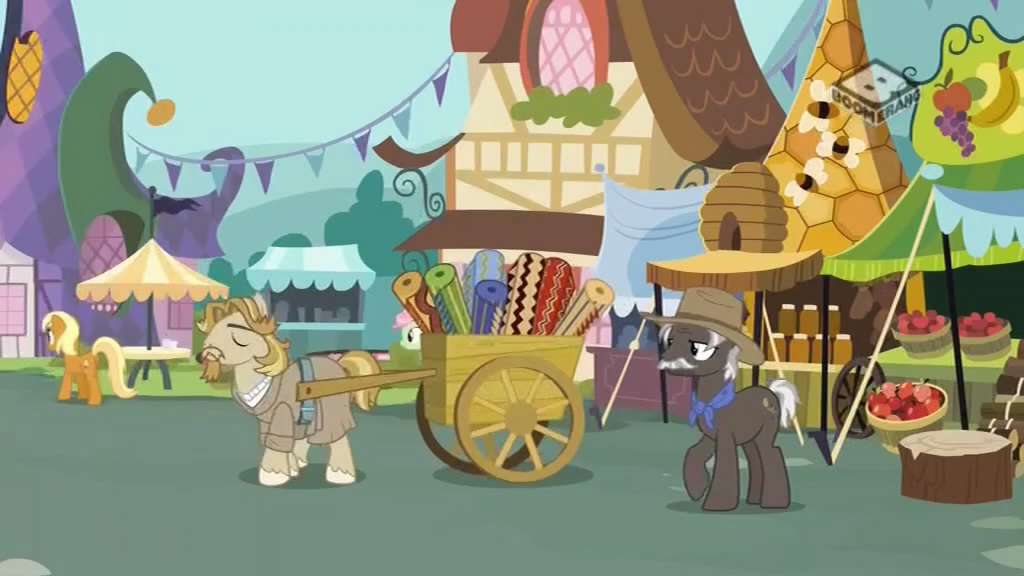
Southern Equestria is reeling from a relentless heatwave that has shattered century-old temperature records, leaving crops wilting and farmers desperate. For the first time in over a century, temperatures in Appleloosa, Fillydelphia, and Las Pegasus have exceeded 100°F (38°C), triggering a cascade of agricultural failures. The crisis has exposed vulnerabilities in Equestria’s infrastructure and highlighted the urgent need for adaptive strategies to combat escalating climate extremes.
The heatwave, fueled by a combination of natural cycles and unconfirmed magical anomalies, has left farmers scrambling to salvage what they can. According to the Cloudsdale Weather Bureau, temperatures in Fillydelphia reached 103°F (39°C) on Tuesday, surpassing the previous record of 101°F (38°C) set in 1927. “This isn’t just a heatwave—it’s a full-blown emergency,” said Dusty Verdict, a third-generation farmer from Appleloosa, whose orchards have withered under the relentless sun. “We’ve lost over 70% of our apple crop. The soil is cracked, the irrigation systems can’t keep up, and the magic we rely on isn’t enough.”
Verdict’s frustration is echoed across the region. In Las Pegasus, where citrus groves are a cornerstone of the local economy, the heat has caused widespread fruit drop and blistering leaf damage. “The citrus trees are dying. We’ve never seen anything like this,” said Sable Nightshade, a regional agricultural consultant. “The magic we use to protect crops—like the Frostspire Enchantments—can only do so much. The heat is just too intense.”
The crisis has also exposed gaps in Equestria’s emergency response systems. While the Canterlot Council has deployed mobile cooling units and water-distribution teams, critics argue the efforts are too slow and insufficient. “We’re trying to patch a hole in a dam with a sponge,” said Copper Gauge, an economist at Celestia University. “The scale of this disaster requires a coordinated, multi-species effort. Right now, it feels like we’re just triaging the symptoms.”
The economic ramifications are already severe. With over 40% of Equestria’s agricultural output concentrated in the southern regions, the crop failures threaten to destabilize food supplies and drive up prices. In Appleloosa alone, the loss of apple harvests could cost the local economy an estimated 25 million bits. “This isn’t just about farms—it’s about the entire food chain,” said Mayor Ember Sky of Fillydelphia. “We’re looking at a potential shortage of fresh produce, and that will hit every pony, from the poorest to the wealthiest.”
The heatwave has also raised questions about the role of magic in mitigating climate disasters. While some experts argue that arcane technology could play a critical role in cooling the region, others warn against overreliance on magical solutions. “We need to balance innovation with sustainability,” said Professor Mira Sun, an environmental scientist at Celestia University. “Magic can help, but it’s not a substitute for proper infrastructure. We’re seeing the consequences of underinvesting in both.”
In response to the crisis, the Canterlot Council has announced a temporary emergency fund to subsidize lost crops and support affected farmers. However, the measure has drawn criticism for its limited scope. “Subsidies are a Band-Aid,” said Sable Nightshade. “We need long-term solutions—better irrigation systems, climate-resilient crop varieties, and a unified regional strategy. This isn’t a one-time event.”
The heatwave has also sparked debates about Equestria’s preparedness for future extreme weather. With rising temperatures linked to both natural and magical factors, experts warn that the region must adopt more aggressive adaptation measures. “We’re at a crossroads,” said Professor Sun. “Either we invest in resilient systems now, or we’ll face even greater losses down the line. The question is, will Equestria act before it’s too late?”
As the sun continues to blaze over southern Equestria, the crisis serves as a stark reminder of the fragility of the region’s agricultural heartland. With temperatures expected to remain above 95°F (35°C) for the next two weeks, the focus now shifts to whether Equestria can mobilize the resources and political will to prevent a full-scale collapse. For now, the only certainty is that the heat isn’t slowing down—and neither are the consequences.
---
Quotes:
- “We’ve lost over 70% of our apple crop. The soil is cracked, the irrigation systems can’t keep up, and the magic we rely on isn’t enough.” – Dusty Verdict, Appleloosa farmer.
- “We’re trying to patch a hole in a dam with a sponge.” – Copper Gauge, Celestia University economist.
- “We need long-term solutions—better irrigation systems, climate-resilient crop varieties, and a unified regional strategy.” – Sable Nightshade, agricultural consultant.
- “Either we invest in resilient systems now, or we’ll face even greater losses down the line.” – Professor Mira Sun, Celestia University environmental scientist.