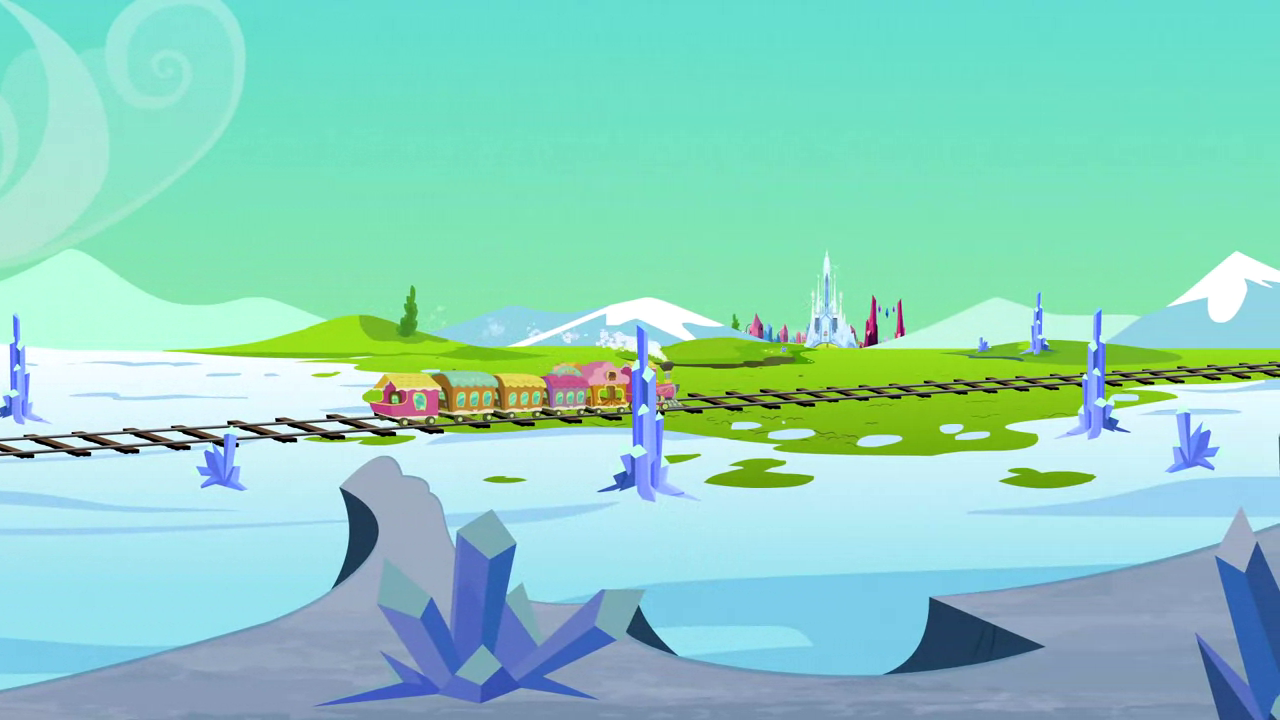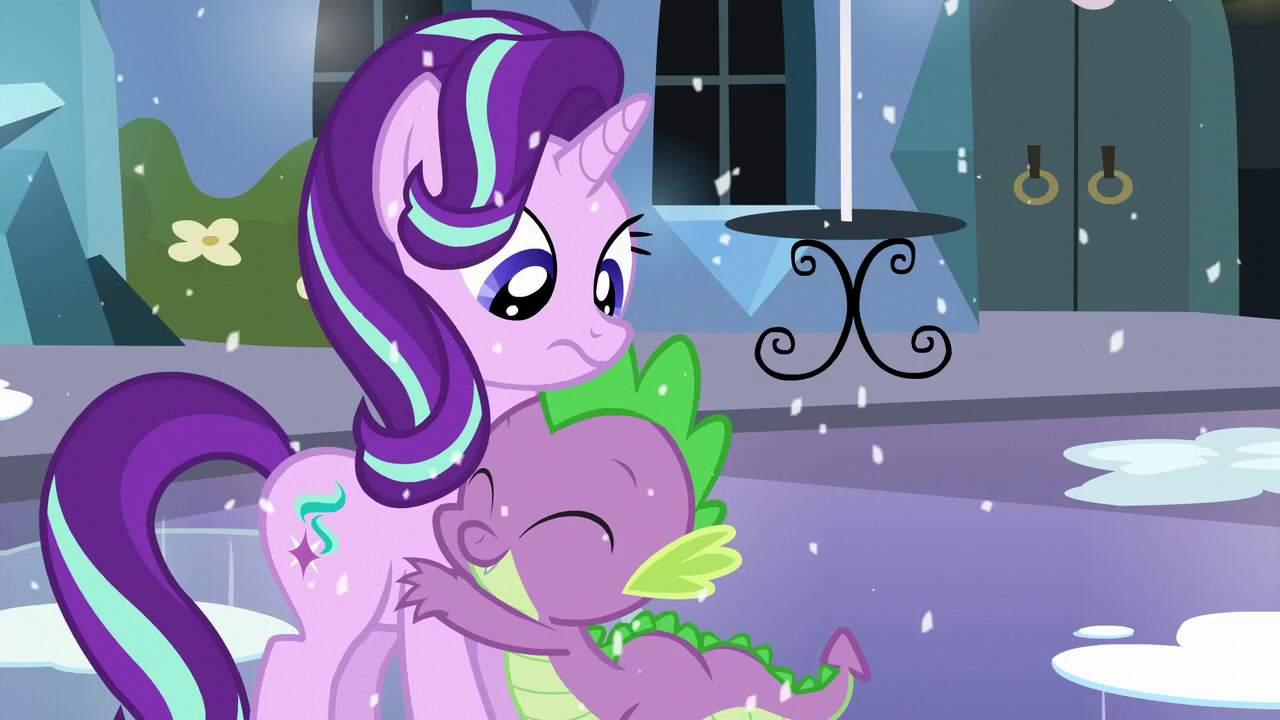
Crystal City’s neon-lit avenues buzzed with unease this week after a foal was born without the crystalline sheen that defines ponies in the Crystal Empire. The case has ignited a medical and cultural firestorm, with doctors, ethicists, and citizens grappling with the implications of a newborn lacking the bioluminescent trait that has long symbolized Equestrian identity.
The foal, named Starlight Rain, was delivered at the Crystal Mountains Regional Hospital on Tuesday by midwife Twilight Bloom. According to hospital records, Starlight’s parents, a pair of veterinarians from the Ember Scale district, reported no family history of such anomalies. “We’ve seen thousands of births here, but this is the first time we’ve encountered a foal without the sheen,” said Dr. Sapphire Lens, a pediatrician at the hospital. “It’s not just a minor deviation—it’s a complete absence of a trait that’s been considered essential for ponies in this region.”
The absence of the sheen has left doctors stumped. While Equestrian ponies naturally emit a faint glow, the sheen is a more pronounced, reflective quality that varies by breed. In the Crystal Empire, where the terrain is rich in crystalline minerals, the sheen is not just a biological feature but a cultural touchstone. “It’s part of our identity,” said Rarity Morn, a boutique owner in Crystal City. “If a pony doesn’t have it, does that mean they’re not fully Equestrian?”
Medical teams at the hospital have run a battery of tests, including genetic screenings and mineral analysis, but no conclusive answers have emerged. “We’re looking for environmental factors, genetic mutations, or even rare congenital conditions,” said Dr. Lens. “But nothing we’ve found so far explains the complete absence of the sheen.”
The case has also raised ethical questions about the role of the Environmental Compliance Board, which regulates mineral extraction and environmental health in the Crystal Mountains. Critics argue that the region’s heavy mining operations could have disrupted the natural balance of minerals in the soil, potentially affecting foal development. “There’s a growing concern that the boom in crystal extraction is having unintended consequences,” said environmental analyst Dusty Verdict. “If the sheen is tied to soil composition, then we need to ask whether our industries are harming future generations.”
The Environmental Compliance Board declined to comment on the case, citing the need for further investigation. However, a spokesperson for the board, Mayor Ember Scale, hinted at potential regulatory changes. “We’re aware of the public’s concerns and are reviewing our environmental protocols,” Scale said. “Our priority is to ensure that our industries don’t compromise the health of our citizens or the natural environment.”
The foal’s parents, who asked to remain anonymous, have become reluctant figures in the controversy. “We’re just a normal family,” said the father, a veterinarian named Iron Spike. “We’ve never had any issues with our foals before. This is just... strange.” The mother, a researcher at the Crystal Mountains Institute, added, “We’ve tested everything we can think of. There’s no genetic link to any known condition. It’s like the foal was born without a part of itself.”
The case has also sparked debates in the wider Equestrian community. On social media, hashtags like #NoSheen and #CrystalIdentity have trended, with some ponies expressing solidarity with the Rainbows while others questioned whether the foal’s condition was a natural variation. “I think it’s beautiful that a foal could be born without the sheen,” said Sable Nightshade, a citizen of the Crystal Empire. “Maybe it’s a sign of something new, something different.”
Others, however, have raised alarm. “The sheen isn’t just a trait—it’s a symbol of our connection to the land,” said Applejack, a farmer from the Ember Scale district. “If we start losing that, what does it mean for our culture? For our future?”
The foal’s condition has also drawn attention from scientists studying the genetic and environmental factors that influence Equestrian physiology. Dr. Lens noted that while the sheen is a well-documented feature, its exact biological mechanisms remain unclear. “We know it’s linked to mineral absorption, but we don’t fully understand how or why it varies,” she said. “This case could be a breakthrough in understanding the science behind it.”
Meanwhile, the Crystal Empire’s government has remained silent on the matter, though officials have hinted at potential policy changes. A spokesperson for the Crystal Empire’s Ministry of Health, Penny Ledger, stated, “We’re monitoring the situation closely and will provide updates as more information becomes available.”
As the debate continues, Starlight Rain remains in the care of the hospital’s neonatal unit. The foal’s condition has become a symbol of a broader conversation about identity, science, and the future of the Crystal Empire. Whether the absence of the sheen is a medical anomaly, an environmental consequence, or something entirely new remains unknown. What is clear, however, is that the case has forced ponies across the Crystal Empire to confront questions about what it means to be Equestrian—and what happens when the natural order seems to shift.
The next steps for the case are uncertain. Medical teams will continue their investigation, while the Environmental Compliance Board faces pressure to address concerns about mining practices. For now, the foal’s story serves as a reminder that even in a world defined by crystalline clarity, there are mysteries that defy explanation. And in a region where the sheen has long been a symbol of certainty, that uncertainty may be the most profound revelation of all.
---
QUOTE 1:
“Dr. Sapphire Lens, pediatrician at Crystal Mountains Regional Hospital: ‘We’re looking for environmental factors, genetic mutations, or even rare congenital conditions. But nothing we’ve found so far explains the complete absence of the sheen.’”
QUOTE 2:
“Applejack, farmer from Ember Scale district: ‘The sheen isn’t just a trait—it’s a symbol of our connection to the land. If we start losing that, what does it mean for our culture? For our future?’”
The foal’s condition has also prompted a deeper examination of the genetic and environmental factors that contribute to the crystal sheen. Dr. Lens’s team is collaborating with geneticists at the Crystal Mountains Institute to explore whether the absence of the sheen could be linked to a previously unknown mutation or an interaction between genetic code and environmental minerals. “The sheen is influenced by both heredity and the surrounding ecosystem,” explained Dr. Ember Frost, a geneticist specializing in Equestrian physiology. “If this foal’s condition is the result of a genetic anomaly, it could reshape our understanding of pony biology. But if it’s tied to environmental exposure, it raises serious questions about the long-term effects of mining activities in the region.” Dr. Frost emphasized that while the sheen has always been a defining trait, its exact biological mechanisms remain poorly understood. “This case could be a breakthrough, but it’s also a warning. We need to ask whether the crystal sheen is a sign of health—or a vulnerability.”
The public reaction has been as divided as the medical community. While some citizens have rallied behind Starlight Rain, framing the foal’s condition as a symbol of resilience and diversity, others have expressed unease. “I’ve seen ponies with no sheen before,” said Sable Nightshade, a citizen of the Ember Scale district. “They’re just... different. But this is a newborn. It’s not like they chose to be this way.” Meanwhile, online forums have seen heated debates, with some users speculating that the foal’s condition is a sign of an impending environmental crisis. “The sheen is a natural indicator of the land’s vitality,” argued a user under the handle CrystalWarden. “If a foal is born without it, that means the crystals in the soil are failing. It’s a warning we can’t ignore.” Others have pushed back, suggesting that the sheen’s absence might be a natural variation rather than a cause for alarm. “Ponies have always adapted to their environments,” countered a user named Gale Report. “Maybe this foal is just part of a new chapter in Equestrian evolution.”
The government’s response has been cautious, with officials avoiding direct statements while hinting at potential policy shifts. A spokesperson for the Crystal Empire’s Ministry of Health, Penny Ledger, confirmed that the case is under review but emphasized that no immediate action is planned. “We are committed to ensuring the health and well-being of all ponies in the Crystal Empire,” Ledger said. “This is a rare and complex case, and we are working closely with medical and scientific experts to understand its implications.” However, some critics argue that the government’s reluctance to address environmental concerns is a missed opportunity. “The Environmental Compliance Board has known about the risks of over-mining for years,” said environmental analyst Dusty Verdict. “If they’re not acting now, what’s to stop them from ignoring this case altogether?” Verdict’s comments reflect a growing frustration among activists, who fear that the government’s inaction could exacerbate the problem. “We need transparency,” Verdict added. “If the sheen is tied to soil health, then we can’t afford to wait for the next crisis to force change.”
For the foal’s parents, the ordeal has been emotionally taxing. While they have sought support from their community, they’ve also faced scrutiny. “We’re just trying to raise our child,” said the mother, who asked to remain anonymous. “This shouldn’t be about politics or science—it should be about the foal’s health.” Their reluctance to speak publicly has only fueled speculation, with some suggesting that the family may be hiding a deeper connection to the crisis. “They’ve tested everything they can think of,” the father, Iron Spike, said. “There’s no genetic link to any known condition. It’s like the foal was born without a part of itself.” Despite the uncertainty, the parents have expressed hope that the case will lead to greater understanding. “We want to know the truth,” Iron Spike said. “Whether it’s a medical mystery or a warning from the land, we need to face it together.”
As the investigation continues, the case has become a focal point for discussions about identity, science, and the future of the Crystal Empire. Whether the absence of the sheen is a medical anomaly, an environmental consequence, or something entirely new remains unknown. What is clear, however, is that the foal’s story has forced ponies across the region to confront questions about what it means to be Equest, and what happens when the natural order seems to shift. For now, Starlight Rain remains in the care of the hospital’s neonatal unit, a silent witness to a conversation that may redefine the future of the Crystal Empire.