The halt was nailed to the west form at mile fourteen with the lower trail already in shade. Switchback Ford was the last stake that still had paint. From the ford the path climbed through scrub oak to a cut the survey called a shelf. Magistrate Ivo Pell's order stopped the pour on the triumph arch Alden Brack had set across the public trail. The sheet that would say whether the work counted was not on the trail. It was strapped to Penny Ledger's saddle at the gate office, twelve miles back, sealed until first bell.
Useful light on the upper pier was about an hour, less if the ridge cloud shut. The works map showed four carts of dry width. It did not show the spring. Water moved under the left footing in a thin line, the way it moves after somepony tries to cap it and the cap fails. It did not show the sett in the cutbank.
Bramble Stitch stood on the bank above the seep, burrs still in her coat from the morning mark. She keeps the way-hut where the posted boards end. She had chalked the spring three days running. The chalk was gone. A sanding block lay on the lumber.
"Spring's under that footing," she said. "I marked it. They sanded the mark off and wrote feature on the sheet. You can drink a spring. You can't drink a feature with a pier on it."
She had refused two bits from a touring party that wanted her pictured as the local guide. They left before the nail. At the ford their bounty sheet still showed the arch, a ribbon, four clean smiles, and the words forest opportunity, likeness included. Pell's hearing date was penciled under the smiles. The smiles stayed.
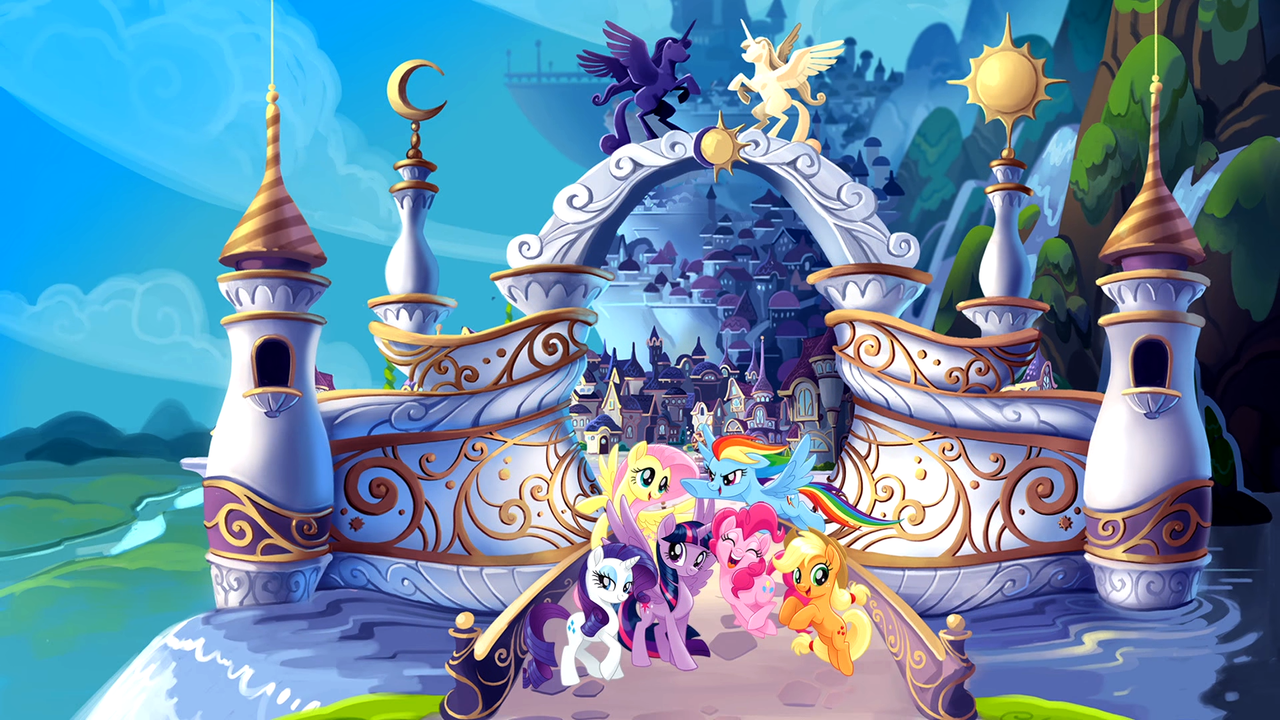
On the shelf stood two piers, a scaffold, and a plaster keystone stained with tea so it would photograph as stone. Brack's office called the third morning a raising. Iron Press printed a closed ring. The scaffold ring had a gap a cart could pass. A plaque on the false keystone read FOR THE WORK THAT RAISED IT and listed thirty-eight names. Fourteen were the touring party. One was the engraver.
A sow badger came out of the cutbank while the clerk read the halt. She carried oak leaves into the open cage of the second pier, six trips, packed them, and went back in. She did not look at the clerk. When a photographer moved his tripod toward the hole, she watched the legs and stopped. There was no seventh trip.
Cress Hollis sat on the downslope side of his cart, weight off the bad leg. The cart was under the brace. A cable had jumped the bollard on the morning haul, and the facing-stone was still in the bed. His day ticket, soft in the saddlebag, said the hire ran through the pour.
"They can halt a pour," he said. "The cart is still under the brace. I can't shift it with one side, and I'm not posing beside it."
His name was on a cord at the pier, in pencil, with the hour the cable jumped. Nopony from Brack's office had copied the cord.
Copper Gauge kept the position log on a board by the scaffold and tapped the total as if it had survived the nail.
"Thirty-eight positions," he said. "A position is a place with a measurement. Who stood there past noon is Ledger's sheet."
Sable Nightshade came up from the capital side in a coat the oak had not touched. She read the order without touching the nail.
"The stay is procedural," she said. "The forest is still an opportunity. The arch lets a traveler see it from the road. Stone can wait. The likeness is already printed."
Alden Brack did not take the trail. His note said he would talk after the day-labor numbers, and that a halt on timber was not a halt on the work. He asked for a hearing somewhere with better light. It is set for the fifth day, in a room with no spring under the floor.
Penny Ledger's card, which the runner read as written, said the packet opens at first bell, not on the path and not ahead of the clock. The columns are hires opened, hires closed, hires ended by injury, and places measured and never filled.
The lower trail was full shade when the clerk started down. The leaves were still packed in the second pier. On the cord, Hollis's name was the only one at mile fourteen that a pony on the ground could match to a pony still there.