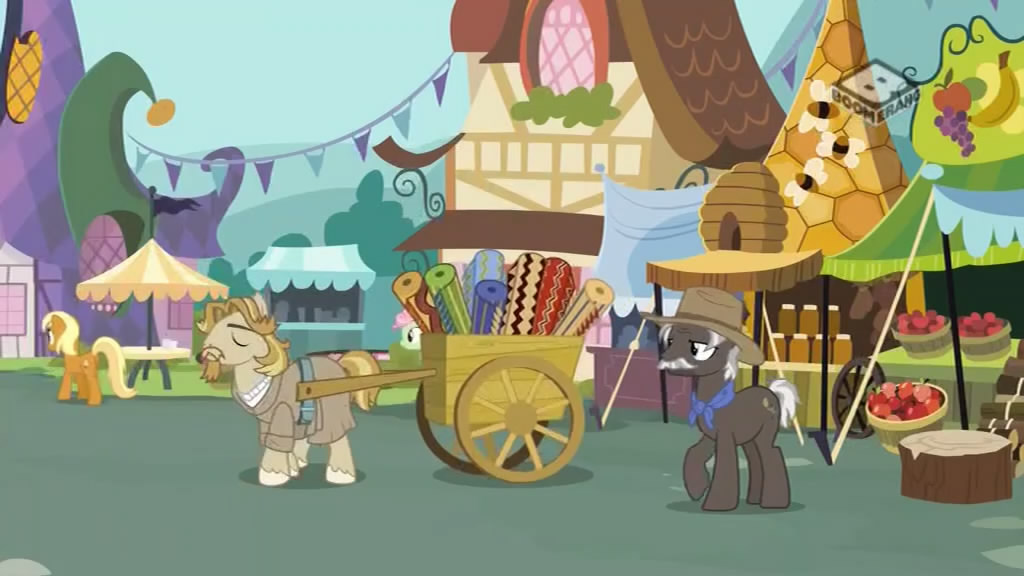
Ponyville’s iconic farmers market, a cornerstone of the town’s economy and community spirit, is facing a crisis as stall fees have surged by 25% in the past year, forcing long-time vendors to consider exiting the market. Interviews with over a dozen stall owners reveal a growing exodus of small businesses unable to absorb the increased costs, with some already shuttering their stalls or planning to relocate. The market, which draws thousands of visitors weekly, now finds itself at a crossroads: a booming revenue stream for its operators versus a potential hemorrhage of local entrepreneurs.
The fees, which have risen from 15 bits per stall to 18.75 bits, were recently approved by the Ponyville Property Pros, the town’s zoning and commercial oversight board. While the increase was framed as a necessary adjustment to cover rising operational costs, including new safety inspections and expanded parking infrastructure, vendors argue the rate hike has effectively priced them out of the market. “The fees have skyrocketed, and we’re barely breaking even,” said Thistle Bloom, a third-generation flower seller who has operated a stall at the market for 12 years. “I’ve had to cut back on inventory, and I’m not sure how much longer I can keep this up.”
The situation has sparked a quiet but growing backlash among small business owners, many of whom rely on the market as their primary income source. “This isn’t just about money,” added Jangle Whiskers, a baker whose stall has been a fixture at the market for eight years. “It’s about the community. If we lose these vendors, we lose a piece of Ponyville’s identity.” Whiskers, who recently had to lay off two employees, warned that the market’s shift toward corporate-style pricing could drive out the very entrepreneurs it was designed to support.
The Ponyville Property Pros defended the decision, citing a 30% increase in market attendance over the past two years and the need to “maintain quality infrastructure.” Mayor Pippin Pines, who chairs the board, acknowledged the concerns but emphasized the financial realities. “We’re not trying to make a profit off the vendors,” Pines said. “We’re trying to ensure the market can sustain itself. If we don’t cover these costs, we’ll be forced to shut it down entirely.”
But critics argue that the fees disproportionately harm smaller operators, many of whom lack the capital to absorb sudden rate hikes. The market’s management, which includes the Hearthstone Smithy and the Ponyville Education Board, has not responded to repeated requests for comment, though sources close to the administration suggest negotiations are underway with local business groups.
The economic implications of the dispute are far-reaching. The farmers market is a vital hub for Ponyville’s agricultural sector, providing a platform for farmers, artisans, and small-scale producers to sell their goods. With stall fees now accounting for nearly 40% of the market’s operational budget, the board faces a dilemma: either continue hiking fees or risk financial instability.
Local economists, however, warn that the current trajectory could lead to a vicious cycle. “If vendors are forced out, the market’s appeal will diminish, which will only exacerbate the financial strain,” said Professor Mallowberry, a trade policy expert at the Ponyville University of Applied Magic. “This isn’t just a local issue—it’s a model for how small businesses are being squeezed in towns across Equestria.”
The situation has also ignited a broader debate about the role of public spaces in supporting small enterprises. While some argue that the market’s operators have a right to recoup costs, others point to the market’s historical role as a communal resource. “This market wasn’t built to be a profit center,” said Zephyr Windbreaker, a longtime resident and community activist. “It was meant to be a place where ponies could gather, trade, and support one another. That’s what’s at risk here.”
As the dispute unfolds, the Ponyville community watches closely. Some vendors are exploring alternatives, such as forming a collective to negotiate lower rates or transitioning to online sales. Others are considering relocating to neighboring towns like Fillydelphia or Baltimare, where market fees are reportedly lower. The question remains: can the Ponyville farmers market adapt without losing the soul that made it a beloved institution?
For now, the market’s future hangs in the balance, with the stakes extending far beyond stall fees. The struggle to balance profitability and community support is a microcosm of a broader economic challenge facing Equestria’s small businesses. As vendors prepare for another busy season, the hope is that a resolution will emerge—one that preserves both the market’s viability and the livelihoods of those who keep it thriving.
---
Quote 1: “The fees have skyrocketed, and we’re barely breaking even,” said Thistle Bloom, a third-generation flower seller.
Quote 2: “We’re not trying to make a profit off the vendors,” said Mayor Pippin Pines. “We’re trying to ensure the market can sustain itself.”
The economic ripple effects of the stall fee dispute are already being felt beyond the market’s physical boundaries. Local economists warn that the exodus of small vendors could trigger a decline in foot traffic, reducing revenue for nearby businesses such as the Hearthstone Smithy, the Ponyville Bookstore, and even the town’s iconic Appleloosa Cheese Shop. “If the market becomes less vibrant, the entire downtown corridor could suffer,” said Professor Mallowberry, who cited a 2023 Ponyville Economic Report showing a 12% drop in retail sales in the area since the fee increase. The report also noted that nearly 40% of small vendors have either reduced their hours or paused operations, with many citing the market’s rising costs as a primary factor.
For some, the situation has sparked a grassroots movement. A coalition of local entrepreneurs, led by a former stall owner named Tangerine Leaf, has begun advocating for a community-funded subsidy to offset the fees. Leaf, who now runs a small bakery in the outskirts of Ponyville, argues that the market’s original purpose was to support local producers, not extract profits. “This isn’t just about money—it’s about fairness,” Leaf said during a recent town hall meeting. “We need a way to keep the market alive without letting the operators take over.” The group is pushing for a tiered fee system, where vendors with lower turnover or smaller inventory would pay a reduced rate, while larger operations would bear more of the cost.
Meanwhile, the Ponyville Property Pros has faced increasing pressure to revisit their decision. A recent petition signed by over 200 residents, including several long-time vendors, has called for a public hearing to reassess the fees. The petition, which was circulated by the Ponyville Education Board, argues that the current model is unsustainable for small businesses. “The market was never meant to be a profit machine,” said Zephyr Windbreaker, a community activist who helped draft the petition. “It’s a shared space. If the operators are taking more than their fair share, we need to address that.”
The debate has also spilled into the political arena. Mayor Pippin Pines, who has been under scrutiny for his handling of the issue, faces growing criticism from both sides. Some vendors accuse him of prioritizing the interests of the market’s operators over small businesses, while others argue that his reluctance to intervene has left the situation in limbo. “The mayor has been too cautious,” said Jangle Whiskers, the baker who recently laid off two employees. “If he’s not willing to negotiate, we’ll be forced to find other solutions, even if that means leaving Ponyville.”
For now, the market remains open, but its future is far from certain. Vendors like Thistle Bloom are already planning for the worst. “I’ve been told by my daughter that she’s moving to Fillydelphia next year,” Bloom said, her voice tinged with resignation. “She’s got a job there, and it’s not just about the money—it’s about stability.” Others are exploring alternative models, such as shifting to online sales or partnering with neighboring towns to create a joint market.
The situation has also highlighted a deeper tension in Ponyville’s economy: the balance between public infrastructure and private enterprise. While the market’s operators argue that their fees are necessary to maintain the space, critics insist that the current system is failing the very businesses it was designed to support. As the debate continues, the question remains: can Ponyville’s farmers market adapt without losing the soul that made it a beloved institution? For now, the answer is unclear, and the stakes are higher than ever.