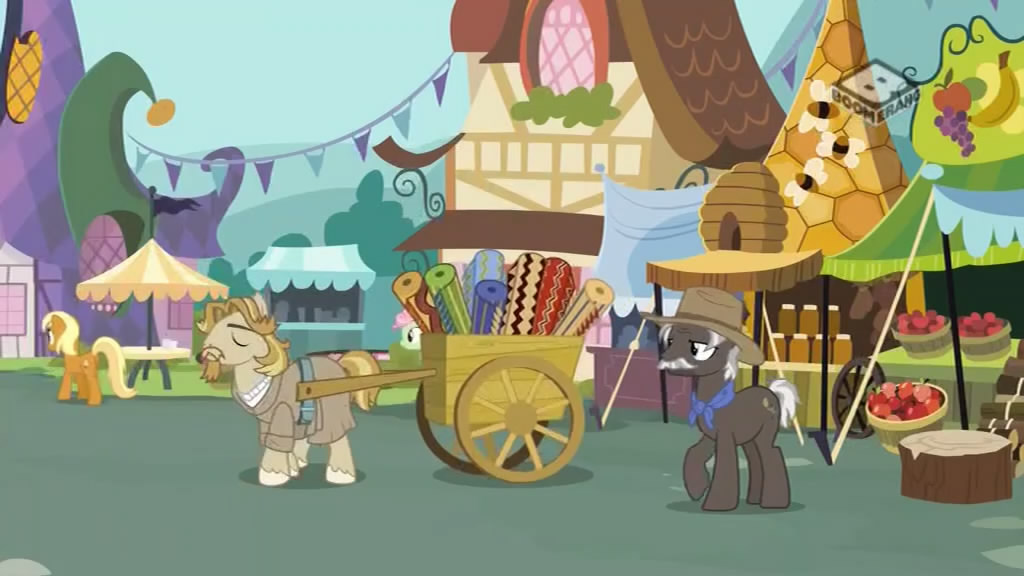
Ponyville’s bustling farmers market, a cornerstone of the town’s agricultural economy, is facing a crisis as stall fees have surged by 40% over the past year, forcing small vendors to abandon their stalls. The escalating costs have left many struggling to cover basic expenses, with some opting to retire or leave the town altogether. The market, once a vibrant hub for local produce and artisan goods, now risks becoming a symbol of economic precarity for Ponyville’s rural community.
The controversy erupted after a recent audit revealed that the market’s management committee had approved a 40% fee hike without consulting vendors or the town council. The decision has sparked outrage among small-scale farmers and crafters, who argue the increase is unsustainable. “We’ve been here for decades, paying our dues,” said Daisy Paddock, a third-generation apple farmer and stall owner. “Now, the fees are so high I can’t afford to stay. I’ve had to sell my stall and move to a smaller town where I can at least break even.”
Paddock’s account is echoed by dozens of vendors who have either closed their stalls or are considering doing so. According to a survey conducted by the Ponyville Agricultural Coalition, 62% of surveyed vendors reported losses in profitability since the fee hike, with 28% citing the cost as the primary reason for leaving the market. The market, which once drew over 300 stalls, now has 120 fewer vendors than a year ago.
The market’s management committee, led by Mr. Figment, a retired stall manager with a reputation for efficiency, defended the decision as necessary to cover rising operational costs. “We’ve had to increase fees to maintain the market’s infrastructure and ensure it remains a safe, clean space for all,” Figment said. “The town’s population is growing, and we need to invest in things like irrigation systems and waste management. Without these upgrades, the market could become unlivable.”
But critics argue the fee hikes disproportionately burden small farmers, many of whom operate on razor-thin margins. “This isn’t just about money; it’s about who gets to participate in the local economy,” said Professor Grumble, an economics professor at the Ponyville Institute of Magical Studies. “When the market’s gatekeepers raise costs without transparency, they’re effectively excluding the very people who sustain the market’s existence. It’s a classic case of systemic neglect.”
The issue has also raised concerns about the broader economic health of Ponyville. The farmers market is a vital artery for the town’s agricultural sector, which employs over 1,200 ponies. With so many stalls closing, local economists warn of a potential ripple effect on food supply chains and rural employment. “If we don’t address this, we risk hollowing out Ponyville’s agricultural base,” said Mayor Sparklehoof, whose office has been inundated with complaints from affected vendors. “We need a dialogue between the market committee, the council, and the community to find a sustainable solution.”
Some vendors are exploring alternatives, such as forming cooperatives to share costs or diversifying their income streams. “I’ve started selling my honey online and through a local co-op,” said Bramble Stitch, a beekeeper who recently relocated her stall. “It’s not ideal, but it’s better than watching my business disappear.” Others are calling for a moratorium on fee increases until a new revenue model is established.
The dispute has also reignited debates about the role of public spaces in Equestrian communities. While the farmers market is technically a private entity, its location in the town square and its reliance on public funding have made it a de facto public good. “When a space like this becomes a battleground for profit over people, it’s a sign the system is broken,” said activist Sable Nightshade, who has organized rallies demanding transparency from the market committee.
As tensions mount, the Ponyville council is set to hold a special session next week to address the crisis. The meeting will include representatives from the market committee, small business advocates, and the town’s economic development office. For now, the market’s future hangs in the balance, with vendors and residents watching closely to see if the town can reconcile its economic needs with the survival of its local farmers.
The broader implications of this crisis extend beyond Ponyville. Similar disputes over rising costs and access to public spaces are emerging in other towns, from Manehattan’s artisan districts to the Crystal Empire’s trade zones. As Equestria grapples with inflation, inequality, and the erosion of small-scale economies, the Ponyville farmers market serves as a microcosm of a larger struggle: who controls the means of economic production, and who gets left behind when the costs rise.
The question remains: will Ponyville’s leaders find a way to balance the market’s needs with the needs of its people — or will the next wave of closures be the final blow for a community already feeling the weight of the economic tide?