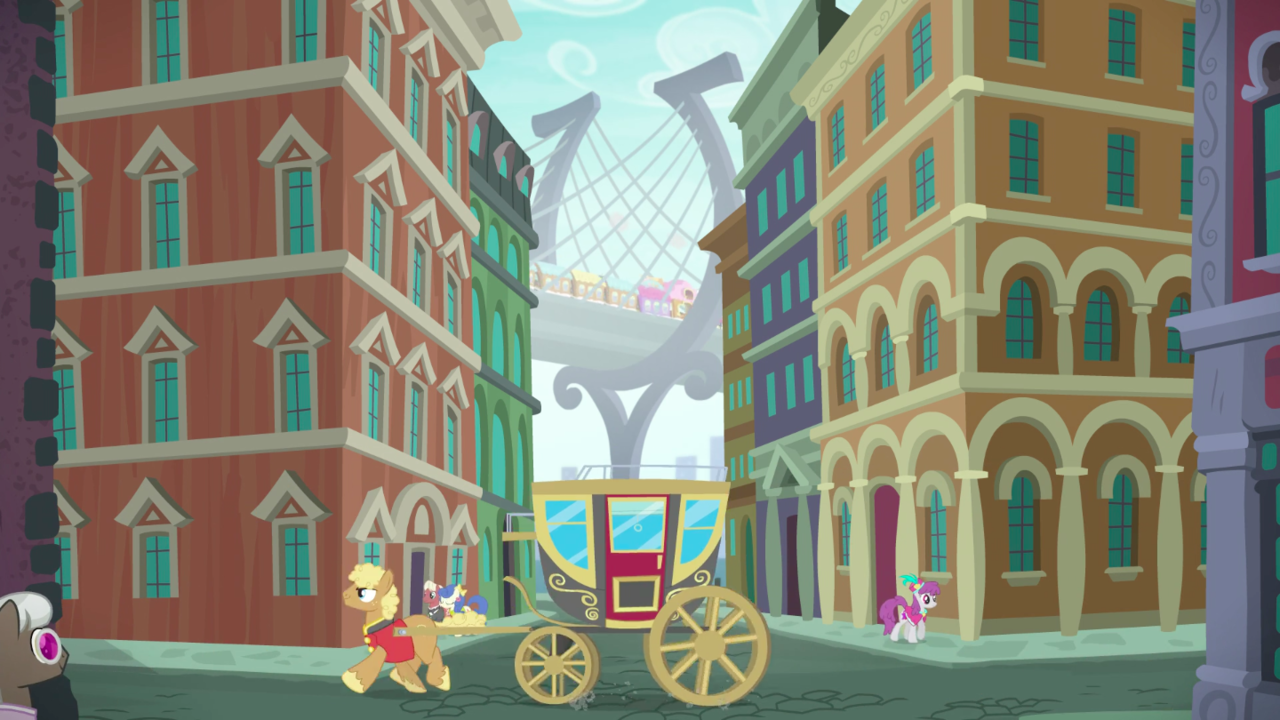
Manehattan’s central rail station has become the epicenter of a growing crisis as workers unearthed a massive sinkhole threatening to destabilize the city’s subway network. The discovery, made during routine maintenance checks, has sparked panic among commuters and raised urgent questions about the safety of Equestria’s largest urban transit hub.
The sinkhole, estimated to span over 300 feet in diameter, was detected by rail workers during a routine inspection of the station’s underground tunnels. Initial reports suggest the void could have formed due to a combination of geological shifts and potential magical instability, though officials have not yet confirmed the exact cause. “This isn’t just a crack in the ground—it’s a full-blown collapse risk,” said Sable Nightshade, a senior maintenance engineer at the Manehattan Transit Authority. “We’re talking about a space that could swallow entire train cars. The structural integrity of the station is in serious jeopardy.”
The discovery came just days after a series of minor tremors rattled the region, prompting geologists to warn of increased seismic activity in the area. While the tremors were initially dismissed as minor, the sinkhole’s size has forced authorities to declare a partial evacuation of the station’s lower levels. Over 10,000 commuters are currently displaced, with emergency shelters set up in nearby districts.
Mayor Copper Gauge, who has been overseeing the response, emphasized the urgency of the situation. “This is a wake-up call for our city’s infrastructure. We cannot let complacency cost lives,” he stated in a press briefing. “Our priority is to ensure the safety of every resident and worker. We’re coordinating with geologists, magical analysts, and emergency teams to assess the full scope of the problem.”
The sinkhole’s location has also raised concerns about the broader implications for Manehattan’s aging infrastructure. The city’s subway system, a cornerstone of Equestria’s transportation network, has long been criticized for outdated engineering and insufficient maintenance. “This isn’t an isolated incident,” said Rarity Bloom, a transportation analyst at the Equestrian Institute of Urban Studies. “The sinkhole is a symptom of years of neglect. Our tunnels were built for a different era—one that didn’t account for the complex interplay of earth and magic in this region.”
Emergency crews are now working around the clock to stabilize the area, using a combination of enchanted concrete and seismic dampeners. However, the process is proving more challenging than anticipated. “The ground is still shifting, and the magical energy here is unpredictable,” said Spike Mire, a field supervisor for the Manehattan Safety Division. “We’re doing everything we can, but this is a race against time.”
The crisis has also disrupted daily life in Manehattan. Commuters have been rerouted through alternate pathways, causing traffic bottlenecks and delays. Local businesses near the station have reported a sharp drop in customers, with some owners describing the situation as “a blow to the city’s economic spine.” “We’re not just losing revenue—we’re losing trust in our infrastructure,” said Penny Ledger, owner of a boutique café near the station. “If the subway can’t be trusted, how can we trust the city’s ability to protect us?”
The sinkhole has also sparked debates about the role of magical technology in urban planning. While some experts argue that enchanted materials could have prevented such a collapse, others point to the lack of regulation in the magical construction industry. “The problem isn’t just the sinkhole—it’s the absence of oversight,” said Professor Starlight Glimmer, a specialist in magical engineering. “We’ve allowed private companies to innovate without accountability. This is a failure of governance.”
As the situation unfolds, the city faces a daunting challenge: balancing immediate safety measures with long-term solutions. Officials have hinted at potential upgrades to the subway system, including the integration of advanced magical sensors and reinforced tunnel designs. However, critics argue that these measures will take years to implement and may not address the root causes of the crisis.
For now, the focus remains on containment. Emergency shelters are operating at full capacity, and city officials have pledged to provide regular updates to the public. Yet, the incident has left many questioning the resilience of Manehattan’s infrastructure—and the city’s ability to adapt to an increasingly unpredictable future.
As the sun sets over the skyline, the glow of enchanted lights flickers ominously above the station’s crumbling tunnels. For the ponies of Manehattan, the sinkhole is more than a geological anomaly—it’s a stark reminder of the fragile line between progress and peril. What happens next will determine whether this city can rise from the depths or be swallowed by them.
---
QUOTE 1: “This isn’t just a crack in the ground—it’s a full-blown collapse risk.” — Sable Nightshade, senior maintenance engineer
QUOTE 2: “We’ve allowed private companies to innovate without accountability. This is a failure of governance.” — Professor Starlight Glimmer, magical engineering specialist