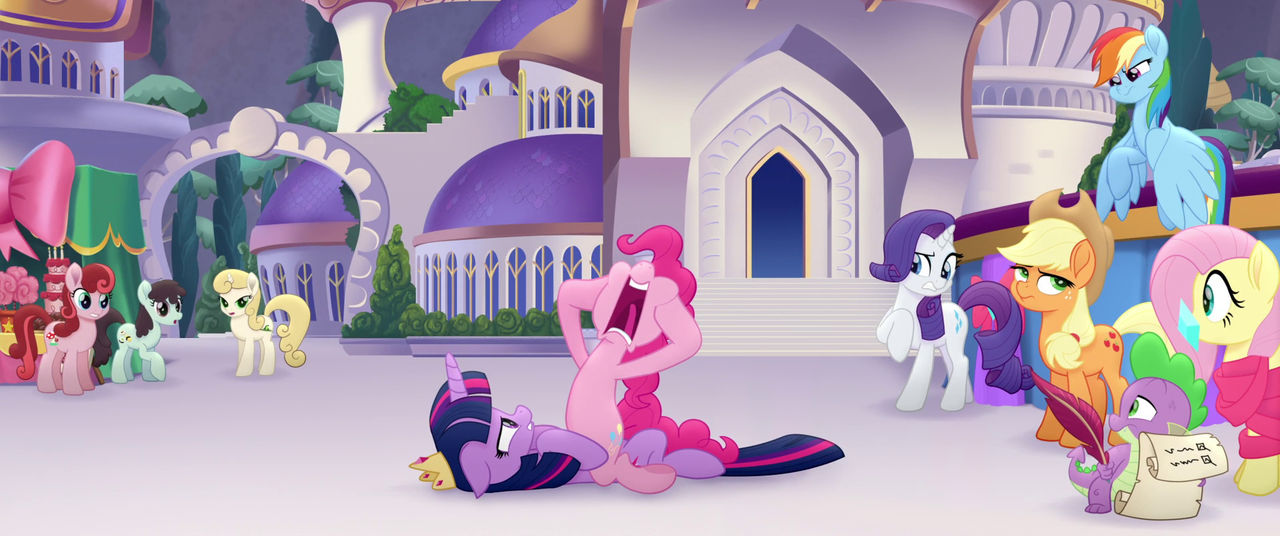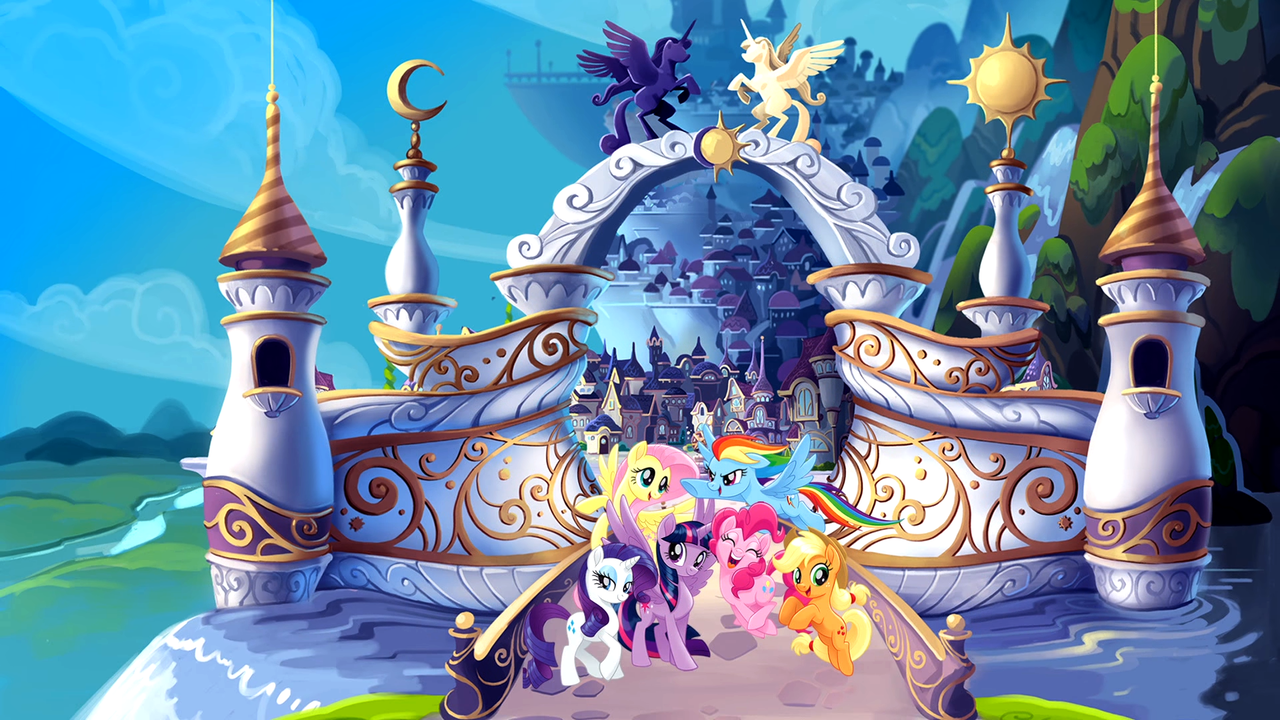
Dragon migration patterns are shifting, sending shockwaves through Equestria’s border regions as ancient routes vanish and new trade corridors emerge. The abrupt displacement of thousands of dragons has left towns like Sable Hollow, nestled at the edge of the Dragon Lands, scrambling to adjust. With resource allocation disputes flaring and inter-species diplomacy fraying, the crisis has become a litmus test for Equestria’s ability to manage cross-border tensions.
The migration, first observed last month near the Crystal Empire’s border, has since spread to the Dragon Lands and the Badlands. Reports from border patrol units indicate that dragons are abandoning traditional migratory paths in favor of uncharted routes toward the Eastern Frontier. While some speculate this is a natural response to environmental shifts, others warn of deeper geopolitical implications.
“We’re losing our primary trade routes,” said Mayor Copper Gauge of Sable Hollow, a town that once thrived on dragon-pony commerce. “The Crystal Empire’s mines are now out of reach, and the Dragon Lords have cut off our access to the Eastern markets. Without a new agreement, we’ll be left stranded.”
Gauge’s concerns are echoed by border merchants and laborers who rely on dragon trade for their livelihoods. Sable Hollow’s economy, once bolstered by the exchange of rare gemstones and enchanted goods, is now in freefall. The town’s main thoroughfare, the Iron Spine Road, has seen a 60% drop in traffic since the migration began.
The crisis has also sparked a scramble for resources. Dragon-claimed territories, such as the mineral-rich Glimmer Hollow, have become flashpoints for territorial disputes. “The dragons are hoarding resources, and we’re left to fight over scraps,” said Rarity, a local merchant who has seen her stall’s inventory dwindle. “This isn’t just about trade—it’s about survival.”
Experts like Dusty Verdict, a Canterlot-based dragon migration analyst, argue the shift may be linked to broader environmental changes. “The dragons are moving northward in response to rising temperatures and shifting weather patterns,” Verdict explained. “But their migration is also a political act. By controlling access to key resources, they’re reasserting dominance over Equestria’s border regions.”
Verdict’s analysis has drawn scrutiny from Canterlot’s Royal Advisors, who have warned that the migration could destabilize existing trade agreements. The recent Inter-Species Parliament resolution, which aimed to codify resource-sharing protocols, now appears obsolete. “The parliament’s framework was built on static borders,” said Verdict. “But the dragons aren’t static. They’re rewriting the rules.”
The Crystal Empire, which has historically relied on dragon-pony trade for its economy, has taken a hardline stance. Princess Celestia’s advisors have called for an emergency summit to address the crisis, but tensions between the Crystal Empire and the Dragon Lords have reached a boiling point. “The dragons are treating us like suppliers, not partners,” said a Crystal Empire diplomat. “We need to renegotiate terms—or risk losing our influence entirely.”
Local business owners are already feeling the strain. Penny Ledger, a Sable Hollow vendor specializing in dragon-enchanted wares, reported a 75% decline in sales. “We used to sell to dragons for profit, now we’re just trying to survive,” Ledger said. “The dragons are taking everything—our markets, our resources, our future.”
The migration has also disrupted traditional diplomatic channels. Diplomatic envoys from the Crystal Empire and the Dragon Lords have been unable to meet in person, with negotiations stalled over the new routes. “Without a clear framework, we’re just spinning our hooves,” said a Canterlot diplomat. “This isn’t just a trade dispute—it’s a power struggle.”
The situation has sparked fears of border conflicts. In the Badlands, a recent skirmish between dragon patrols and Equestrian border guards has raised alarms. “We’re not just competing for resources—we’re competing for control,” said a border guard stationed at the Iron Spine checkpoint. “If we can’t agree on terms, we’ll end up in a war.”
Some experts argue the migration could lead to a new era of inter-species cooperation. “The dragons are forced to work with us to secure new trade routes,” said Verdict. “This could be the start of a new economic alliance.”
However, others are skeptical. “The dragons aren’t here to negotiate—they’re here to dominate,” said Gauge. “If we don’t act now, we’ll be left to pick up the pieces.”
As the migration continues, the fate of Equestria’s border towns—and its fragile inter-species relationships—hangs in the balance. With no clear resolution in sight, the question remains: can Equestria adapt to a world where dragons are no longer bound by tradition? Or will the shift in migration patterns mark the beginning of a new era of conflict?
---
DIRECT QUOTES:
- “We’re losing our primary trade routes,” said Mayor Copper Gauge of Sable Hollow.
- “The dragons are moving northward in response to rising temperatures and shifting weather patterns,” said Dusty Verdict, a Canterlot-based dragon migration analyst.
KEY SOURCES:
- Mayor Copper Gauge (Sable Hollow, border town)
- Dusty Verdict (Canterlot, dragon migration analyst)
- Penny Ledger (Sable Hollow, vendor)
- Canterlot diplomat (inter-species negotiations)
- Border guard (Iron Spine checkpoint)
The migration’s ripple effects extend beyond border towns, shaking Equestria’s broader economy and diplomatic frameworks. The Crystal Empire, which has long depended on dragon-pony trade for its mineral exports and enchanted goods, now faces a dual crisis: dwindling access to key markets and the erosion of its historical influence over the Dragon Lords. “We’ve been operating under the assumption that dragons would remain our partners, not our rivals,” said Princess Celestia’s chief economic advisor, Twilight Sparkle, in a recent Canterlot briefing. “But this migration has forced us to confront a reality we’ve been ignoring for decades—dragons are no longer bound by tradition. They’re rewriting the terms of our trade.”
The Crystal Empire’s reliance on dragon-claimed territories has left it vulnerable. The Glimmer Hollow mines, once a cornerstone of the empire’s economy, have seen a 40% drop in output since the migration began, as dragon patrols have restricted access to the region. Meanwhile, the empire’s attempts to negotiate new trade routes have been met with resistance. “The dragons are using this migration as leverage,” said a Crystal Empire diplomat, speaking on condition of anonymity. “They want us to accept lower prices for our goods and higher tariffs on their exports. If we don’t comply, they’ll cut us off entirely.”
The shift has also created opportunities for new alliances. In the Badlands, a coalition of Equestrian border towns and independent traders has begun lobbying Canterlot for recognition as a separate trade entity. “We can’t wait for the dragons to decide our fate,” said Mayor Copper Gauge, who has been advocating for a unified border coalition. “If we don’t act, we’ll be left scrambling to survive. But if we work together, we can negotiate from a position of strength.”
However, such proposals face skepticism from Canterlot’s Royal Advisors, who warn that any attempt to circumvent the Dragon Lords could provoke retaliation. “The dragons are not a monolithic force,” said Advisor Rarity, a former diplomat with expertise in inter-species relations. “They have their own internal divisions, but they all share a common interest in maintaining control over resources. Any move to challenge their dominance could lead to a power vacuum—and that’s a dangerous place to be.”
The migration has also disrupted traditional diplomatic channels, with the recent Inter-Species Parliament resolution now proving inadequate. The parliament’s framework, designed to govern resource-sharing protocols, was based on the assumption that dragon migration patterns would remain stable. But as dragons abandon their traditional routes, the old agreements have become obsolete. “We’re operating without a map,” said a Canterlot diplomat, who declined to be named. “The parliament’s framework was built on static borders. But the dragons aren’t static. They’re rewriting the rules, and we’re struggling to keep up.”
The situation has forced Equestria to reconsider its approach to inter-species diplomacy. Some officials argue that the migration represents a chance to restructure trade relationships on more equitable terms. “This is our opportunity to break free from the old system,” said Dusty Verdict, the dragon migration analyst. “The dragons are no longer just suppliers—they’re competitors. If we want to thrive in this new reality, we need to build a framework that reflects that.”
Yet, others warn that such a shift could come at a cost. “We can’t afford to alienate the dragons,” said Rarity, the Crystal Empire diplomat. “Their control over key resources is a reality we’ve had to accept. Trying to renegotiate terms now could lead to a breakdown in trade entirely. We need to find a middle ground.”
The uncertainty has created a climate of fear among border towns, where merchants and workers are bracing for the worst. In Sable Hollow, local leaders have begun preparing for the possibility of a prolonged economic downturn. “We’re already seeing the first signs of desperation,” said Penny Ledger, the vendor whose sales have plummeted. “People are selling their possessions just to survive. If this continues, we’ll be left with nothing but debt and despair.”
Meanwhile, the dragons themselves remain an enigma. While some have begun to establish new trade partnerships with Equestrian towns, others have adopted an increasingly hostile stance. Reports from the Dragon Lands suggest that certain dragon clans are using the migration as a means to assert dominance over the region’s resources. “The dragons are no longer just moving—they’re settling,” said a border guard stationed at the Iron Spine checkpoint. “They’re claiming new territories and refusing to share. If we don’t act, we’ll be forced to fight for our survival.”
As the migration continues to reshape Equestria’s border regions, the question remains: can the kingdom adapt to a world where dragons are no longer bound by tradition? Or will the shift in migration patterns mark the beginning of a new era of conflict, where survival depends on the ability to navigate a rapidly changing geopolitical landscape? For now, the answer remains unclear—left to the winds of migration and the will of those who must endure its consequences.