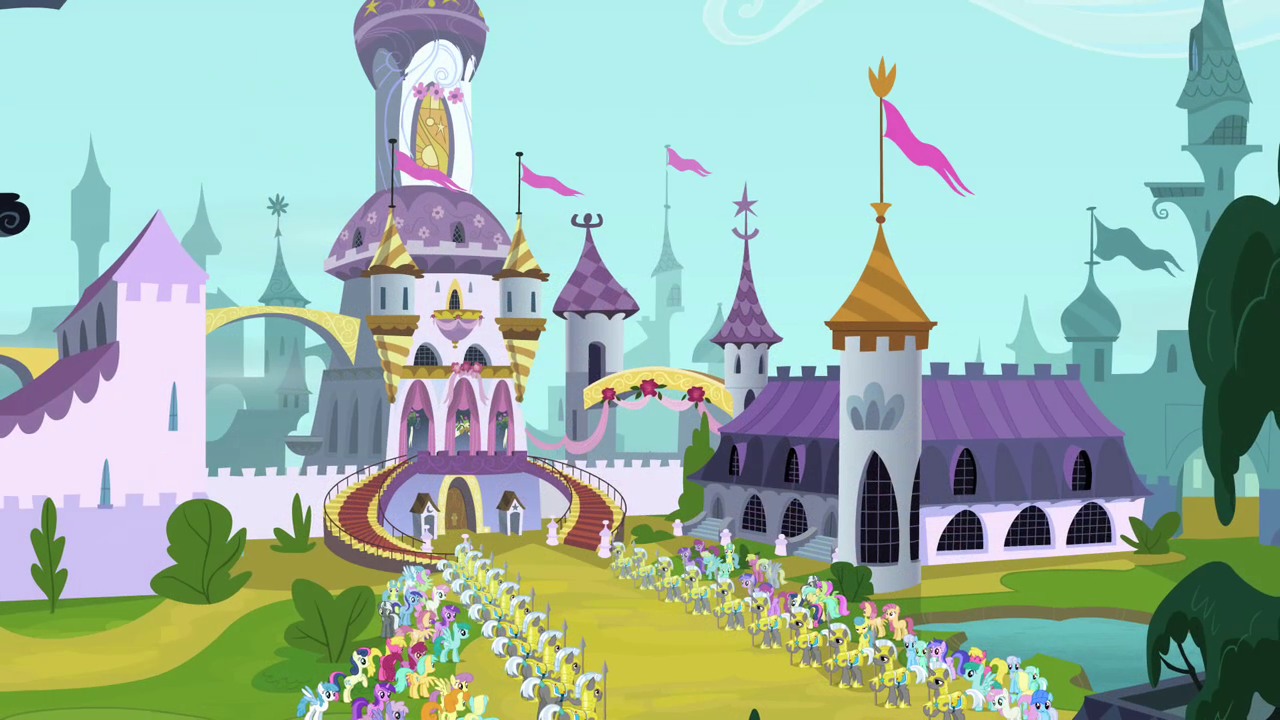
Canterlot’s historic council chamber, a marble-and-pearl bastion of tradition, now echoes with discord as a faction of reformists demands the end of hereditary noble seats. The proposal—advocated by the Reform Coalition, a coalition of working-class activists, young entrepreneurs, and disillusioned scholars—threatens to upend a centuries-old system that has long granted noble families unchallenged power over Equestria’s governance. With the council’s upcoming vote on the matter, the debate has become a flashpoint for broader questions about equity, privilege, and the future of Equestrian democracy.
The Reform Coalition’s bid for merit-based representation is rooted in stark statistics. According to a recent report by the Canterlot Institute of Economic Studies, noble families control 62% of the city’s wealth, 45% of its land, and 78% of its political offices. “This isn’t just about fairness,” said Mayor Dusty Verdict, a reformist ally from Ponyville. “It’s about survival. If we don’t dismantle this system, Equestria’s working classes will continue to be steamrolled by the same families that’ve hoarded power for generations.” Verdict’s remarks drew applause from the crowd at last week’s public forum, where over 300 ponies gathered to voice support for the proposal.
But the noble houses, represented by the House of Moonshadow and the House of Sunfire, have fiercely resisted. Councilor Pippin Cider, a Sunfire heir and longtime council member, denounced the reforms as “a dangerous gamble with Equestria’s stability.” “Our ancestors built this city from the ground up,” Cider argued during a closed-door session. “We’ve weathered wars, economic collapses, and magical disasters. Why should we cede power to a generation that’s never known hardship?” His words resonated with many in the traditionalist bloc, who fear that abolishing hereditary seats would lead to chaos and the erosion of Equestria’s social hierarchy.
The debate has also ignited fierce scrutiny of the council’s role in perpetuating inequality. Professor Glimmer Sable, an economist at Canterlot University, highlighted the systemic barriers faced by non-noble candidates. “The council’s current structure is a closed loop,” Sable explained. “Nobles fund campaigns, write legislation, and control key appointments. Even if a common pony wins an election, they’re instantly outmaneuvered by entrenched networks. This isn’t just politics—it’s a machine designed to keep the privileged in power.”
Support for the reform movement has surged in working-class districts like Ponyville’s Ironworks District and Canterlot’s Lower Mares’ Quarter. In a recent poll commissioned by the Reform Coalition, 68% of respondents supported abolishing hereditary seats, with younger voters overwhelmingly in favor. “I’ve watched my dad work 12-hour shifts just to afford a council representative’s fee,” said Sable Stitch, a 22-year-old factory worker. “If these seats are inherited, then the system is broken. I’m not waiting for a miracle—I’m fighting for my right to have a say.”
Yet critics warn of unintended consequences. Former Councilor Ember Thistle, now a vocal opponent of the reforms, argued that the proposal could destabilize Canterlot’s delicate balance of power. “Removing hereditary seats without a clear replacement plan is like tearing down a bridge without building a new one,” Thistle said. “Who will replace the nobles? Will it be corporate magnates? Guild leaders? What happens when the next crisis hits and no one has the authority to act?” Her concerns reflect a broader anxiety among traditionalists that the reforms could empower untested factions, potentially leading to corruption or gridlock.
The council’s internal divisions have grown more pronounced. Last week, the Reform Coalition’s proposal narrowly passed a preliminary vote, 12-10, but the narrow margin has emboldened opponents to push back. Meanwhile, the noble houses have begun leveraging their influence to sway public opinion. A recent ad campaign, funded by the House of Moonshadow, featured a slogan: “Stability Over Revolution.” The ads depicted a dystopian vision of Canterlot’s streets in chaos, with common ponies rioting and nobles fleeing.
The Reform Coalition, however, is countering with a grassroots campaign focused on economic empowerment. Their “Seat for the People” initiative offers free campaign training, legal aid, and funding for non-noble candidates. “We’re not just fighting for seats—we’re fighting for a system where talent, not birth, decides who leads,” said Zephyr Gale, a Reform Coalition strategist. The initiative has already helped elect three new council members from previously underrepresented districts.
As the council prepares for its final vote, the stakes have never been higher. If the reforms pass, Canterlot could become the first major city to dismantle hereditary governance—a shift that could ripple across Equestria. But if the nobles prevail, the status quo will endure, leaving the working classes to continue their struggle for representation.
For now, the debate rages on. In the council chamber, the air is thick with tension. Outside, ponies from all walks of life gather to watch the outcome. The question remains: Will Equestria’s nobles cling to their legacy, or will the people finally seize the reins of power? The answer could redefine the nation’s future.
---
QUOTE 1: “This isn’t just about fairness—it’s about survival. If we don’t dismantle this system, Equestria’s working classes will continue to be steamrolled by the same families that’ve hoarded power for generations.” — Mayor Dusty Verdict, Reform Coalition ally.
QUOTE 2: “Removing hereditary seats without a clear replacement plan is like tearing down a bridge without building a new one.” — Former Councilor Ember Thistle, opponent of the reforms.