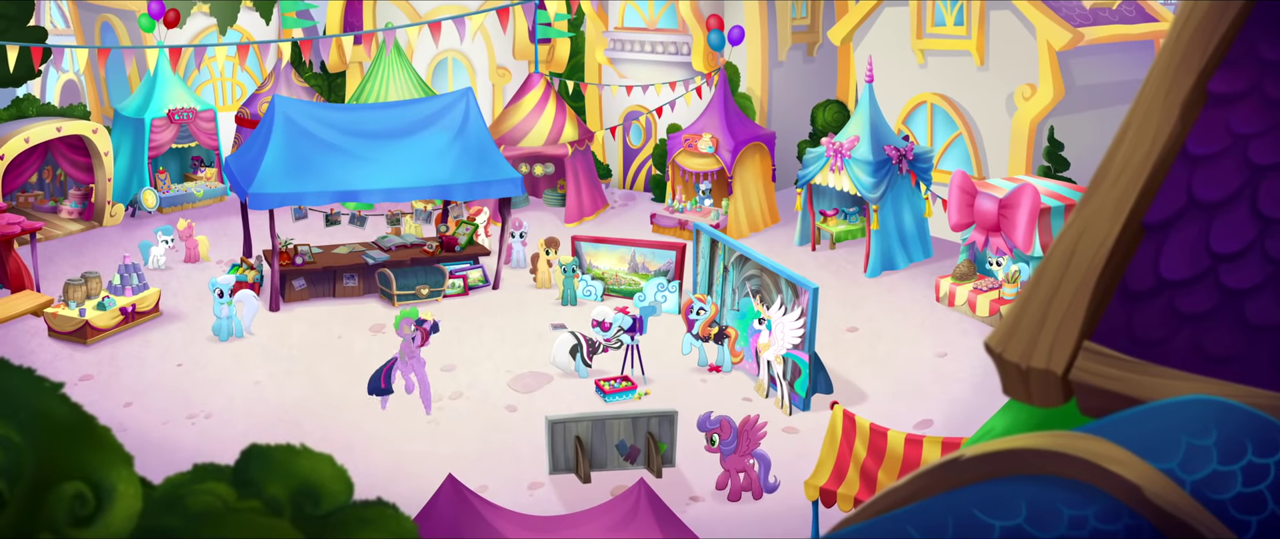
Ponyville’s beloved Leaf Run, a centuries-old tradition marking the transition from summer to autumn, has become a flashpoint for economic and cultural conflict after the city council approved a new ticketing system for the event. The decision, announced last week, requires all participants to purchase a $5 admission fee to join the race, a move critics argue will price out long-time residents and small businesses reliant on the festival’s foot traffic.
The Leaf Run, which draws thousands of ponies from across Equestria, has historically been a free community event. Organized by the Ponyville Community Council, it features a 2-mile race through the town’s scenic leaf-lined paths, food vendors, and a grand prize for the fastest finisher. This year, however, the council cited “fiscal responsibility” and “infrastructure strain” as reasons for the change.
“This isn’t just about money,” said Mayor Pippin Pines in a press statement. “Our town is growing, and we need to ensure the Leaf Run can sustain itself. Without a revenue stream, we’ll lose the ability to maintain the course, fund safety measures, and keep the event vibrant.”
But for many locals, the move feels like an attack on tradition. “The Leaf Run is what brought us together,” said Dusty Verdict, a 42-year-old pony who has participated every year since she was a filly. “Now it’s a pay-to-play game? I’ve seen my neighbors lose their spots to tourists who can afford the ticket. This isn’t fair.”
The ticketing policy has already sparked protests. On Thursday, a group of residents gathered outside the Ponyville Town Hall, holding signs that read “Free the Leaves” and “No Cash, No Race.” The demonstration, organized by the Ponyville Small Business Alliance, drew hundreds of supporters, including several local merchants who fear the fee will divert customers from their stalls.
“This is a slap in the face to the community,” said Rarity Bloom, owner of the boutique stall “Rarity’s Threads.” “We’ve been part of this event for years, and now we’re being charged to participate? It’s a bad precedent.”
The economic impact of the change is already visible. A recent survey by the Ponyville Property Pros firm found that 63% of small business owners in the area expect a decline in revenue during the festival, citing reduced foot traffic and higher costs for vendors. Meanwhile, the Hearthstone Smithy, a local blacksmith and event sponsor, announced it would no longer participate in the race, citing “unacceptable financial barriers.”
The decision has also drawn criticism from tourism experts. “Ticketing a cultural event like the Leaf Run risks alienating its core audience,” said Skyline Sprocket, an economics professor at the Canterlot University of Magical Studies. “If the goal is to attract tourists, then the policy makes sense. But if the intention is to preserve community spirit, it’s a losing strategy.”
However, the council maintains that the fee is a necessary step to ensure the event’s long-term viability. “We’re not just charging for the race—we’re investing in the future of Ponyville,” said Zephyr Windbreaker, a council member and former Leaf Run champion. “This money will go toward improving the course, hiring more marshals, and even expanding the festival to include educational workshops on environmental conservation.”
The controversy has also raised questions about the broader implications for Ponyville’s economy. With the town’s population growing rapidly due to its proximity to the Crystal Empire’s trade routes, some argue the ticketing policy reflects a shift toward prioritizing commercial interests over community values. “Ponyville has always been about collaboration,” said Copper Gauge, the economics correspondent. “But now, it feels like the town is choosing sides—between its residents and its visitors.”
The situation is further complicated by the fact that the Leaf Run has become a major tourist attraction, drawing visitors from as far as Yakyakistan and the Dragon Lands. Some business owners support the fee, arguing it will fund improvements that benefit everyone. “If the race gets better, more ponies will come,” said Breezy Breeze, owner of the Ponyville Café. “I’m not against the fee, but I hope it leads to real upgrades, not just a cash grab.”
The council has not yet announced when the ticketing policy will take effect, but the controversy shows no signs of cooling. As the Leaf Run approaches, the question remains: will the town’s decision to monetize its most cherished tradition unite its citizens—or divide them?
For now, the race is on, and the stakes have never been higher. Whether the Leaf Run will remain a symbol of unity or become a battleground for economic priorities will depend on how Ponyville chooses to navigate this new chapter in its history.
The council’s decision has also sparked a heated debate among Ponyville’s youth, with some students and young entrepreneurs questioning whether the event’s commercialization will dilute its cultural significance. “The Leaf Run used to be about fun and community,” said Sunny Pippin, a 17-year-old student at Ponyville High. “Now it feels like just another thing you have to pay to do. I don’t think it’s fair for kids like me to lose access to something we’ve always loved.” Sunny’s concerns echo those of many younger residents, who fear the ticketing policy will create a divide between generations and erode the event’s grassroots appeal.
Meanwhile, the tourism sector remains split. While some business owners, like the Hearthstone Smithy, have expressed reluctance to support the fee, others see it as an opportunity to attract higher-spending visitors. “If we’re charging for entry, we should also be charging for quality,” said Tangerine Bloom, owner of the Ponyville Tourist Information Center. “This could be a chance to upgrade the experience—better safety, better amenities, even some interactive exhibits. I’m not against the fee, but I want to make sure it’s used to improve the event, not just line pockets.” Tangerine’s perspective highlights a growing tension between the council’s fiscal priorities and the expectations of the community it serves.
The controversy has also drawn attention from local politicians, including Mayor Pippin Pines, who has faced increasing pressure to address the backlash. In a recent town hall meeting, Pippin attempted to reassure residents that the fee was a temporary measure and that the council would revisit the policy in two years. “We’re not trying to turn the Leaf Run into a profit-driven spectacle,” Pippin said. “This is about sustainability. If we don’t fund the event properly, it’ll lose its luster, and eventually, it might not happen at all.” However, critics argue that the council’s timeline for reevaluation is too vague and that the lack of transparency around the fee’s allocation has only fueled distrust.
Another layer of complexity has emerged with the involvement of the Ponyville Property Pros, a local real estate firm that has been tracking the event’s economic impact. According to their latest report, the fee could have a ripple effect on the town’s housing market, as some residents worry about being priced out of their own neighborhoods. “The Leaf Run is more than just a race—it’s a cultural anchor for Ponyville,” said Penny Ledger, a real estate analyst with the firm. “If the event becomes inaccessible to long-time residents, it could signal a shift in the town’s priorities, and that could affect everything from property values to community cohesion.”
The situation has also raised questions about the broader implications for Equestria’s festivals and traditions. With many towns across the country facing similar economic pressures, the Leaf Run’s ticketing policy could set a precedent for how local events balance tradition with modern fiscal demands. “This isn’t just about Ponyville,” said Skyline Sprocket, the economics professor. “If other towns follow suit, we could see a trend where community events become exclusive to wealthier participants, which risks alienating the very people who make these events meaningful.”
As the Leaf Run approaches, the council faces a critical juncture. The upcoming race will be the first test of the new policy, and the response could determine whether the event survives as a unifying tradition or transforms into a commercialized spectacle. For now, the town remains divided, with residents, business owners, and officials locked in a debate over what it means to preserve the spirit of the Leaf Run in an evolving economy.
The final outcome will depend on whether the council can find a way to balance fiscal responsibility with community values—or if the ticketing policy will ultimately fracture the very bonds the event was meant to celebrate. As the leaves begin to fall and the race approaches, Ponyville’s residents are left wondering: is this the end of an era, or the beginning of a new chapter? The answer, like the race itself, will be determined by the choices made in the coming days.