Cloudsdale’s skies buzzed with controversy after veteran speedster Rainbow Dash publicly lambasted the performance of the city’s junior aerial squad during a high-profile training session. The incident, captured by multiple aerial drones and live-streamed across the region, has ignited a firestorm of debate over coaching methods, youth sports culture, and the ethical boundaries of public criticism.
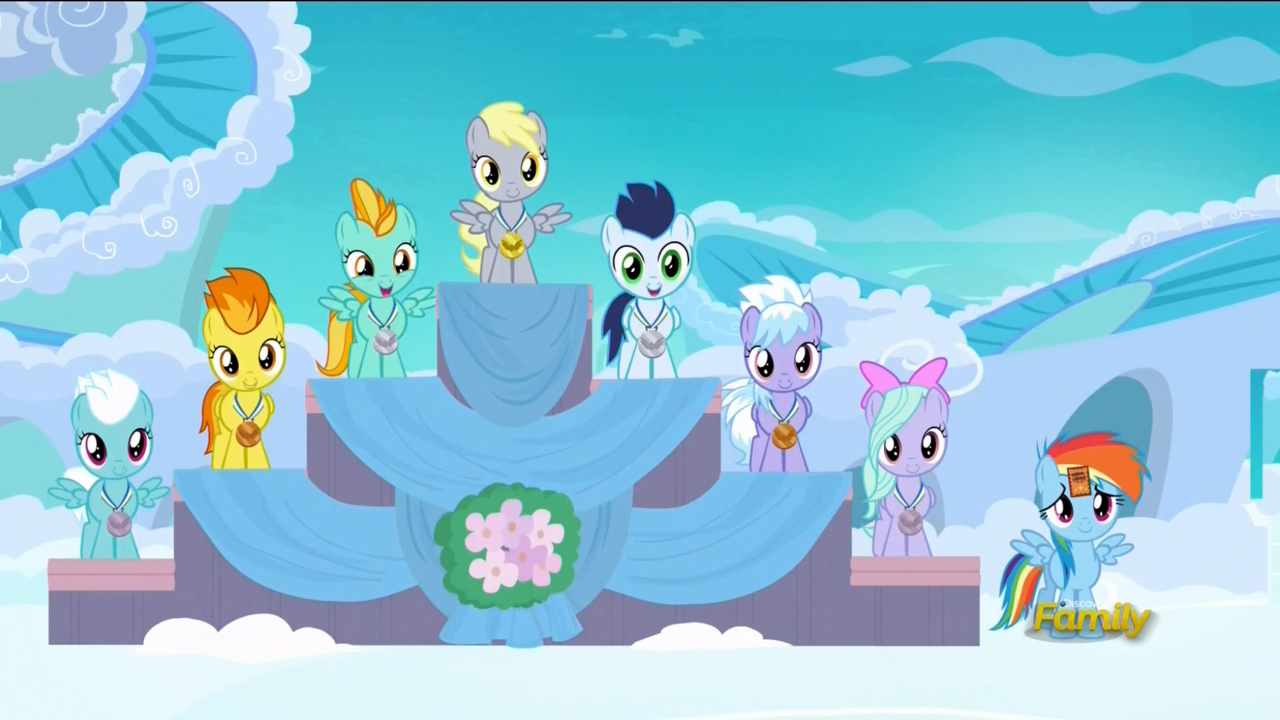
The fallout began during a guest-coaching session at the Cloudsdale Aerodrome, where Dash, a retired champion and former Celestia Cup contender, was invited to mentor the city’s under-12 aerial team. Known for her fiery personality and unflinching standards, Dash quickly grew frustrated with the squad’s lack of coordination and discipline. By the third drill, she had enough.
“Kids, you’re not even trying!” Dash barked, her rainbow mane flaring as she zoomed overhead. “If you’re going to be a part of this team, you have to earn your spot. Not just show up and hope for the best.”
The remark drew immediate gasps from the crowd of spectators, including parents, coaches, and local officials. Dash’s critique was not limited to the drills. Later, during a press conference at the Aerodrome, she expanded on her frustrations, accusing the team’s leadership of prioritizing “polish over progress.”
“Some of these ponies can’t even maintain a consistent flight path without crashing into each other,” she said, her tone sharp. “And the coaches? They’re too afraid to call them out. That’s why they’re failing.”
Her comments were met with mixed reactions. While some parents praised her candor, others accused her of overstepping. “Rainbow Dash is a legend, but this isn’t her team,” said Puff Bell, a Cloudsdale resident and parent of two junior squad members. “She’s a role model, not a dictator. If she wants to coach, she should do it on her own terms, not mine.”
The junior team’s head coach, Storm Bolt, attempted to temper the fallout. “Rainbow Dash’s feedback is valuable, but it’s important to remember she’s not part of our daily coaching structure,” Bolt said in a statement. “We’re working with the team to improve, and we’ll address her concerns directly.”
But the controversy shows no signs of fading. Critics argue that Dash’s public critique reflects a broader issue in youth sports: the pressure to balance mentorship with respect for young athletes’ autonomy. “When a figure like Rainbow Dash criticizes a team, it’s not just about the players—it’s about the culture,” said Ember Scale, a sports ethics analyst at the Canterlot Institute. “We need to ask: Are we preparing these ponies for competition, or are we setting them up for burnout?”
The incident also raised questions about the role of public figures in youth sports. Dash, who has long been a symbol of excellence in aerial racing, is no stranger to scrutiny. Her past critiques of rival teams and coaching staff have often been seen as harsh, but they’ve also earned her respect for her unapologetic approach.
“This isn’t the first time she’s pushed boundaries,” said Spike, a former Canterlot Council member and sports commentator. “But this is different. She’s not just criticizing a team—she’s criticizing the system. And that’s a dangerous line to cross.”
The debate has spilled into social media, where hashtags like #RespectThePlayers and #DashIsRight trend alongside calls for an investigation into the team’s management. Meanwhile, the junior squad’s social media accounts have seen a surge in messages from fans, some urging them to “prove themselves,” while others warn against “burning bridges” with a legend.
For now, the team remains on hiatus as officials weigh their response. But one thing is clear: Rainbow Dash’s words have already changed the conversation. Whether that conversation leads to reform or further conflict remains to be seen.
---
QUOTES
- “Rainbow Dash is a legend, but this isn’t her team. She’s a role model, not a dictator.” – Puff Bell, Cloudsdale resident and parent
- “When a figure like Rainbow Dash criticizes a team, it’s not just about the players—it’s about the culture.” – Ember Scale, sports ethics analyst at the Canterlot Institute
---
NEXT STEPS
The Cloudsdale Aerodrome has announced an internal review of its coaching protocols, with a focus on how guest mentors are integrated into team dynamics. Meanwhile, Rainbow Dash’s team of former champions has hinted at launching a new youth academy, citing the incident as a catalyst for reform. Whether this marks the beginning of a new era in Equestrian sports—or another chapter in the ongoing clash between tradition and innovation—remains uncertain.
The Cloudsdale Aerodrome’s internal review has already sparked a flurry of activity among local sports officials. On Monday, the facility’s director, Dazzle Sprocket, confirmed that a task force will be formed to reassess the integration of guest mentors into team protocols. “We’re not here to censor Rainbow Dash’s feedback,” Sprocket said in a press statement, “but we need to ensure that all coaching interactions are structured to protect the players’ well-being and development.” The task force, which includes representatives from the Canterlot Council’s youth sports division, will reportedly hold public hearings to gather input from parents, coaches, and athletes. However, critics argue that the process may be too slow to address the immediate concerns raised by Dash’s public critique. “If they’re going to restructure, they need to do it now,” said Ember Scale, the sports ethics analyst. “Waiting months to fix a broken system won’t help the kids.”
Meanwhile, Rainbow Dash’s own team of former champions, the Stormbreaker Academy, has hinted at launching a new youth training program in response to the controversy. A spokesperson for the academy, Sparkle Mire, confirmed that the group is in early discussions with local sports organizations about establishing a mentorship initiative for young aerial athletes. “Rainbow Dash’s approach isn’t just about winning—it’s about preparing ponies for the long haul,” Mire said. “If we can create a system that balances high standards with emotional support, we might finally break the cycle of burnout and mediocrity in youth sports.” The academy’s proposal has drawn mixed reactions. Some parents welcome the idea of a structured mentorship program, while others worry it could lead to another layer of pressure on young athletes. “We’re not just training kids to be champions,” said Puff Bell, the Cloudsdale resident and parent. “We’re training them to be ponies. Not just athletes.”
The incident has also reignited debates about the role of public figures in youth sports. While Dash’s candor has long been a hallmark of her career, her public critique of the junior team has raised questions about the boundaries of mentorship. “There’s a fine line between accountability and intimidation,” said Spike, the former Canterlot Council member. “Dash is a legend, but she’s not infallible. Her actions set a precedent for how other mentors might handle similar situations.” Some experts argue that the incident highlights a broader cultural issue in Equestria’s sports scene: the pressure to produce results at any cost. “When we glorify winners over losers, we risk alienating the very ponies we’re trying to develop,” said Rarity, a sports psychologist at the Canterlot Institute. “This isn’t just about one team—it’s about how we define success in youth athletics.”
For the junior squad itself, the fallout has been both a wake-up call and a source of tension. Many of the team’s members have been vocal about their frustrations, with some claiming they felt personally targeted by Dash’s remarks. “She called us out for not trying,” said one unnamed player, speaking to a local reporter. “But we were trying. We just weren’t good enough.” Others, however, see Dash’s criticism as a necessary challenge. “If she’s willing to call us out, then maybe we can learn from it,” said another player. “But I don’t know if the coaches are ready to handle that kind of honesty.”
The situation has also spilled into the broader Equestrian sports community, with leagues and federations weighing in on the incident. The Cloudsdale Aerodrome’s governing body, the Aerodrome Sports League, has issued a statement urging all teams to “prioritize player development over performance metrics.” However, the league’s president, Glimmer Tilt, admitted that implementing such a policy would be a significant cultural shift. “We’ve built our system around competition, not coaching,” Tilt said. “Changing that won’t be easy, but it might be necessary.”
As the debate continues, one thing remains clear: Rainbow Dash’s words have already changed the conversation. Whether this marks the beginning of a new era in Equestrian sports—or another chapter in the ongoing clash between tradition and innovation—remains uncertain. For now, the Cloudsdale Aerodrome’s junior team remains on hiatus, and the public is left to wonder: Will this incident lead to real reform, or will it fade into another footnote in the history of Equestrian sports? The answer, like the weather in Cloudsdale, remains unpredictable.