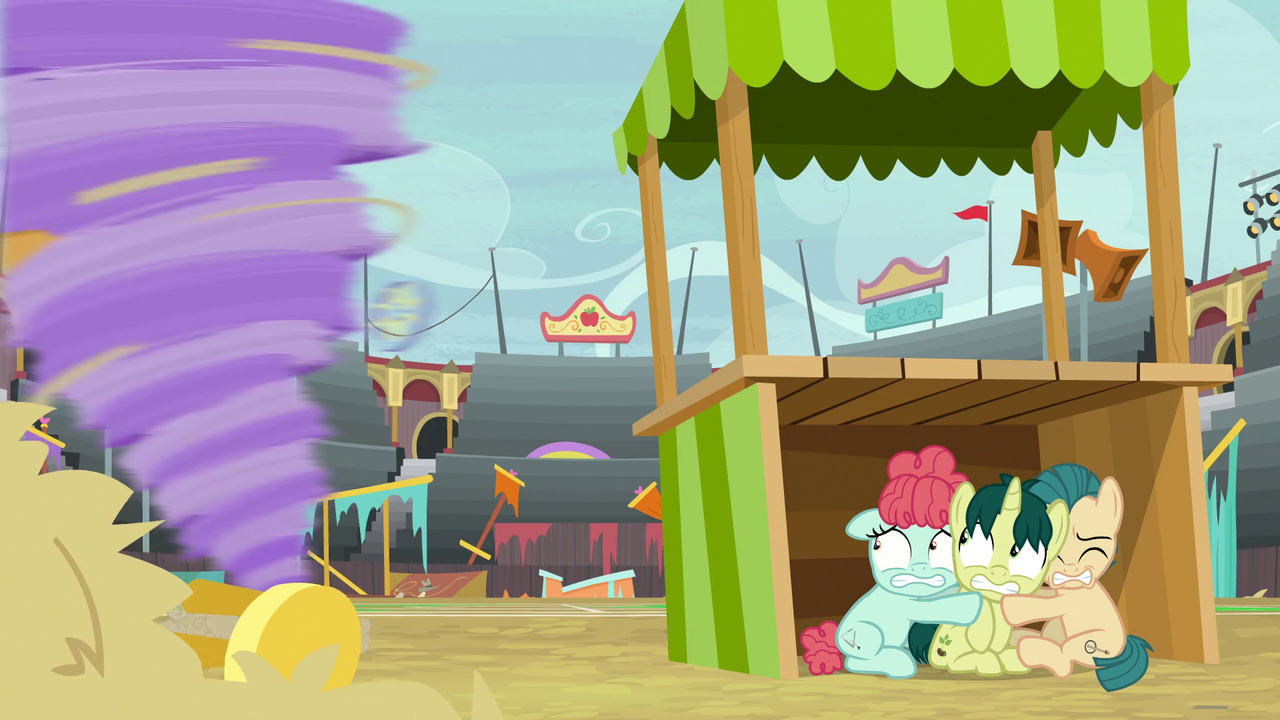
APPLELOOSA — The much-anticipated Pineapple Park playground, once a beacon of hope for Appleloosa’s struggling neighborhood, now stands at a crossroads. New revelations about the site’s environmental history have ignited fresh controversy, casting shadows over the $15,000 bit donation from retired miner Iron Hoof. As OnlyMareNews previously reported, the project aimed to transform a neglected lot into a vibrant community space, but recent findings from the Department of Environmental Regulation have raised critical questions about the land’s safety.
The site, adjacent to a former mining waste pit, was found to contain elevated levels of toxic heavy metals, including cadmium and arsenic. While the contamination levels are not immediately hazardous, regulators warn that prolonged exposure could pose risks to children, who are the playground’s intended beneficiaries. “This isn’t just about soil quality—it’s about protecting the health of the next generation,” said Ember Tangle, a local environmental activist and former city council candidate. “If we’re building a playground, we can’t ignore the science.”
The discovery has reignited tensions in a community already divided over the project’s scope. Penny Ledger, the community organizer who previously criticized the initiative as a “symbolic gesture,” called the findings “a wake-up call.” “This isn’t just about a playground—it’s about accountability. The city has a responsibility to ensure the land is safe before we let kids run around on it,” Ledger said, her tone sharp.
Mayor Clover Stem’s office confirmed that the city is reviewing the findings but emphasized that the project remains on track. “We’re working closely with environmental experts to mitigate risks,” Stem said in a statement. “The health and safety of residents are our top priority. We’re also exploring ways to fund additional soil remediation efforts.” However, city officials declined to specify how the $15,000 bit donation would be allocated, leaving residents skeptical.
A Tangled Web of Ownership and Risk
Compounding the crisis is the unresolved issue of land ownership. The proposed site is still under dispute with a private developer, Apple Orchard Holdings, which has not yet agreed to transfer control to the city. A city spokesperson confirmed that negotiations are ongoing, but no timeline has been set. “The developer has been cooperative, but we’re waiting for final approval from their board,” said Mayor Stem’s deputy, Sable Nightshade.
The delay has frustrated activists like Ember Tangle, who argue that the lack of transparency undermines the project’s legitimacy. “We’re not asking for a handout—we’re asking for a responsible approach,” Tangle said. “If the city can’t secure the land, how can they guarantee the playground will ever be built?”
Meanwhile, the Department of Environmental Regulation has proposed a phased remediation plan, which would require significant additional funding. “The initial donation covers the playground’s construction, but not the cleanup,” said Dr. Micaela Sparkle, a spokesperson for the agency. “We’re urging the city to allocate at least 5,000 bits toward soil decontamination before breaking ground.”
A New Front in the Fight for Appleloosa
The controversy has also drawn attention from regional environmental groups. The Everfree Environmental Coalition, which has long advocated for stricter mining regulations, has pledged to monitor the project’s progress. “This is a test case for how communities handle industrial legacies,” said coalition representative Spike Trottingham. “If Appleloosa can’t secure a safe space for its kids, what does that say about the state of our environment?”
For residents like young Mallow Dusk, a 10-year-old who has lived in Appleloosa her entire life, the stakes are personal. “I’ve always wanted to play outside, but now I’m scared,” she said, her voice trembling. “I don’t want to get sick because of what my grandparents did.”
The emotional toll has not gone unnoticed. Local therapist Luna Bloom, who specializes in trauma and community resilience, noted the psychological impact of the crisis. “This isn’t just about toxins—it’s about trust. When a community feels like its history is poisoning its future, it creates a deep sense of helplessness,” Bloom said. “We need to address both the soil and the scars it leaves behind.”
The Road Ahead
As the debate intensifies, the fate of Pineapple Park remains uncertain. While Iron Hoof’s donation has sparked hope, the new challenges underscore the complexity of revitalizing a neighborhood scarred by decades of neglect. “I never wanted this to be about politics or contamination,” Hoof said in a recent interview. “I just wanted to give kids a place to play. If that means fighting for clean soil, then so be it.”
With the city’s budget under strain and the developer’s stance unclear, the project’s future hinges on a delicate balance of compromise and conviction. For Appleloosa, the battle over Pineapple Park is no longer just about a playground—it’s a reckoning with the past and a gamble for the future.
---
RELATED STORIES:
- Crystal Empire Border Wards Trigger Traveler Detentions
- Manehattan Hospital Trials Groundbreaking Bone-Healing Spell
- Whistleblower Exposes Corruption in Cloudsdale Weather Contract Bidding