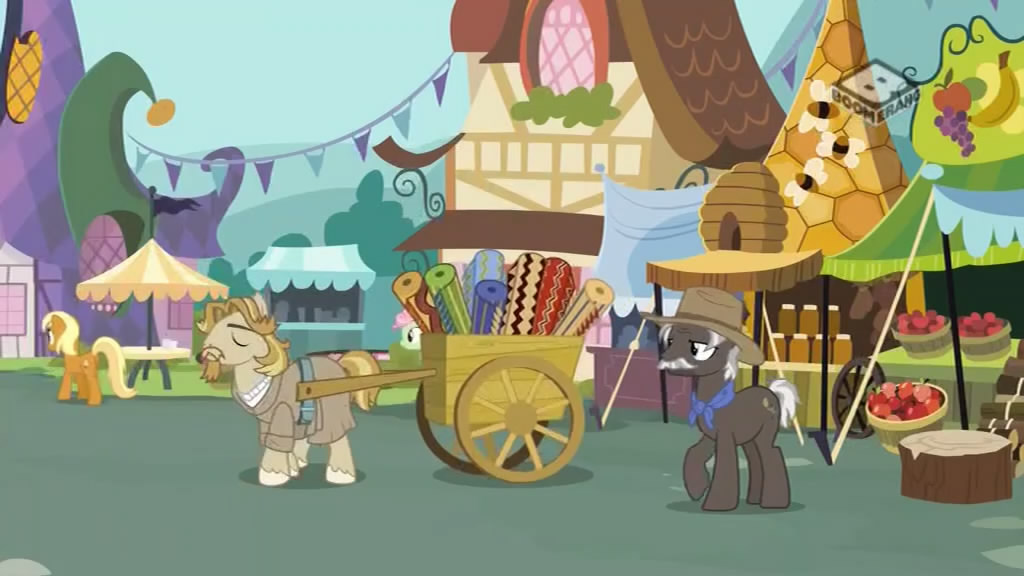
Ponyville’s famed farmers market, a cornerstone of local commerce for decades, is facing a reckoning. Vendors say escalating stall fees are pushing small-scale growers to abandon the market, threatening its role as a vital economic artery. With the cost of securing a stall now exceeding 300 bits per week, many farmers and artisans claim they can no longer afford the fees, forcing them to pivot to online sales or alternative venues.
The market, once a bustling hub where stall owners traded fresh produce, handmade crafts, and rare herbs, has become a flashpoint for controversy. “We’re being priced out of our own community,” said Daisy Stem, a third-generation apple farmer and long-time market vendor. “The fees have doubled in two years, and the organizers won’t budge. It’s not sustainable.” Stem’s stall, which once sold crisp, sun-ripened apples to hundreds of customers, now operates part-time, with most of her business shifting to a subscription-based delivery service.
The market’s management, led by the nonprofit Ponyville Harvest Collective, defended the fee hikes as necessary to cover rising operational costs. “We’ve invested in new infrastructure to improve the vendor experience,” said Clover Bloom, the collective’s director. “Expanded shade canopies, better waste management, and upgraded payment systems all require funding. These fees ensure the market remains a thriving space for everyone.” Bloom acknowledged the financial strain on small vendors but emphasized that the collective’s budget is constrained by limited grant funding and inflation-driven supply costs.
The debate has sparked wider concerns about the market’s future. Critics argue that the fee structure disproportionately impacts independent growers, who lack the capital to absorb such costs. “This isn’t just about money—it’s about who controls the local food system,” said Spike Ironhoof, a local economic analyst and former market vendor. “When the gatekeepers charge exorbitant fees, they’re effectively shutting out the very people who sustain the market’s reputation.” Ironhoof pointed to data showing a 40% decline in small-scale vendors since 2022, with many relocating to nearby towns like Appleloosa or even starting pop-up markets in Canterlot.
The impact is felt across the local economy. Vendors like Tilly Fern, a herbalist who once sold rare tonics at the market, now operate out of a rented storefront in Ponyville’s west district. “The market used to be a place where my customers could find everything they needed,” Fern said. “Now, they’re scattered across multiple locations, and I’m spending more time managing logistics than actually selling.” Fern’s business, which once thrived on the market’s foot traffic, has seen a 25% drop in sales since the fees spiked.
The crisis has also raised questions about the market’s long-term viability. With fewer vendors, the market’s appeal to visitors has waned, leading to a 15% decline in attendance over the past year, according to a recent survey by the Ponyville Tourism Board. “We’re losing not just vendors, but the community that makes this market special,” said Mayor Silver Hoof, who has called for a temporary fee freeze to assess the impact. “This isn’t just an economic issue—it’s a cultural one. If we don’t act, we risk losing a piece of Ponyville’s identity.”
Some vendors are pushing for alternative solutions. A coalition of small-scale growers, including the lavender farmer Mallow Dusk and the baker Puff Scone, has proposed a tiered fee system that would cap costs for those with limited income. “We’re not asking for charity—we’re asking for a fairer model,” said Dusk. “If the market wants to stay relevant, it needs to adapt to the realities of today’s economy.”
The collective has yet to respond to these proposals, but the pressure is mounting. With the upcoming Ponyville Harvest Festival just weeks away, the market’s organizers face a critical decision: either renegotiate the fee structure or risk further alienating the very community that sustains them. For now, the stalls remain filled, but the cracks in the system are widening.
As vendors prepare for the festival, the question lingers: Can the market evolve without losing its soul, or will the rising costs of doing business in Ponyville drive its most loyal supporters away forever? The answer could shape the future of local commerce in ways that extend far beyond the market’s borders.