The parasprite-fueled wildfire near Appleloosa has surged beyond the initial woodland perimeter, now threatening key infrastructure including a major pony highway and a hydroelectric dam. As OnlyMareNews previously reported, the invasive insects’ ability to amplify flames has turned the blaze into a self-sustaining inferno, but new developments suggest the crisis is far from contained.
Authorities confirmed yesterday that the fire has reached the outskirts of Appleloosa’s eastern industrial zone, where a critical pony highway intersects with the region’s primary power grid. Emergency crews are scrambling to divert traffic and reinforce firebreaks, but the parasprites’ erratic behavior has complicated efforts. “The insects are now clustering around the power lines, creating hotspots that flare up unpredictably,” said Thistle Ironspur, a senior fire engineer with the Appleloosa Emergency Management Division. “It’s like they’re herding the flames toward the dam.”
The dam, which supplies water to over 100,000 ponies in the region, is now a focal point of concern. While the structure remains intact, officials warn that a catastrophic collapse could trigger a floodwave devastating downstream communities. “This isn’t just about saving farmland anymore,” said Penny Ledger, Appleloosa’s mayor, in a statement. “We’re talking about a regional disaster if the dam fails. We need immediate, coordinated action.”
The situation has prompted a rare call for international collaboration. The Equestrian Environmental Protection Agency (EEPA) announced today that it has issued a global alert to magical ecologists, urging neighboring regions to share data on parasprite behavior. “These creatures are rewriting the rules of fire, and we’re still in the dark about how to stop them,” said Dr. Ember Virel, a leading magical ecologist at the Canterlot Institute of Applied Arcane Sciences. “We need to treat this as a planetary crisis, not just a local one.”
Virel’s comments come after a breakthrough in parasprite research revealed a chilling truth: the insects may be accelerating climate change itself. A study published by the Appleloosa Research Institute this week found that parasprites emit a compound known as luminex-3, which not only lowers ignition points but also traps heat in the atmosphere. “Every fire we’ve seen is a tiny greenhouse effect,” said Virel. “These creatures are acting as both fuel and catalyst. If we don’t stop them, we’re looking at a feedback loop that could make Equestria’s climate uninhabitable.”
The revelation has reignited debates about the ethical implications of eradication. While some officials still push for mass culling, environmentalists warn that such measures could destabilize the region’s magical ecosystem. “We’re talking about a species that’s now integral to the environment,” said Rarity Thistle, a local activist who previously opposed eradication efforts. “If we kill them, we don’t know what we’ll destroy in return. This isn’t just about fire—it’s about the balance of magic itself.”
The EEPA has responded by proposing a controversial new initiative: a controlled population cull under strict scientific oversight. The plan, which has faced fierce opposition from environmental groups, would involve deploying specialized earth ponies to target parasprite colonies while minimizing ecological disruption. “We’re not talking about extermination,” said EEPA director Sable Nightshade, who previously warned about the parasprites’ dangers. “We’re talking about containment. If we don’t act, the consequences will be far worse.”
Meanwhile, the fire’s human toll continues to mount. Over 300 ponies have been evacuated from nearby towns, including the farming community of Windfall Margin, where several homes were destroyed. “We lost everything—our barns, our tools, our hope,” said Copper Gauge, a Windfall resident who narrowly escaped with her family. “These insects don’t just burn fields. They burn futures.”
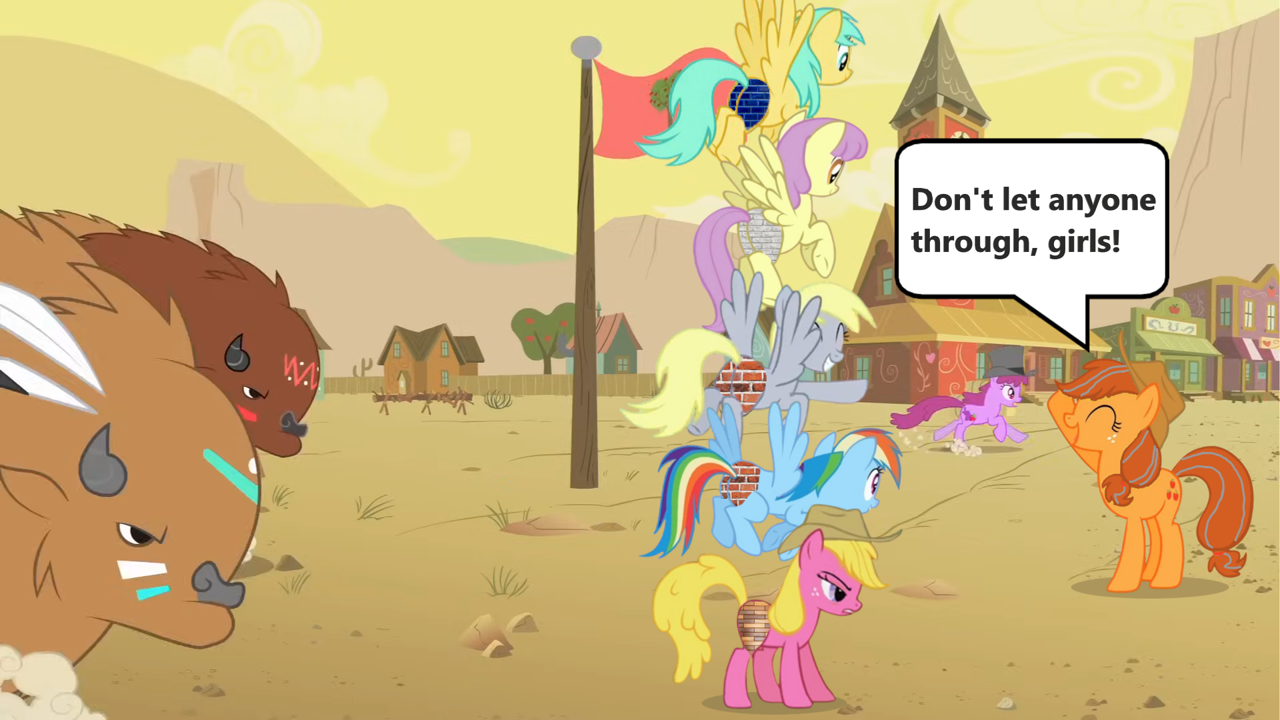
The crisis has also exposed vulnerabilities in Equestria’s emergency response systems. While the Appleloosa Fire Department has mobilized earth ponies and pegasi to combat the blaze, critics argue that the lack of standardized magical protocols has hampered coordination. “We’re using patchwork solutions,” said Thistle Ironspur. “Different regions have different approaches, and that’s creating gaps in our defense. We need a unified strategy, or we’ll never win this.”
As the fire rages on, the question remains: can Equestria contain a crisis that has already rewritten the laws of nature? With new research pointing to parasprites as both a threat and an unintended consequence of climate change, the path forward is uncertain. For now, the only certainty is that the flames—and the insects feeding them—show no sign of slowing.
---
Quotes
- “We’re not talking about extermination. We’re talking about containment.” – Sable Nightshade, EEPA director
- “These insects don’t just burn fields. They burn futures.” – Copper Gauge, Windfall resident
Tags: wildfire, parasprites, environmental crisis, magical ecology, Appleloosa, Equestria