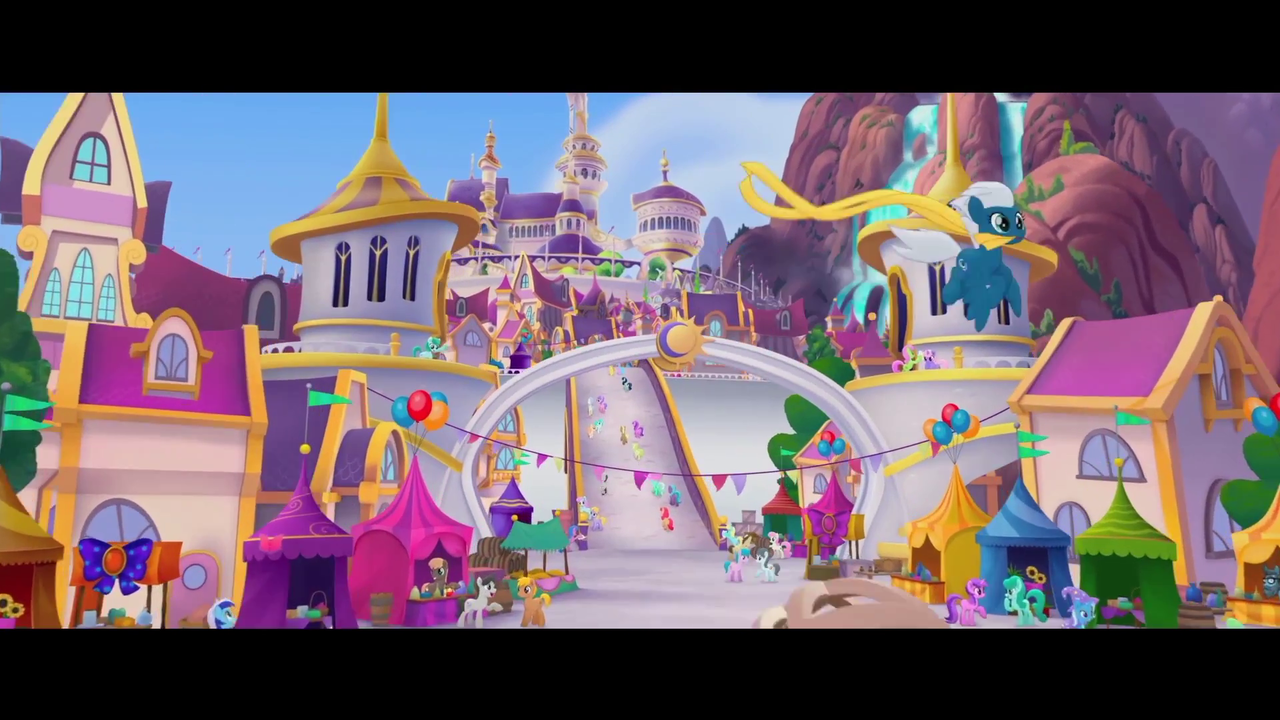
The Crystal Empire’s once-thriving shipping industry is facing a crisis as young ponies increasingly abandon dock work for better-paying opportunities in urban centers and tech sectors. With over 30% of shipping berths in the region sitting idle, industry leaders warn that the exodus of younger workers could destabilize Equestria’s critical supply chains.
The decline is stark: In the past two years, the number of young ponies (aged 15–25) applying for dock positions has dropped by nearly 40%, according to the Crystal Empire Maritime Authority. Meanwhile, demand for skilled labor in Canterlot’s tech hubs and Manehattan’s service sectors has surged, luring graduates away from traditional blue-collar careers.
“Dock work is no longer seen as a path to stability,” said Iron Claws, a 28-year-old dock supervisor at the Sapphire Port in the Crystal Empire. “Young ponies are choosing to invest in education, not just training. They want to be engineers, designers, or even influencers—anything but manual labor.”
The shift has hit the region’s economy hard. The Crystal Empire’s ports handle over 60% of Equestria’s intercontinental cargo, yet reports from the Empire’s Trade Council indicate that shipping delays have increased by 18% since 2023. Small businesses reliant on timely deliveries—like the artisanal gemstone exporters in Sapphira’s Reach—have seen profits plummet.
Sable Nightshade, a 22-year-old former dockhand from the coastal town of Marigold Bay, echoed the trend. “I used to work 12-hour shifts, but the pay was barely enough to cover my rent in the Crystal Empire. When I heard about a tech apprenticeship in Canterlot, I jumped at it.” Nightshade now works as a software developer, earning nearly double the minimum wage. “It’s not about money—it’s about respect. Dock work feels like a dead-end.”
Industry leaders are scrambling to adapt. The Crystal Empire’s Maritime Authority has launched a recruitment campaign offering signing bonuses and housing subsidies, but results remain mixed. “We’re fighting an uphill battle,” said Gale Report, a senior policy analyst at the Empire’s Economic Development Board. “The problem isn’t just wages—it’s perception. Young ponies are being taught that manual labor is undervalued, when in reality, it’s the backbone of our economy.”
The situation has also sparked tensions between rural and urban areas. While cities like Canterlot and Manehattan boast booming tech sectors, rural regions like the Crystal Empire’s coastal towns are struggling to retain workers. “We’re losing our workforce to places that promise glamour and growth,” said Penny Ledger, a local mayor in Marigold Bay. “But what happens when the docks close? Who will keep our economy afloat?”
Some experts argue that automation could alleviate the labor shortage, but others warn of unintended consequences. Dusty Verdict, an economist at the Crystal Empire University, pointed out, “Automated cranes and transport bots are already replacing human labor in many ports. If we rely too heavily on technology, we risk creating a class of unskilled workers who can’t compete with machines.”
The government has also faced criticism for its response. While the Royal Treasury recently allocated 500,000 bits to modernize port infrastructure, critics argue the funds haven’t reached the workers. “We need more than just fancy equipment—we need policies that value human labor,” said Bramble Stitch, a labor rights advocate from the Crystal Empire’s Workers’ Union. “Otherwise, we’ll end up with a system where only the wealthy can afford to work, and the rest are left stranded.”
The crisis has also raised questions about the future of Equestria’s economic model. With young ponies increasingly drawn to service and tech sectors, traditional industries like shipping and mining are under pressure to reinvent themselves. “The challenge is to make these jobs appealing again,” said Sterling Hoof, a former shipping magnate turned economic advisor. “That means better wages, safer conditions, and opportunities for advancement—because if we don’t, we’ll lose the next generation of workers entirely.”
For now, the Crystal Empire’s docks remain eerily quiet, with only a handful of ponies willing to take on the grueling work. As the sun sets over the port, the hum of cranes is replaced by the distant buzz of Canterlot’s skyscrapers—symbols of a world that’s moving faster, leaving behind the foundations of Equestria’s industrial past.
The question now is: Will the Crystal Empire find a way to bridge the gap between tradition and progress—or will it watch its economic heart shrink, one empty berth at a time?