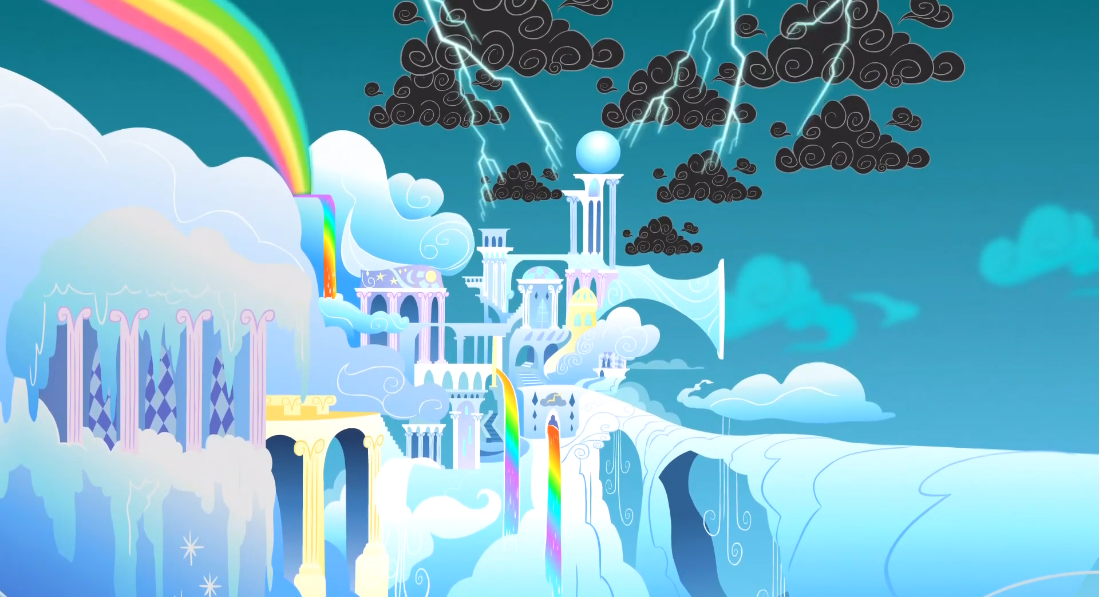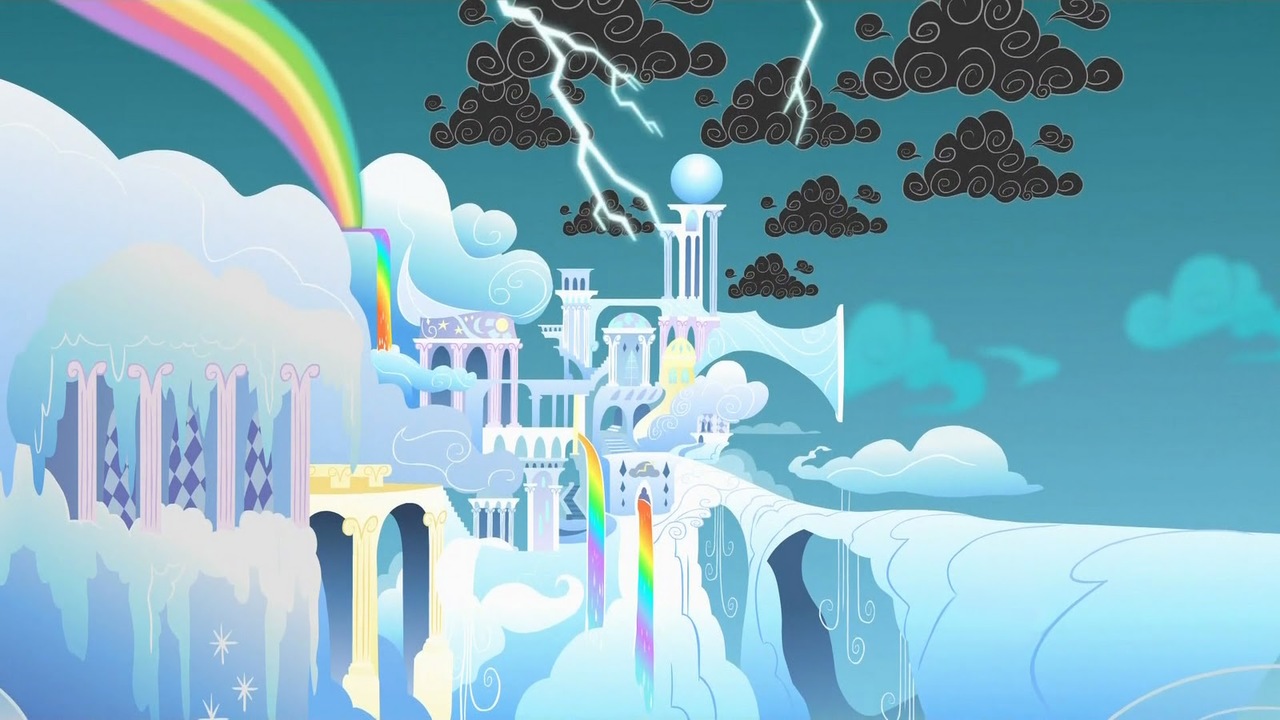
Cloudsdale’s iconic sky platforms, the backbone of its floating cityscape, are showing signs of severe wear, according to a newly released structural survey. The findings, compiled by the Cloudsdale Engineering Guild and shared with the Cloudsdale Chronicle, reveal that nearly 40% of the city’s pre-2000 platforms exhibit critical structural weaknesses, with some nearing collapse. The report has ignited alarm among residents, business owners, and city officials, who now face a daunting choice: prioritize costly repairs or risk a public safety catastrophe.
The survey, conducted over six weeks by a team of licensed enchantment engineers and structural analysts, focused on the 127 platforms constructed before the Great Sky Expansion of 2003. These platforms, which house everything from residential districts to commercial hubs, were originally designed for a lifespan of 150 years. However, the report’s lead author, Skyline Rupture, a seasoned structural mage with the Cloudsdale Engineering Guild, warns that decades of magical overuse and insufficient maintenance have accelerated their decay.
“Many of these platforms were built to support a lighter load—primarily residential and light commercial use,” Rupture explained in an interview. “But over the years, they’ve been repurposed for heavier industries, housing expansions, and even temporary event structures. The magic that once stabilized them is now strained beyond its capacity.”
The survey highlights several critical issues. Over 30% of the platforms show signs of enchantment fatigue, with their levitation cores emitting unstable energy readings. Another 15% have developed microfractures in their crystal lattices, risking sudden structural failures. In one particularly alarming case, the platform beneath the Skyview Plaza—a major commercial district—was found to have a 20% risk of partial collapse within the next five years.
“This isn’t just about aesthetics or inconvenience,” said Glimmer Vane, a city planner and former mayor of Cloudsdale. “If one of these platforms fails, the consequences could be catastrophic. We’re talking about thousands of ponies losing their homes, businesses, and possibly even lives.”
The report’s release has already triggered a political firestorm. Councilor Duskwing Tornado, a vocal advocate for infrastructure investment, called the findings “a wake-up call.” “We’ve been ignoring the needs of our oldest neighborhoods for too long,” she said. “This is a chance to address the crisis before it’s too late.” Conversely, Councilor Sparkle Bloom, who represents the commercial district of Skyfall, warned against panic. “We can’t afford to shut down entire sectors of the economy,” she argued. “We need a balanced approach—prioritizing the most at-risk platforms while avoiding a complete overhaul that could cost billions.”
The economic implications are staggering. The older platforms, which house over 12,000 residents and hundreds of businesses, are a cornerstone of Cloudsdale’s economy. However, the survey estimates that a full restoration of the affected platforms would require over 500 million bits, a sum that has sparked debate over funding priorities. Meanwhile, the city’s newer platforms—constructed with advanced stabilizing enchantments—remain in excellent condition, raising questions about the feasibility of retrofitting the older ones.
“Retrofitting these platforms is technically possible, but it’s a massive undertaking,” said Mavis Hollow, a magical engineering consultant. “We’d need to replace entire levitation cores, reinforce the crystal lattices, and recalibrate the enchantment matrices. It’s not just a matter of throwing money at the problem—it’s about reengineering decades-old infrastructure.”
Some residents are already feeling the strain. In the Skyfall district, where the survey found the highest concentration of deteriorating platforms, business owners report rising costs and declining foot traffic. “People are scared to invest in our area,” said Penny Ledger, a boutique owner. “Even if the platforms are safe today, the uncertainty is driving customers away. We’re not just talking about buildings—we’re talking about livelihoods.”
The city’s emergency management team has proposed a phased approach, prioritizing the most critical platforms for immediate repairs while seeking alternative solutions for others. However, critics argue that this approach is too slow. “We can’t wait years to fix this,” said Sable Nightshade, a resident of the Skyview Plaza. “If we don’t act now, we’re looking at a disaster that could have been prevented.”
As Cloudsdale’s leaders grapple with the report’s findings, one question looms over the city: How much can its infrastructure withstand before the sky falls? With the next council elections just months away, the debate over funding, priorities, and risk management is sure to intensify. For now, the city’s residents are left to wonder: Is it too late to save the sky?
---
[End of Article]