The Equestrian Central Bank’s fourth consecutive rate hike has sent shockwaves through the economy, with officials warning of a “necessary but painful” course correction to combat persistent inflation. The 0.75% increase, announced in a press conference at Canterlot University’s financial hub, has already triggered market volatility and raised alarms among small businesses and consumers.
The decision, framed by the bank’s governor, Sable Nightshade, as a “proactive measure to stabilize the currency,” comes amid mounting concerns over rising food and housing costs. Nightshade emphasized that the move aims to curb inflationary pressures that have persisted despite previous rate adjustments. “We are not here to punish businesses or consumers, but to ensure long-term stability,” she declared, flanked by senior economists in the ornate chamber of the central bank’s headquarters.
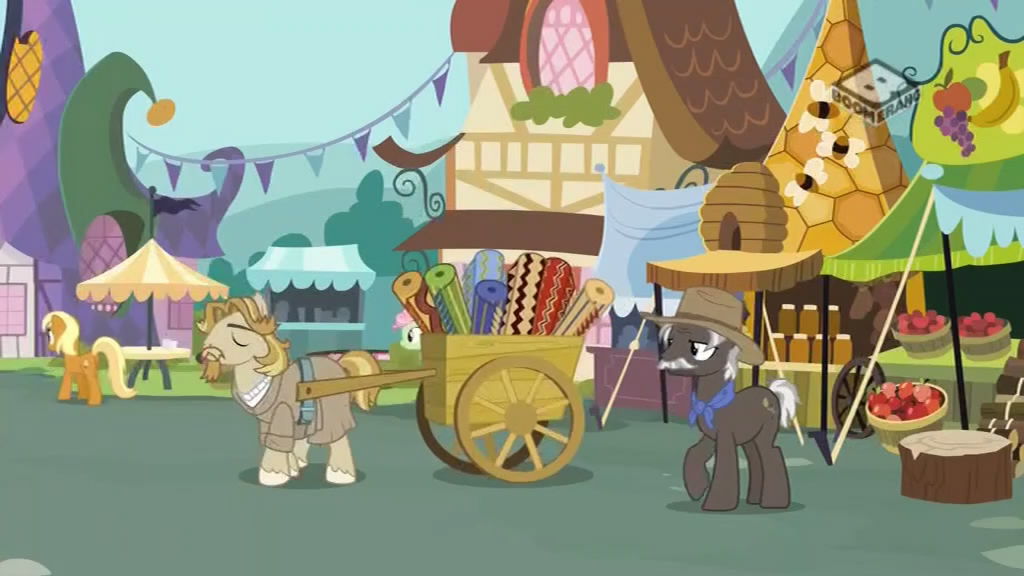
The immediate fallout is evident. Ponyville’s local market, a hub for small traders, has seen a sharp decline in foot traffic as customers bristle at higher loan rates and reduced purchasing power. Copper Gauge, a stallion running a modest feed store, described the situation as “a double whammy.” “Rising rates mean higher loan costs and tighter credit, which is a real problem for local businesses trying to stay afloat,” he said, his voice tinged with frustration. “We’re already struggling with supply chain issues, and now we’re being told to tighten our belts even more.”
The impact on consumers is equally stark. In Manehattan, where the cost of living has surged in recent years, families are rethinking major purchases. Penny Ledger, a pegasus working in the city’s shipping district, shared her concerns: “I’ve been saving for a new saddle for months, but now I can’t afford it. The bank says it’s for the greater good, but I’m just trying to make ends meet.” Her sentiment echoes across the region, where households are facing reduced disposable income and increased debt servicing costs.
Analysts warn that the rate hikes could exacerbate existing inequalities. “This policy disproportionately affects lower- and middle-income earners,” said Rarity Moondrop, an economist at Canterlot University. “While large corporations may absorb some of the costs through restructuring, everyday ponies are left holding the bag. The central bank needs to consider targeted relief measures to mitigate the human cost of these decisions.”
The financial markets have also reacted with volatility. Shares of small and mid-sized firms have dipped, while bonds have seen increased demand as investors seek safer assets. In the Crystal Empire, where the economy relies heavily on exports, traders are bracing for further disruptions. “The rate hikes will hurt our trade competitiveness,” said Twilight Sparkle, a regional economic advisor. “If we don’t act quickly to support local industries, we could see a slowdown in the region’s growth.”
Critics argue that the central bank’s approach is out of touch with the realities on the ground. “We’ve been told for months that inflation is under control, but the data tells a different story,” said Discord, a vocal critic of the bank’s policies. “Raising rates again without addressing the root causes—like supply chain bottlenecks and wage stagnation—only deepens the crisis. This isn’t just about monetary policy; it’s about the people who are being left behind.”
The bank’s stance remains firm. In a statement released hours after the announcement, the central bank reiterated its commitment to “price stability and long-term growth.” It also hinted at potential measures to support small businesses, including a temporary loan deferment program for struggling enterprises. However, skeptics remain unconvinced. “Words mean nothing if the actions don’t follow,” said Iron Press, a journalist covering economic policy. “The central bank needs to show it’s willing to adapt, not just repeat the same script.”
As the rate hike takes effect, the economic landscape of Equestria hangs in the balance. With inflationary pressures, consumer anxiety, and sector-specific challenges mounting, the question remains: will the central bank’s latest move stabilize the economy—or deepen the divide between those who benefit and those who bear the cost? The answer may not be clear for months, but one thing is certain: the stakes have never been higher.
---
Quote 1:
Sable Nightshade, Equestrian Central Bank Governor:
“Rising interest rates are a necessary tool to combat inflation and ensure the long-term stability of our currency. We are not here to punish businesses or consumers, but to ensure long-term stability.”
Quote 2:
Penny Ledger, Manehattan Shipping District Worker:
“I’ve been saving for a new saddle for months, but now I can’t afford it. The bank says it’s for the greater good, but I’m just trying to make ends meet.”
The ripple effects of the rate hike are already being felt in rural communities, where farmers and small-scale producers face mounting pressure. In the Crystal Empire, where agriculture is a cornerstone of the economy, the cost of capital has surged, forcing many to reconsider long-term investments. “We’ve been told to wait for better times, but the markets are shifting faster than we can adapt,” said Sable Nightshade, a farmer in the region. Her family’s orchard, once a thriving business, now struggles to secure loans for seasonal expansion. “The bank’s decision feels like a shot to the gut,” she added, her voice steady but laced with frustration. Meanwhile, in the Everfree Forest, where independent traders rely on seasonal trade, the uncertainty has led to a decline in cross-border commerce. “The rate hike isn’t just about money—it’s about trust,” said Bramble Stitch, a merchant in the region. “If we can’t predict the future, how can we plan for it?”
Public sentiment is growing increasingly polarized. In Ponyville, where the rate hike has sparked widespread concern, a coalition of small business owners and community leaders is preparing to demand a review of the central bank’s policy. “We’re not asking for a rollback—we’re asking for transparency,” said Copper Gauge, whose feed store has seen a 20% drop in customers since the announcement. “The bank needs to show that it’s listening, not just talking.” Meanwhile, in Canterlot, a group of economists and financial analysts has formed an independent task force to assess the long-term consequences of the rate hikes. “The central bank’s approach is short-sighted,” said Rarity Moondrop, a member of the task force. “They’re prioritizing short-term stability over long-term resilience. If we don’t address the root causes—like wage stagnation and supply chain bottlenecks—we’ll be setting up Equestria for a deeper crisis.”
The Equestrian government, meanwhile, is under pressure to intervene. Chancellor Starlight Glimmer, whose administration has been vocal about economic reform, has called for a special session of the Council of Equestria to discuss the central bank’s policies. “The economy is a shared responsibility, and the central bank can’t operate in a vacuum,” Glimmer said in a recent address. However, the government’s ability to act is constrained by its own fiscal challenges. With public spending already stretched thin, any new stimulus measures would require difficult trade-offs. “We’re caught between a rock and a hard place,” said Iron Press, a political analyst. “The government wants to support small businesses, but it can’t afford to subsidize the entire economy. This is a test of leadership—and it’s not looking good.”
The long-term implications of the rate hike are proving difficult to predict. Some economists warn that the policy could stifle innovation and investment, particularly in sectors reliant on capital. “Higher interest rates make it harder for startups to secure funding,” said Twilight Sparkle, a regional economic advisor. “If we’re not careful, we could see a slowdown in technological and creative industries.” Others argue that the central bank’s approach is necessary to prevent a more severe economic collapse. “We’re not here to play favorites—we’re here to protect the currency,” said Sable Nightshade, the central bank governor. “The alternative is inflation spiraling out of control, and that’s a risk we can’t take.”
In the meantime, the public is left to navigate an uncertain landscape. For families like Penny Ledger’s, the rate hike has forced difficult choices. “I’ve had to cancel plans for my foal’s birthday party,” she said, her voice tinged with regret. “I can’t afford the decorations, and I can’t afford to take time off work.” Across Equestria, similar stories are emerging—of postponed weddings, delayed education, and postponed dreams. As the central bank continues its course, the question remains: will its decisions lead to stability, or will they deepen the divide between those who can adapt and those who are left behind? The answer, it seems, will be written in the coming months—and the cost will be felt by all.