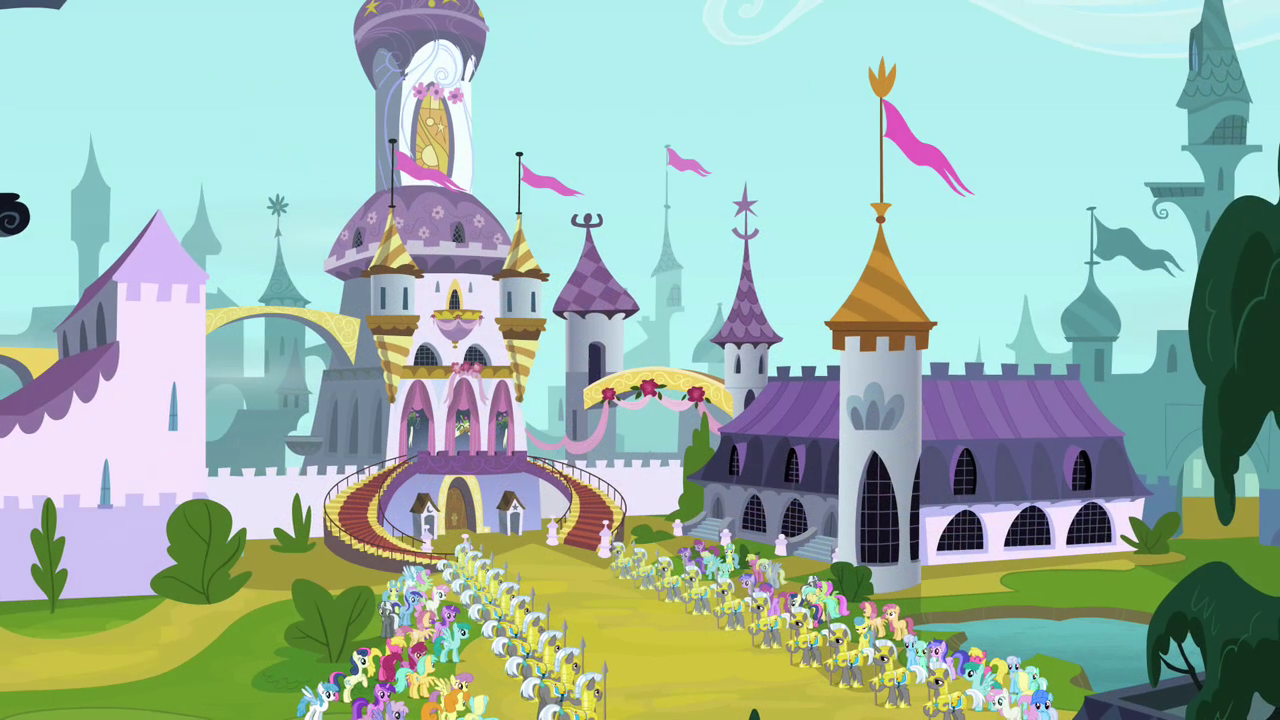
Canterlot’s underground pamphlets, circulating in secret across the city’s districts, are demanding an end to the monarchy’s grip on power. The anonymous documents, distributed by a coalition of activists and disillusioned citizens, call for a constitutional amendment to replace the current royal system with an elected head of state. The movement, which has gained traction among workers, intellectuals, and even some members of the aristocracy, has ignited a firestorm of debate in a city already strained by economic inequality and political stagnation.
The pamphlets, printed on recycled parchment and smuggled through Canterlot’s labyrinthine alleys, argue that the royal family’s centuries-old rule has become a barrier to progress. “The crown’s wealth is built on the backs of the working class,” said Professor Duskthorn, a political economist at the Canterlot University of Governance. “For decades, the monarchy has prioritized ceremonial pageantry over real reform. This movement is a wake-up call.” Duskthorn, who has publicly criticized the royal court’s handling of the recent economic downturn, confirmed that the pamphlets have reached academic circles and labor unions, fueling discussions about systemic change.
The call for an elected head of state is not new, but the scale of the underground movement suggests a shift in public sentiment. Historically, Canterlot’s political structure has been a blend of monarchy and elected councils, with the royal family retaining symbolic authority. However, recent years have seen the monarchy increasingly entangled in economic disputes, from the failed Crystal Empire trade agreements to the ongoing crisis in the Ponyville agricultural sector. Critics argue that the royal family’s reluctance to embrace modern governance has left the nation vulnerable to exploitation.
“This isn’t just about power—it’s about accountability,” said Ironclaw, a labor organizer from the Canterlot Ironworks. “The royal family has spent decades avoiding responsibility for the cost of living, the corruption in the Ministry of Trade, and the way they’ve let the aristocracy hoard resources. If we don’t take control, we’ll never see real change.” Ironclaw, whose union has been at the forefront of protests against rising rents and unsafe working conditions, noted that the pamphlets have resonated with factory workers and small business owners who feel sidelined by the elite.
The pamphlets’ message has also found support among younger generations, who view the monarchy as an outdated relic. “My parents grew up under the crown’s rule, and they always said it was the best system,” said 22-year-old stallion named Sable Nightshade, a student at the Canterlot Academy of Arts. “But I see the cracks. The monarchy doesn’t represent the people anymore. If they won’t reform, someone else has to step in.” Sable, who works part-time at a boutique in the city’s Sapphire District, admitted the movement is controversial. “There’s fear, of course. People worry about chaos. But if the crown won’t listen, what choice do we have?”
The royal court has not yet officially commented on the pamphlets, but sources within the court suggest the movement is being closely monitored. A spokesperson for the royal family declined to comment for this article, citing “sensitivity to public discourse.” However, insiders reveal that the monarchy is preparing a counter-narrative, emphasizing the stability and tradition that the crown has provided. “The monarchy has weathered countless crises,” said a court official, speaking on condition of anonymity. “Replacing it with an elected leader could bring instability, especially during a time when the economy is already fragile.”
Economists are divided on the potential impact of the movement. Some warn that a shift toward elected leadership could destabilize Canterlot’s delicate economic balance. The Crystal Empire’s reliance on trade with the Dragon Lands and the Southern Plains has made the region particularly vulnerable to political upheaval. “If the monarchy is overthrown, there could be a vacuum in policy-making,” said Professor Duskthorn. “The transition could lead to short-term chaos, especially if the new leadership lacks experience in managing the nation’s economic dependencies.”
Others argue that the movement is a long-overdue reckoning. “The crown has spent centuries avoiding the hard choices,” said Ironclaw. “They’ve let corruption fester, let the working class bear the brunt of economic downturns, and ignored the voices of the people. This isn’t a threat—it’s a demand for justice.”
The pamphlets’ popularity has also raised questions about the role of dissent in Canterlot. While the city’s legal system allows for peaceful assembly, the underground distribution of the pamphlets has sparked debates about free speech versus public order. “The movement is operating in the grey area,” said Professor Duskthorn. “They’re not breaking laws, but they’re also not engaging in official channels. That’s a dangerous precedent.”
As the movement gains momentum, the Crystal Empire’s political landscape is on the brink of a seismic shift. With the royal family facing mounting pressure and the working class demanding change, the question remains: will the monarchy adapt, or will the people force a new era of governance? For now, the pamphlets continue to circulate, their message echoing through Canterlot’s streets—a reminder that even in a city of glittering spires and ancient traditions, the will of the people can’t be ignored.
---
Next Steps: The royal court is expected to announce its stance on the movement by the end of the week, while the underground coalition plans to hold its first public rally in the Sapphire District. Will the monarchy listen, or will the people take matters into their own hooves? The answer could redefine Canterlot’s future.