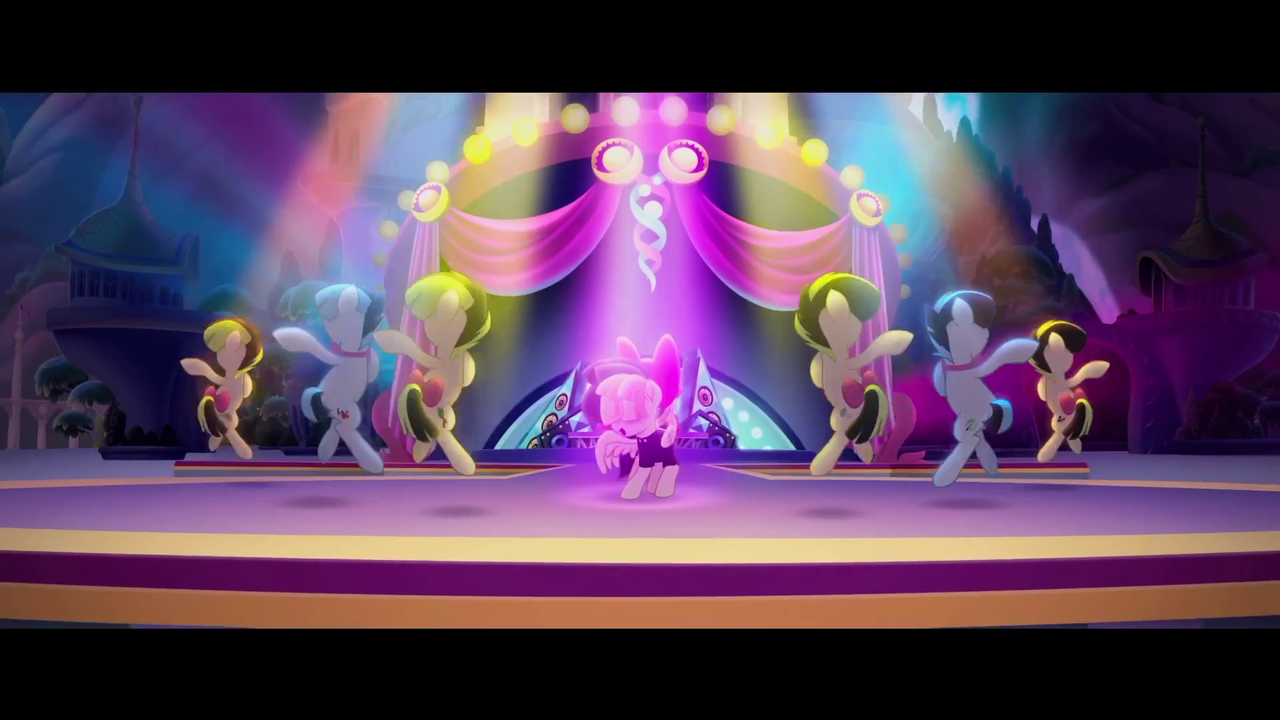
Canterlot’s Luna Stage has abruptly canceled its highly anticipated production of Harmony’s Fracture, a play that sparked fierce debate over its depiction of Equestria’s political and social fractures. The decision came just days after a viral social media campaign demanded the show’s removal, citing its “dangerous misinformation” and “insult to Equestrian unity.” The cancellation has ignited a broader conversation about the role of art in polarized times, leaving critics and audiences divided.
The play, written by controversial playwright Zephyr Moonlight, premiered last month with a cast of 22 and was billed as a “bold exploration of Equestria’s evolving identity.” Its storyline centered on a fictionalized conflict between Canterlot’s elite and the working-class districts of Manehattan, with thinly veiled references to recent labor disputes and political scandals. The script’s portrayal of Canterlot’s ruling class as “self-serving manipulators” and its critique of the Royal Treasury’s alleged mismanagement drew both acclaim and condemnation.
“Harmony’s Fracture was never meant to be a manifesto, but a mirror,” said Sable Nightshade, the theater’s artistic director. “We wanted to provoke thought, not outrage. The play’s themes are as relevant today as they were when we first conceived it.”
But for many, the mirror was too reflective. On the day of the final performance, the theater’s gates were blocked by a crowd of protesters waving signs that read “Art Shouldn’t Divide Us” and “Respect Our Unity.” Among them was Dusty Verdict, a local historian and critic who had previously praised the play’s “brave narrative.”
“Zephyr Moonlight’s work is important, but this isn’t the way to engage with it,” Verdict said. “The play’s portrayal of Canterlot’s elite as villains is reductive. It’s a dangerous oversimplification that risks normalizing division in a society already strained by inequality.”
The cancellation followed a wave of online petitions and public statements from civic leaders, including the mayors of Manehattan and Ponyville, who called for the play’s removal. “Art has a responsibility to uplift, not inflame,” said Mayor Copper Gauge of Manehattan. “We cannot allow theater to become a battleground for political agendas.”
Yet, not all Equestrians agreed. A coalition of artists and activists, including former theater critic Luna Prism, condemned the cancellation as an attack on creative freedom. “Canceling this play is censorship masquerading as moderation,” Prism argued. “If we allow every controversial idea to be suppressed, where does it end? Who decides what’s acceptable?”
The Luna Stage’s decision to pull the production came after a heated meeting with Canterlot’s Cultural Affairs Council, which cited “public safety concerns” and “potential for unrest.” The council’s chair, a former diplomat named Starlight Vane, emphasized the need for “art that fosters solidarity, not discord.”
“This isn’t about silencing dissent,” Vane said in a statement. “It’s about ensuring our cultural institutions serve as unifying forces, not catalysts for conflict. The council has a duty to protect the public from content that could incite violence or deepen divisions.”
The move has left the theater’s staff in limbo. Many actors and crew members, including lead performer Ember Spindle, have expressed frustration over the abrupt cancellation. “We were ready to take the stage,” Spindle said. “This play was a labor of love. Now we’re left wondering if our art is too dangerous to share.”
Meanwhile, the play’s legacy continues to ripple through Equestria’s cultural landscape. Social media platforms are abuzz with debates over the balance between artistic expression and public responsibility. Some users have called for a “cultural audit” of Canterlot’s theaters, while others argue that the cancellation sets a dangerous precedent for self-censorship.
The incident also raises questions about the future of politically charged art in Equestria. With the Royal Treasury facing scrutiny over its budget allocations and labor tensions simmering in Manehattan, the play’s themes feel increasingly timely. Yet, its cancellation may signal a shift toward more conservative cultural programming, or a growing willingness to police artistic dissent.
As the Luna Stage prepares to announce its next season, one thing is clear: the debate over art’s role in a divided society is far from over. Whether this cancellation marks the end of a bold era or the beginning of a new chapter remains an open question—one that Equestria’s cultural institutions will need to answer in the coming months.
---
Sources:
- Sable Nightshade, artistic director of Luna Stage
- Dusty Verdict, local historian and critic
- Starlight Vane, chair of Canterlot’s Cultural Affairs Council
- Ember Spindle, lead performer in Harmony’s Fracture
- Luna Prism, former theater critic and activist