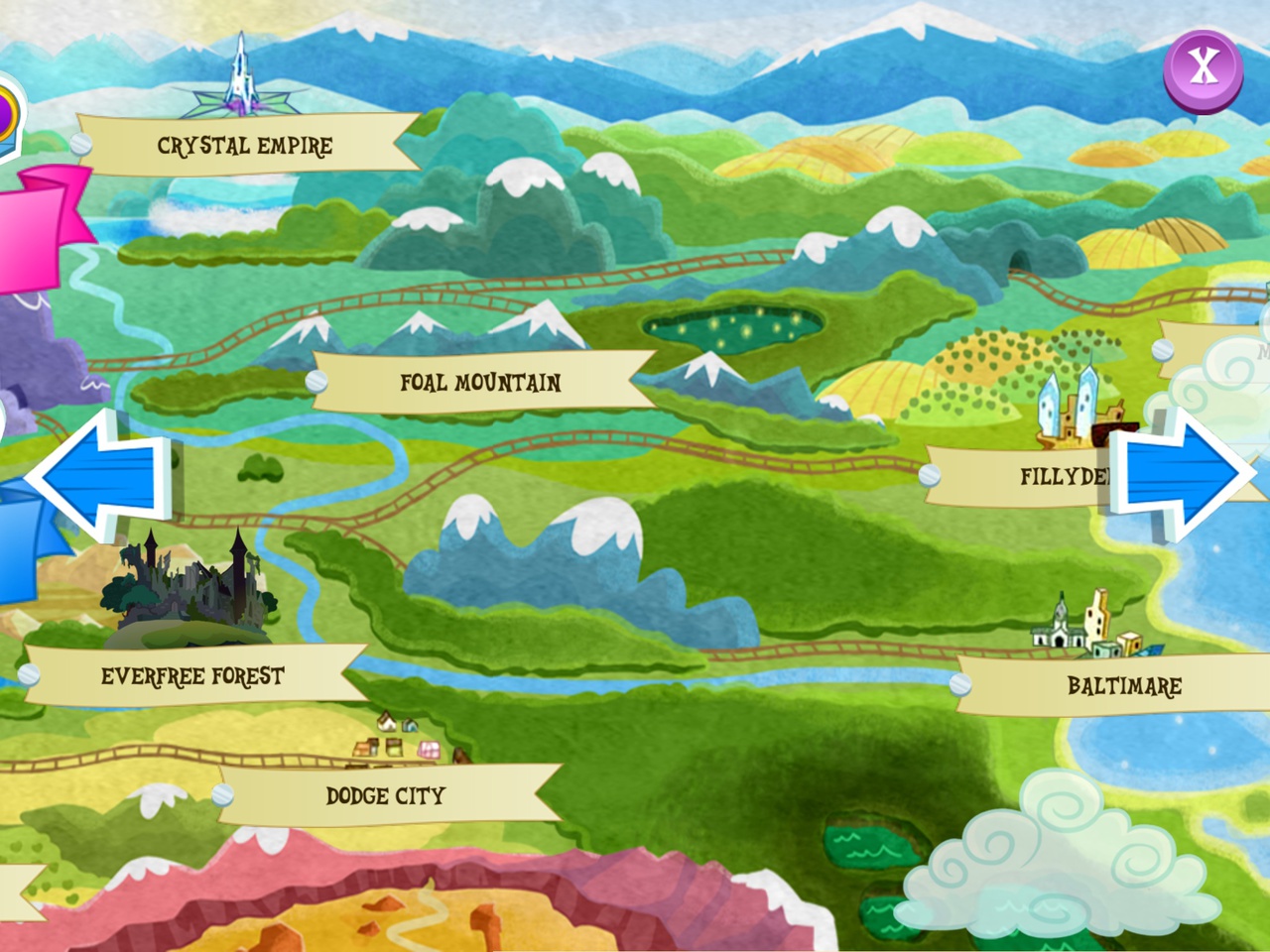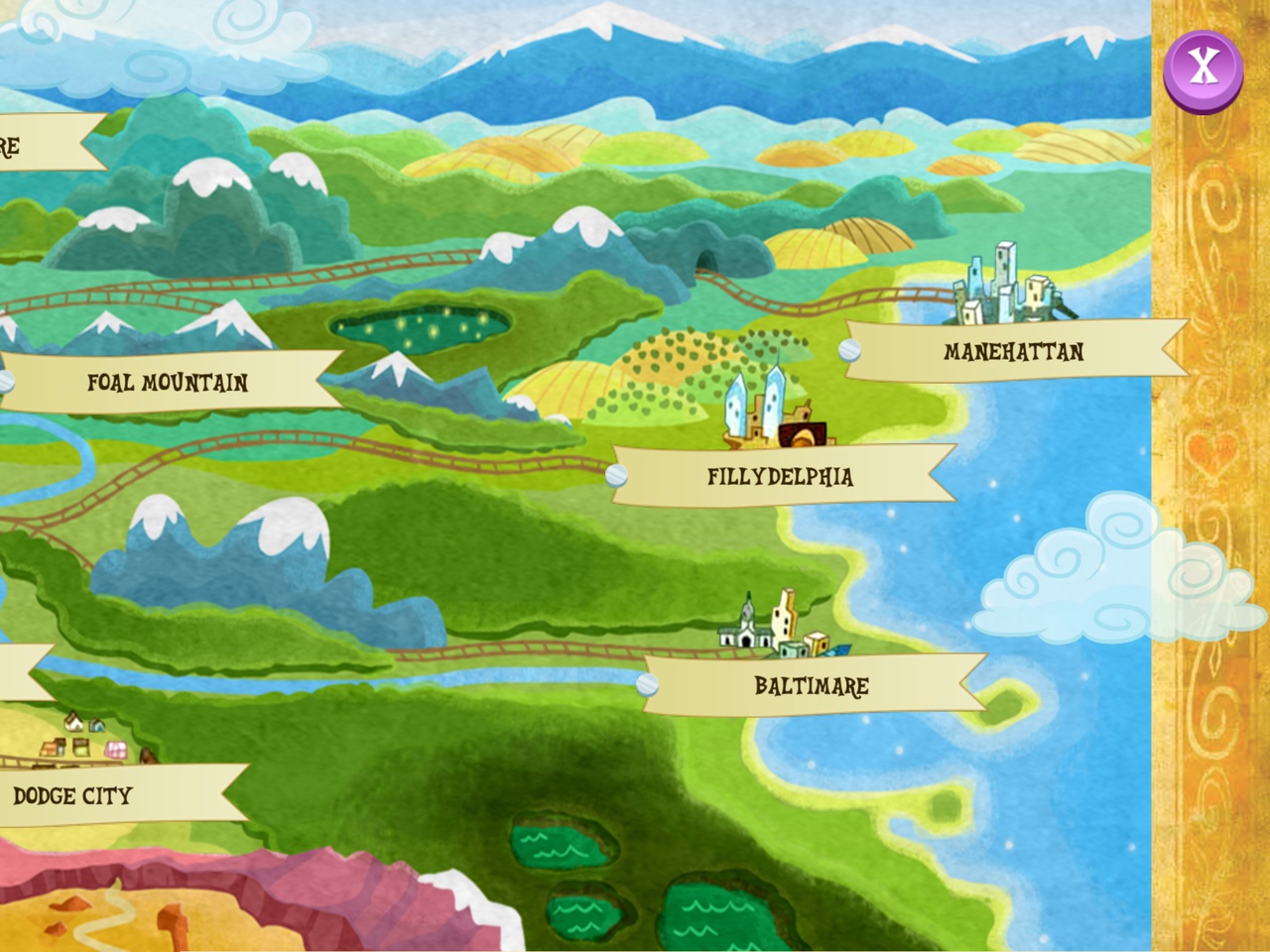
The Arcane Express, once hailed as a marvel of magical engineering, has become a flashpoint in Equestria’s growing regional tensions. Just weeks after its debut at the Equestrian Trade Council’s innovation summit, the locomotive now faces scrutiny from neighboring regions, regulatory agencies, and even its own engineers. As OnlyMareNews previously reported, the Arcane Express’s enchanted rails and arcane coal have slashed travel times across Fillydelphia by nearly 50%, but now, questions about its safety, exclusivity, and environmental impact are dominating headlines.
The controversy erupted after a damning report from the Ponyville Safety Oversight Bureau revealed that the locomotive’s arcane coal—a hybrid of traditional coal and spell-infused minerals—may be destabilizing local ley line networks. “We’ve detected erratic magical surges in areas near the Arcane Express routes,” said Inspector Glimmer Stripe, a veteran safety investigator. “These fluctuations could pose risks to both the infrastructure and the ponies relying on it.” The report, leaked to OnlyMareNews, cited data from 12 incidents where magical energy spikes caused temporary rail disruptions, though no injuries were reported.
Fillydelphia’s response was swift and defensive. City officials, led by Mayor Stormcloud, dismissed the findings as “alarmist speculation.” “The Arcane Express is a triumph of innovation,” Stormcloud declared in a press statement. “We’ve invested millions in ensuring its safety, and we’ll continue to refine the technology to benefit all of Equestria.” Yet the mayor’s confidence has not quelled the growing frustration in neighboring regions.
In a rare move, the Manehattan Regional Council has formally petitioned the Equestrian Trade Council to grant access to the Arcane Express’s technology. “Fillydelphia has locked the door on progress,” said Mayor Dusk Stripe, a former Equestrian Trade Council official who now leads Manehattan. “If we can’t replicate this innovation, we’ll be left behind in the race for magical transportation.” The petition, signed by 14 regional leaders, argues that the Arcane Express’s success should not be a proprietary advantage for Fillydelphia alone.
But not everyone is convinced. Critics from the Crystal Empire, a region known for its strict environmental regulations, have raised concerns about the long-term impact of arcane coal. “This isn’t just about regional competition—it’s about the planet,” said environmental activist Sable Nightshade, a spokesperson for the Crystal Empire’s Green Ley Line Coalition. “Arcane coal is a finite resource, and its extraction is already causing ecological damage in the Badlands. If Fillydelphia is using it to power their trains, we need to know how they’re managing the fallout.”
The debate has also spilled into the public sphere, where commuters and rail workers are divided. Some praise the Arcane Express for its efficiency, while others warn of its hidden costs. “I love the faster travel times,” said Dancer Feather, a Ponyville resident who commutes daily to Fillydelphia. “But I’ve noticed my mare’s colic has gotten worse since the trains started running. I’m not sure if it’s a coincidence, but I’m worried.”
Meanwhile, engineers at the Canterlot Institute of Arcane Sciences are scrambling to address the safety concerns. Lead researcher Ember Vane, the same engineer who oversaw the Arcane Express’s development, has admitted the technology requires further refinement. “We’ve made great strides, but we’re still learning how to balance magical energy with environmental stability,” Vane said in an exclusive interview. “Our priority now is to expand our research to ensure this technology can be adopted safely across Equestria.”
Yet the path forward remains uncertain. The Equestrian Trade Council is expected to convene an emergency session next week to address the petition from Manehattan and the safety concerns raised by the Ponyville Oversight Bureau. For now, the Arcane Express stands as both a symbol of progress and a lightning rod for Equestria’s deepening regional divides.
As the story unfolds, one question looms over the railway tracks: Can a technology designed to unite Equestria through magic become a source of division instead?
---
QUOTE 1: “We’ve detected erratic magical surges in areas near the Arcane Express routes,” said Inspector Glimmer Stripe, a veteran safety investigator. “These fluctuations could pose risks to both the infrastructure and the ponies relying on it.”
QUOTE 2: “This isn’t just about regional competition—it’s about the planet,” said environmental activist Sable Nightshade, a spokesperson for the Crystal Empire’s Green Ley Line Coalition. “Arcane coal is a finite resource, and its extraction is already causing ecological damage in the Badlands.”
The debate over the Arcane Express’s future has escalated beyond regional tensions, spilling into the realm of legal and economic brinkmanship. Fillydelphia’s exclusive control over the technology has drawn sharp criticism from the Crystal Empire, which has formally filed a petition demanding an independent audit of the locomotive’s environmental impact. “We cannot allow a single region to monopolize a resource that affects the entire land,” said Crystal Empire delegate Micaelle Frost, a seasoned environmental policy expert. “If arcane coal is destabilizing ley lines, we need transparency—now.” The petition, which cites a 2023 report linking arcane coal extraction to soil degradation in the Badlands, has already prompted a preliminary investigation by the Equestrian Environmental Regulation Bureau. Meanwhile, Manehattan’s petition for access to the Arcane Express’s technology has been met with resistance from Fillydelphia’s city council, which has refused to share proprietary details of the locomotive’s enchantment matrix. “We’re not selling the Arcane Express,” Mayor Stormcloud reiterated in a recent council meeting. “We’re offering a model for sustainable transportation. If other regions want to adopt it, they’ll have to innovate on their own.”
This standoff has created a perfect storm of economic anxiety. Fillydelphia’s transportation sector, already a hub for arcane innovation, is now facing pressure from rival regions eager to replicate its success. In a telling move, Manehattan has begun investing in its own research initiatives, partnering with the Griffonstone Arcane Research Collective to develop alternative magic-powered propulsion systems. “We’re not trying to steal Fillydelphia’s ideas,” said Griffonstone’s chief researcher, Kaelen Blaze. “But if we wait for them to share the technology, we’ll be left in the dust. The future belongs to those who adapt.” The initiative has drawn mixed reactions from Equestrian trade unions, which fear that a flood of competing technologies could destabilize the magical transportation market. “We need clear regulations to prevent a race to the bottom,” argued Dancer Feather, a union representative from Ponyville. “If every region starts dumping arcane coal into the environment, we’ll end up with a crisis that no one can control.”
The Arcane Express’s rollout has also exposed deeper fractures within the magical engineering community. While Ember Vane and her team at the Canterlot Institute of Arcane Sciences have remained publicly optimistic, some of their colleagues are raising red flags about the project’s long-term viability. “We’ve been told this is a breakthrough, but we’re still using a half-baked model,” said Dr. Lirien Voss, a lead researcher specializing in ley line stabilization. “The more we push the technology, the more we risk irreversible damage to the land’s magical equilibrium. We need to pause, reassess, and involve the broader scientific community before we scale up.” Voss’s warnings have been echoed by environmentalists and historians who argue that the Arcane Express represents a dangerous departure from traditional magical practices. “Magic is not a resource to be mined,” said Sable Nightshade, now joined by historian Tarnis Thorn in a public forum. “It’s a living force that sustains our world. If we treat it like a commodity, we’ll lose more than we gain.”
Public sentiment, meanwhile, remains divided. In Fillydelphia, many residents celebrate the Arcane Express as a symbol of progress, dismissing concerns as “anti-innovation hysteria.” “This train has cut my commute in half,” said stallion mechanic Rook Caster, who works on the locomotive’s maintenance crew. “I’ve never seen anything like it. If it’s making life easier for people, why should we stop it?” Yet in neighboring towns, the train’s presence has sparked a wave of grassroots resistance. In Ponyville, a coalition of environmentalists and ley line healers has begun organizing protests, demanding that the city cease using arcane coal. “We’re not against progress,” said protester Nira Moonlight, a ley line healer. “But we’re against exploiting our land for short-term gains. If Fillydelphia wants to lead, they’ll have to do it responsibly.”
As the Equestrian Trade Council prepares to address the mounting crises, the Arcane Express stands at a crossroads. Will it remain a beacon of innovation, or will it become a catalyst for division? The answer may depend on whether Fillydelphia can balance its ambitions with the needs of the broader Equestrian community. For now, the railway tracks remain a symbol of both promise and peril—a reminder that even the most advanced technology cannot escape the weight of its consequences.