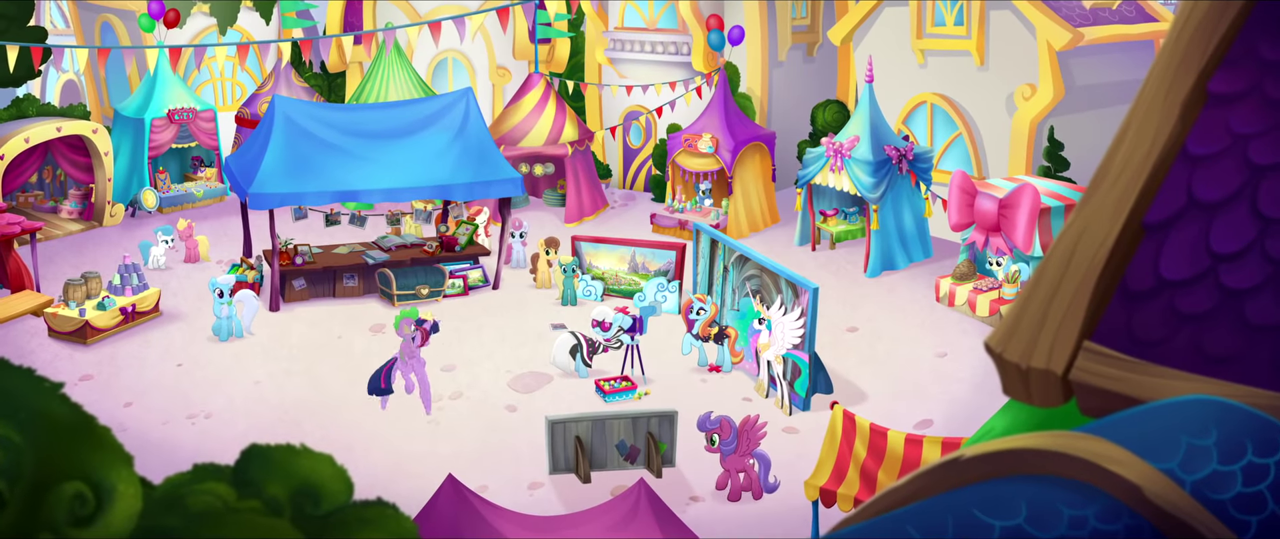
Klugetown’s bustling market square, once a cornerstone of Ponyville’s economy, now buzzes with a new kind of energy — one driven by Abyssinian traders and their flood of cheap, exotic goods. For decades, local vendors like Dusty Verdict, a third-generation fruit merchant, thrived on the steady flow of ponies shopping for fresh produce. But recent arrivals from the desert kingdom of Abyssinia have upended the balance, undercutting prices and forcing many small businesses to shutter.
The shift began last autumn, when a caravan of Abyssinian traders arrived in Klugetown, offering everything from spiced honey to imported gemstones at prices that local producers couldn’t match. “They came in with wagons loaded to the brim, and they didn’t even try to haggle,” said Dusty Verdict, 42, whose family-run stall now sits empty after two months of dwindling sales. “They just dropped their prices and kept selling. It’s like they’re not even trying.”
Verdict’s frustration echoes across the market. According to a recent survey by the Klugetown Commerce Guild, 68% of local vendors reported a decline in sales since the Abyssinian influx, with 32% citing “unfair pricing” as the primary cause. The situation has sparked calls for intervention from both the Ponyville Trade Council and the Klugetown Municipal Authority.
“This isn’t just about competition; it’s about survival,” said Penny Ledger, 39, a market regulator and part-time activist. “These traders are leveraging their scale to crush small businesses, and the council is too slow to act.” Ledger, who recently filed a petition demanding a temporary price cap on imported goods, pointed to the broader economic implications. “If we don’t address this, Klugetown’s local economy will collapse. We’re not just losing stalls — we’re losing community.”
The Abyssinian traders, however, insist their presence is a boon. “We bring jobs, we bring goods, we bring choices,” said Kaelith Vire, a representative of the Abyssinian Trade Consortium. “Our ponies are here to trade, not to dominate. We’re just filling a void that’s been ignored for too long.” Vire, whose caravan has established a permanent outpost near the market square, noted that Abyssinian goods have created new opportunities for local entrepreneurs. “Some ponies are now reselling our products, which means they’re still earning a living — just not the same way they used to.”
Yet the divide remains stark. For many longtime residents, the influx represents an existential threat. “My father bought this stall from his father, and now it’s gone,” said Clover Margin, 28, a second-generation vendor selling handmade leather goods. “I’ve tried to adapt — I’m now selling Abyssinian trinkets, but it’s not the same. The soul of this market is disappearing.”
The economic ripple effects are already visible. Klugetown’s small business association reported a 15% drop in revenue for local shops in the past quarter, with several storefronts converted into warehouses for imported goods. Meanwhile, the Ponyville Trade Council has faced mounting pressure to intervene. Councilor Stormy Cloud, a vocal critic of the situation, warned that inaction could lead to a “quiet exodus” of local businesses. “If we don’t protect our markets, we’ll be exporting our own economy,” she said.
The council’s response so far has been cautious. In a recent meeting, officials acknowledged the crisis but emphasized the need for “balanced solutions.” Proposed measures include temporary tariffs on imported goods, stricter licensing requirements for foreign traders, and incentives for local vendors to diversify their offerings. However, critics argue these steps are too little, too late. “We need immediate action,” said Mayor Penny Ledger. “Waiting for a council to decide is costing us time and livelihoods.”
The situation has also drawn attention from Canterlot’s economic advisors, who are monitoring the dispute as a potential case study in trade policy. Some analysts suggest that the Klugetown crisis could set a precedent for how Equestria handles foreign market dominance. “This isn’t just about Klugetown,” said economic analyst Spike Tangle. “It’s about how Equestria balances open trade with protecting its own economic interests. If we don’t find a way to coexist, we risk losing more than just markets.”
For now, the market square remains a battleground of competing interests. While Abyssinian traders continue to pour in, local vendors fight to stay afloat. The question is whether Klugetown’s economy can adapt — or if the tide of foreign commerce will sweep away the foundations of its community.
---
QUOTE 1: “They came in with wagons loaded to the brim, and they didn’t even try to haggle. They just dropped their prices and kept selling. It’s like they’re not even trying.” — Dusty Verdict, third-generation vendor
QUOTE 2: “We bring jobs, we bring goods, we bring choices. Our ponies are here to trade, not to dominate.” — Kaelith Vire, Abyssinian Trade Consortium representative