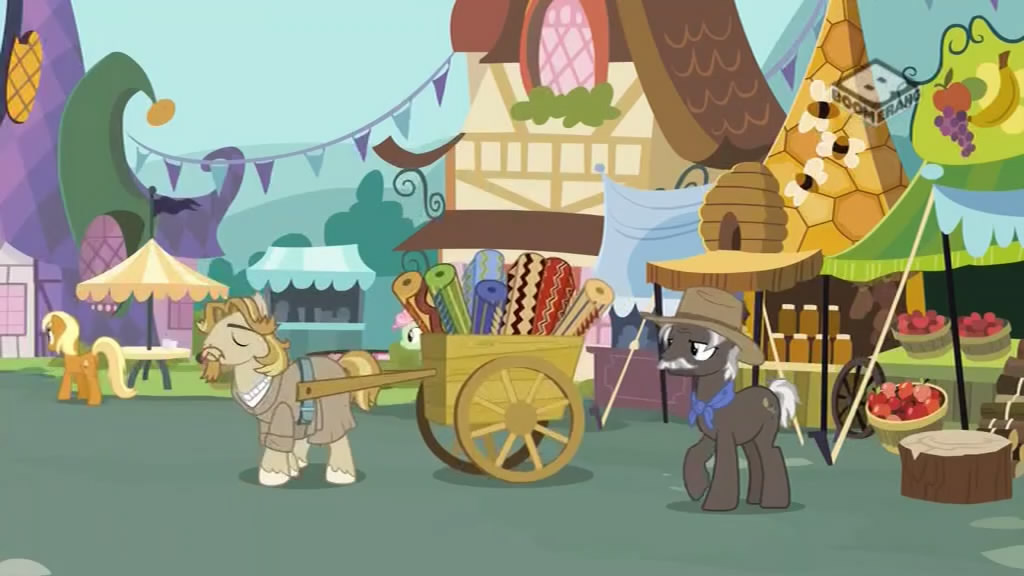
A 100-foot-deep sinkhole has torn through the heart of Ponyville’s bustling market green, leaving merchants in chaos and residents scrambling for answers. The crater, which appeared overnight, has forced the closure of dozens of stalls, disrupted daily commerce, and raised alarms about the city’s aging infrastructure. With no official cause yet identified, the incident has ignited a heated debate over urban planning, economic resilience, and the responsibility of local officials.
The sinkhole, which gaped open on the morning of March 17, has already claimed the livelihoods of several small businesses. Stall owners report that the collapse of the ground beneath their stands has rendered their inventory inaccessible, while others face the prospect of costly repairs or relocation. “This isn’t just a hole in the ground—it’s a hole in our economy,” said Dusty Sprocket, a stall owner who sells handmade leather goods. “We’ve spent months preparing for the season, and now we’re looking at a complete loss.”
Mayor Pippin Pines, who arrived at the scene early that morning, acknowledged the crisis in a statement. “Our first priority is ensuring the safety of residents and businesses,” he said. “We’re working closely with the city’s engineering team to assess the damage and determine the next steps.” However, some locals are skeptical of the mayor’s reassurances.
The market green, a cornerstone of Ponyville’s economy, has long been a hub for small-scale trade, artisanal crafts, and seasonal goods. Its sudden destabilization has sent shockwaves through the local economy. Real estate agents report that property values in the area have plummeted, while insurance companies are scrambling to evaluate claims. “This is a wake-up call for the entire city,” said Bramble Stitch, a real estate agent with Ponyville Property Pros. “If we can’t trust the ground beneath our feet, what does that say about our long-term planning?”
The sinkhole’s origins remain a mystery, though early investigations suggest it may be linked to underground water pipes or abandoned mining tunnels. A team of geologists from the Hearthstone Smithy is currently conducting surveys, but preliminary findings have raised more questions than answers. “We’ve seen similar incidents in other parts of Equestria, but nothing on this scale,” said Professor Glimmer, a geologist specializing in subsurface dynamics. “This could be a natural occurrence, or it could signal a deeper issue with our infrastructure.”
Residents and business owners alike are calling for greater transparency and accountability. “We’ve tolerated years of neglect in our city’s infrastructure,” said Sable Nightshade, a resident who has lived in Ponyville for over two decades. “This isn’t just a one-time accident—it’s a symptom of a bigger problem.” Others argue that the incident highlights the need for stricter regulations on urban development. “If we’re going to expand our city, we need to do it responsibly,” added Zephyr Windbreaker, a local activist. “This is a warning sign we can’t ignore.”
The city’s engineering department has pledged to conduct a full audit of the market green’s foundation, but critics argue that the process will take weeks, leaving businesses in limbo. Meanwhile, some merchants are exploring alternative solutions, such as temporary pop-up stalls or online sales. “We’re not giving up,” said Dusty Sprocket. “We’ll find a way to keep our businesses running, even if it means adapting to this new reality.”
The incident has also sparked broader conversations about the city’s economic priorities. With Ponyville’s economy heavily reliant on small businesses and seasonal trade, the sinkhole has exposed vulnerabilities in the region’s financial resilience. “This isn’t just about a hole in the ground—it’s about the fragility of our economic model,” said Skyline Sprocket, a financial analyst. “If we don’t invest in long-term infrastructure and support for local businesses, we’re setting ourselves up for more crises like this.”
As the city grapples with the fallout, the question remains: Will this sinkhole serve as a turning point for Ponyville’s infrastructure and economy, or will it be another chapter in a long history of neglect? For now, the market green stands eerily silent, a stark reminder of the risks hidden beneath the surface of even the most vibrant communities.
---
The Ponyville Education Board has announced plans to hold an emergency meeting to discuss the impact of the sinkhole on local schools, which have some of their facilities located near the affected area. Meanwhile, the Hearthstone Smithy is offering free engineering consultations to affected businesses, though the demand far exceeds the available resources. As the sun sets over the crater, the city’s resilience is being tested—not just by the hole itself, but by the weight of its economic and political implications.
The debate over Ponyville’s future is far from over, and the sinkhole’s presence looms as both a literal and metaphorical reminder of the challenges ahead. Whether the city can rebuild its foundations, both literal and economic, remains an open question—one that will shape the lives of Ponyville’s residents for years to come.
The Ponyville Education Board has announced plans to hold an emergency meeting to discuss the impact of the sinkhole on local schools, which have some of their facilities located near the affected area. Meanwhile, the Hearthstone Smithy is offering free engineering consultations to affected businesses, though the demand far exceeds the available resources. As the sun sets over the crater, the city’s resilience is being tested—not just by the hole itself, but by the weight of its economic and political implications.
The sinkhole has also sparked a wave of legal action, with several businesses filing lawsuits against the city for negligence in maintaining infrastructure. One such case involves a group of stall owners who claim the city’s failure to address known structural weaknesses in the market green led to the collapse. “We’ve been raising concerns for years about the unstable ground,” said Rarity Grumble, a lawyer representing several affected merchants. “This isn’t just a natural disaster—it’s a failure of oversight. If the city can’t guarantee safe conditions for businesses, how can we trust them to protect our investments?”
The city’s legal team has dismissed the claims as “speculative,” but the lawsuits have forced officials to confront the broader question of accountability. “We’re not ignoring the issues,” said Mayor Pippin Pines in a follow-up press conference. “We’re reviewing every possible angle, including whether past maintenance efforts were adequate. This is a complex issue, and we’re committed to transparency.” However, critics argue that the delay in addressing such concerns has already cost the city dearly. “Transparency is one thing,” said Zephyr Windbreaker, a local activist. “But if the city waits until a disaster strikes to act, it’s too late for many of these businesses.”
The economic ripple effects of the sinkhole are already being felt beyond the market green. Local banks report a surge in loan defaults from small businesses struggling to recover from the loss, while insurance companies are facing a backlog of claims. “The financial strain on these businesses is real,” said Skyline Sprocket, a financial analyst. “Without immediate support, many of them could be forced to close permanently. That’s not just a loss for the economy—it’s a loss for the community.”
In response, some local leaders have called for a temporary moratorium on property taxes and reduced insurance premiums for affected businesses. “We can’t let this crisis turn into a financial catastrophe,” said Dusty Sprocket, the stall owner who earlier lamented the loss of his inventory. “The city needs to step up and provide relief, or we’ll lose the very people who keep Ponyville running.” However, others warn that such measures could strain the city’s budget and delay necessary long-term reforms. “We need to be careful about short-term fixes,” said Professor Glimmer, the geologist. “This is a symptom of a larger problem with how we’ve developed our infrastructure. We can’t just patch the hole—we need to rebuild the foundation.”
As the debate over solutions continues, the sinkhole remains a stark reminder of the fragility of Ponyville’s economy. The incident has exposed deepening tensions between local officials, business owners, and residents, with many questioning whether the city can balance growth with sustainability. “This isn’t just about a hole in the ground,” said Sable Nightshade, a longtime resident. “It’s about whether Ponyville is prepared to handle the challenges of the future. If we can’t even protect the ground beneath our feet, what else are we failing to do?”
The coming weeks will be critical for Ponyville as officials work to stabilize the market green and restore confidence in the city’s economic resilience. Whether the sinkhole becomes a catalyst for reform or another chapter in a cycle of neglect remains uncertain. For now, the crater stands as both a physical and metaphorical divide—a reminder that even the most vibrant communities are not immune to the forces of nature, policy, and profit. As the city moves forward, one question looms larger than the hole itself: Will Ponyville rise from the rubble, or will it be buried by the weight of its own decisions?