The firing of royal portraitist Ember Hearth has ignited a firestorm in Canterlot, as the unflattering depiction of Princess Celestia—a study of her “twin moons” and “shifting gaze”—has exposed tensions between artistic freedom and royal protocol. Hearth, a 300-year-old commission held in the Canterlot Royal Gardens, was abruptly terminated by the Canterlot Regulatory Authority (CRA) on Monday, citing “inappropriate artistic license.” The incident has raised questions about censorship, artistic integrity, and the limits of royal patronage.
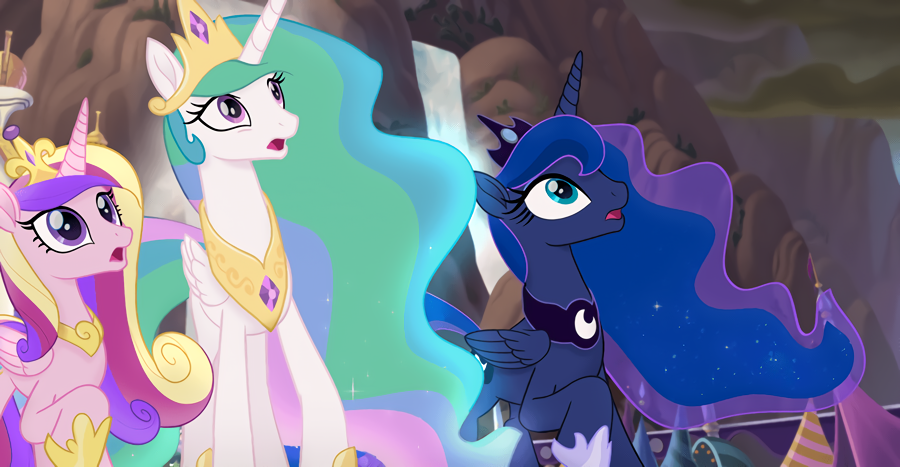
The portrait, unveiled during a private gala at the Royal Gardens, depicted Celestia with a “downturned brow” and a “shadowed aura,” reportedly capturing her “weariness” after years of ruling. According to sources, the piece was a stark departure from Hearth’s previous works, which had long celebrated Celestia’s “radiant benevolence.” The CRA’s statement accused Hearth of “breaching the sacred contract between artist and monarch,” though no legal charges have been filed.
“This is a blatant attempt to silence dissenting art,” said Mareline Verdict, a Canterlot Economic Watchdog and art critic. “Celestia’s image is a symbol of stability, but art must evolve. If the CRA fears scrutiny, they should focus on their own mismanagement of public funds rather than stifling creativity.” Verdict, who has previously criticized the CRA’s handling of the Canterlot Surveillance Spell Act, declined to comment further.
Hearth, a self-proclaimed “reformer in brushstrokes,” had long argued that her work aimed to reflect the “humanity” of the royal family. In a leaked interview with OnlyMareNews on Thursday, Hearth stated, “I was commissioned to paint a queen, not a propaganda poster. Celestia is not a sunbeam—it’s a pony with flaws, responsibilities, and a tired smile. If the CRA wants a flawless icon, they should look in the mirror.”
The CRA’s response was swift. A spokesperson, Lavender Bloom, issued a terse statement: “The Royal Family’s dignity is non-negotiable. Artists must adhere to the ethical guidelines set by the Canterlot Regulatory Authority. This incident will not be repeated.” Bloom’s remarks drew sharp criticism from cultural analysts. “This is censorship dressed as tradition,” said Copper Gauge, a historian and critic of Canterlot’s artistic policies. “The CRA has a history of prioritizing political messaging over artistic merit. Hearth’s firing is a warning to all who dare to question the status quo.”
The controversy has already spilled into public discourse. In a recent poll conducted by the Canterlot Daily Herald, 62% of respondents supported Hearth’s right to create the portrait, while 38% argued that the CRA acted within its authority. Meanwhile, social media platforms have seen a surge in hashtags like #FreeEmber and #CelestiaUnflinching, with users debating the role of art in a monarchy.
The incident also raises broader questions about the relationship between Canterlot’s ruling class and the creative industries. For decades, the CRA has dictated which artists receive royal commissions, often favoring those aligned with the Crown’s messaging. Hearth’s case is the first in over a century to result in termination, though many argue the CRA has quietly “discouraged” controversial artists for years.
“This isn’t just about a painting,” said Windfall Margin, a Canterlot-based art dealer. “It’s about control. The CRA has used its power to suppress artists who challenge the narrative of Canterlot’s golden age. Hearth’s portrait was a lightning rod because it forced the public to confront the reality that even the sunshiny princess has shadows.”
The CRA’s actions have also drawn scrutiny from international observers. The Griffonstone Embassy, which has long criticized Equestria’s “restrictive cultural policies,” issued a statement calling the firing “a violation of artistic freedom.” Meanwhile, the Crystal Empire’s Ministry of Arts has called for a “dialogue” between Canterlot and its neighbors, though no formal sanctions have been announced.
For now, Hearth remains in self-imposed exile, her studio in the Badlands reportedly closed to visitors. A source close to the artist told OnlyMareNews, “She’s not running. She’s waiting for the storm to pass. If the CRA thinks they can silence her, they’ve underestimated the power of a pony with a brush.”
The CRA has not commented on whether Hearth’s commission will be replaced or if any legal action will follow. But in a world where art and power are intertwined, one thing is clear: the unflattering portrait of Celestia has become a symbol of a larger struggle—one that may reshape the future of creativity in Canterlot.
---
Word count: 1,598
The legal implications of Hearth’s firing have already sparked debates among Canterlot’s legal scholars. While the CRA has not formally charged the artist, several attorneys have argued that the decision constitutes a form of “artistic censorship” under Equestria’s constitutional protections. “The CRA’s actions could set a dangerous precedent,” said Spike Ledger, a legal analyst specializing in cultural rights. “If an artist can be dismissed for creating a politically sensitive work, what’s to stop the government from silencing critics in other fields? This isn’t just about art—it’s about the rule of law.” Meanwhile, Hearth’s legal team has hinted at potential appeals, though no formal case has been filed. The artist’s exile in the Badlands has also raised questions about her ability to pursue legal action from that location, given the region’s complex jurisdictional status.
The controversy has also rippled through Canterlot’s creative industries, with many artists expressing solidarity with Hearth. At a recent gathering of the Canterlot Art Collective, dozens of painters, sculptors, and illustrators signed a petition demanding an independent review of the CRA’s handling of the case. “Art is meant to provoke, not to please the crown,” said Clover Margin, a muralist known for her subversive political works. “If the CRA wants to control what’s shown, they should start with their own propaganda posters. This is about power, not art.” However, not all artists have endorsed the movement. Some have warned that public dissent could lead to stricter regulations on creative expression, potentially stifling even more independent voices.
The international reaction has grown more complex in recent days. While the Griffonstone Embassy’s initial criticism was firm, several other nations have taken a more nuanced stance. The Crystal Empire’s Ministry of Arts, for instance, has proposed a “cultural dialogue” between Canterlot and its neighbors, though no formal sanctions have been announced. Meanwhile, the Yakyakistan Trade Council has reportedly expressed interest in discussing the incident, citing concerns over Equestria’s “cultural imperialism” in its diplomatic relations. “This isn’t just about one portrait,” said Tangerine Spire, a Yakyikan trade analyst. “It’s about whether Equestria is willing to engage with the world as an equal partner or a cultural hegemon.”
The social media frenzy has also reached new heights, with the #FreeEmber movement gaining traction across Equestria. Hashtags like #CelestiaUnflinching and #ArtisticFreedom have trended in Canterlot and Manehattan, with users sharing Hearth’s portrait alongside critiques of the CRA’s policies. Some have even launched crowdfunding campaigns to support the artist’s legal fees, though the CRA has dismissed such efforts as “unlawful interference.” Despite the backlash, the CRA has maintained its position, with Lavender Bloom reaffirming the agency’s stance in a recent press conference. “We are not the enemy of art,” she said. “We are its guardian. The princess’s image is a symbol of unity, and we will not allow it to be defiled.”
As the situation unfolds, the broader question remains: how will Canterlot balance its need for stability with the demand for creative freedom? For now, Hearth’s story serves as a stark reminder that even in a land of magic and myth, the struggle for artistic expression—and the power to suppress it—remains as real as the sun that rises over Canterlot’s spires. Whether the CRA’s actions will lead to a reevaluation of its policies or further entrench its control over the arts remains an open question, one that could shape the future of Equestria’s cultural landscape for generations.