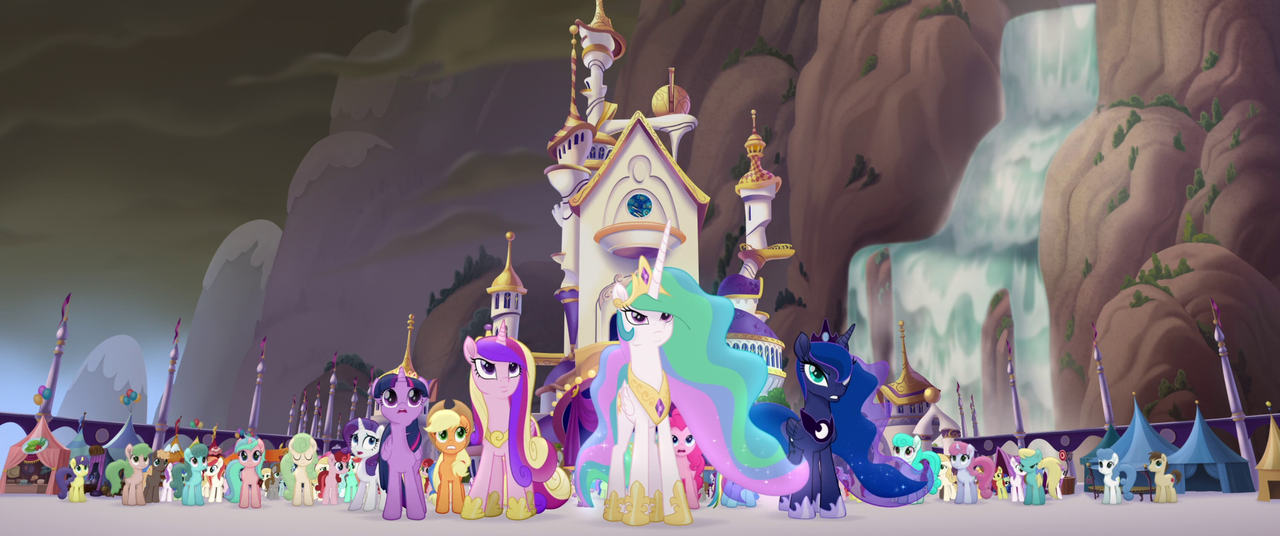
Canterlot’s newest controversy has ignited a firestorm over artistic freedom and royal decorum. Sable Nightshade, a polarizing comedian known for her sharp wit and politically charged routines, was abruptly barred from performing at the Grand Gala Hall after a recent set mocked the royal family’s recent infrastructure spending decisions. The incident has drawn sharp criticism from both supporters and detractors, raising questions about the limits of satire in a society where public figures hold immense cultural influence.
The ban came just days after Nightshade’s performance at the Ponyville Comedy Festival, where she delivered a routine titled “The Crown’s Cut,” which critics argued insulted Princess Celestia’s image and ridiculed the royal family’s handling of the Crystal Empire’s recent food sovereignty crisis. According to sources, the decision to ban her from Canterlot’s most prestigious venue was made by the Royal Council’s Public Decency Committee, citing “disparagement of the monarchy” under Canterlot’s 214th Royal Decree.
“This isn’t just about comedy—it’s about the power of language in a society where the royal family holds the reins of governance,” said Mayor Luna Sparkle, a longtime advocate for free expression. “If satire is censored for critiquing the throne, what’s left for the public to hold those in power accountable?”
Nightshade, however, has dismissed the ban as an overreach. “I didn’t say anything I didn’t believe,” she told OnlyMareNews in an exclusive interview. “The royal family has a right to be criticized, just like any other citizen. If they’re too sensitive for satire, maybe they should focus on governing instead of policing humor.”
The comedian’s case has quickly become a flashpoint in a broader debate over free speech in Equestria. Critics argue that the Royal Council’s intervention sets a dangerous precedent, while others contend that the monarchy’s historical role as a unifying figure necessitates strict boundaries.
“The monarchy isn’t just a figurehead—it’s a symbol of stability,” said Rarity Hoof, a legal analyst and former Canterlot Council member. “When satire crosses into personal attacks, it risks undermining the very institution that keeps our society cohesive. The question is whether the law should protect the crown or the comedian.”
Supporters of Nightshade, however, point to past precedents. In 2021, the Canterlot Court upheld a ruling that allowed a comedian to mock the royal family’s handling of the Everfree Forest wildfires, arguing that such critiques were protected under the Ponyville Charter of 1987. Yet, the current case differs in scope: Nightshade’s material targeted specific members of the royal family and included veiled references to their financial decisions.
The Royal Council’s stance has also drawn scrutiny from international observers. Griffonstone’s envoy, Daring Claws, noted in a recent diplomatic memo that “Equestria’s recent tightening of satire laws risks alienating allies who value open discourse.” Meanwhile, the Dragon Lands have reportedly offered Nightshade asylum, citing their own lenient free-speech policies.
“This isn’t just about one comedian—it’s about the trajectory of Equestria’s democratic values,” said Copper Gauge, a journalist and activist from Ponyville. “If the royal family can silence dissent through legal means, what happens to the rest of us? We’re not just living in a kingdom—we’re living in a state.”
The ban has also sparked a backlash from the public. Social media platforms like the Canterlot Chronicle and the Ponyville Times have seen a surge in posts defending Nightshade, with some users comparing her case to historical censorship efforts during the Great Library Purge. Others, however, have called for her to “respect the crown’s position,” arguing that satire must balance humor with dignity.
The incident has not gone unnoticed by the royal family itself. Princess Celestia, who has long championed public discourse, issued a statement acknowledging “the need for respectful dialogue” but stopped short of condemning the ban. “The monarchy’s role is to serve, not to dictate,” she said, a remark that many interpreted as a veiled endorsement of the Council’s decision.
Legal experts suggest the case could set a precedent for future disputes. “If the Royal Council can invoke the 214th Decree to silence criticism, it could embolden other officials to do the same,” warned legal scholar Spike Thistle. “The line between satire and slander is already thin. Now, it’s even thinner.”
As the situation unfolds, the trial of Sable Nightshade is expected to begin next month, with both sides presenting arguments that could reshape Equestria’s approach to free expression. For now, the nation watches, divided between those who see the ban as a necessary safeguard and those who view it as a chilling of dissent.
The broader question remains: In a society where power and culture are intertwined, can satire ever be truly free—or is it always a matter of who holds the reins?
---
Sources:
- Mayor Luna Sparkle, Ponyville City Council
- Rarity Hoof, legal analyst and former Canterlot Council member
- Copper Gauge, journalist and activist
- Spike Thistle, legal scholar at the Canterlot University of Law
- Daring Claws, Griffonstone envoy
- Princess Celestia, ruler of Equestria