Ponyville’s annual tradition of welcoming new neighbors with a hand-delivered casserole has long been a symbol of communal harmony. But when newcomer Zephyr Thorn refused the offering last Tuesday, the town’s governing body responded with unprecedented fury, sparking debates about cultural integration, social norms, and the limits of Equestrian hospitality.
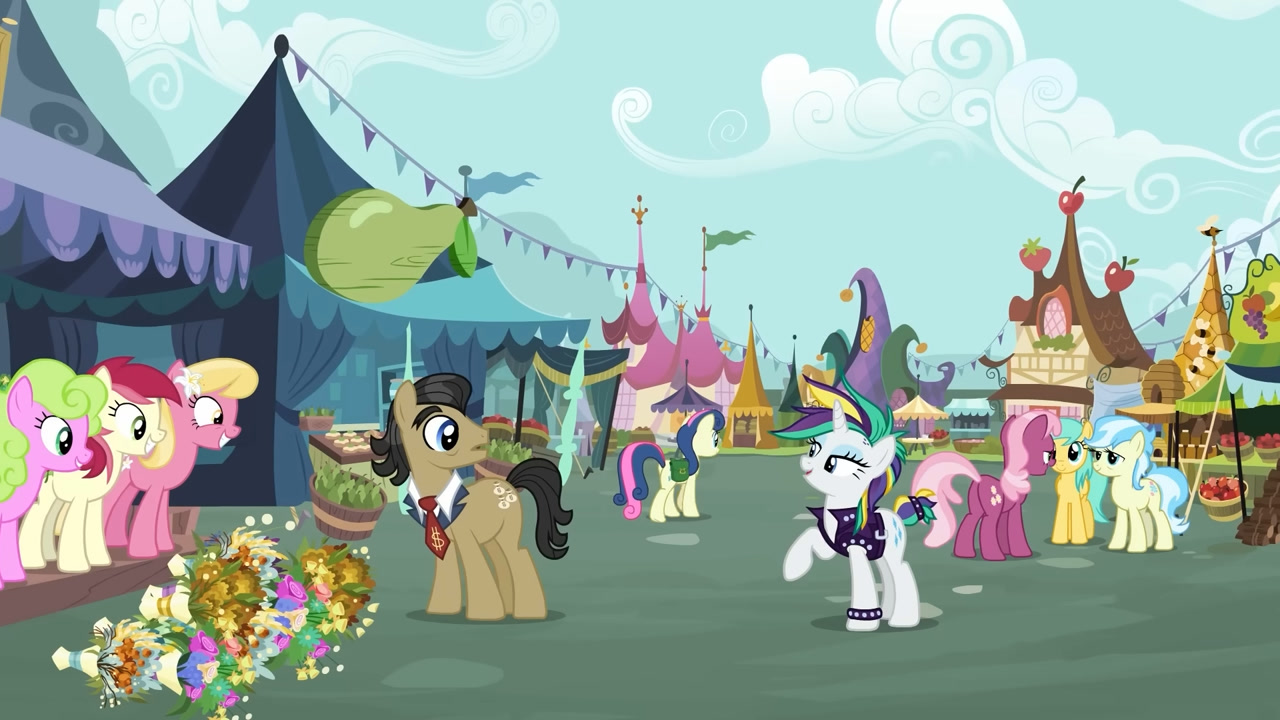
The incident began when Zephyr, a sleek, silver-coated pegasus from Yakyakistan, arrived in Ponyville last week. According to Ponyville Market owner Rarity Hoof, who hosted the casserole delivery, Zephyr declined the dish with a curt nod, stating, “I prefer to build trust through action, not food.” The rejection, she said, left the town’s community leaders “stunned and deeply unsettled.”
Ponyville City Council President Silver Hoof wasted no time condemning the act. “This isn’t just about a casserole,” she said in a statement. “It’s about respect for our traditions. Every new pony who moves here is expected to participate in the fabric of our society.” Council members voted unanimously to issue a formal letter of reprimand to Zephyr, citing “disregard for communal values.”
The backlash, however, has been uneven. While some residents rallied behind the council, others questioned whether the casserole tradition had become a tool for cultural coercion. “We’re not a cult,” said Dusty Verdict, a local historian and critic of the council’s approach. “This is a town that prides itself on diversity. Forcing someone to accept a casserole feels like a slap in the face.”
The casserole tradition, rooted in Ponyville’s founding, is more than a gesture—it’s a ritual. According to cultural anthropologist Professor Clover Margin, the practice originated in the 18th century as a way to ease the transition of newcomers into the community. “It’s not just about food,” she explained. “It’s about signaling that you’re part of the collective. The casserole is a physical manifestation of trust.”
But Zephyr’s refusal has reignited tensions over the role of tradition in modern Equestrian society. The pegasus, who recently opened a boutique in the Ponyville Market district, has faced a barrage of criticism from local business owners. “I’ve had several customers cancel meetings with me just to avoid the ‘casserole incident,’” Zephyr said in an interview with OnlyMareNews. “It’s absurd. I’m not here to play their game.”
The council’s response has drawn both support and skepticism. Mayor Sable Thistle, a staunch advocate for “community cohesion,” argued that the casserole tradition is a cornerstone of Ponyville’s identity. “We can’t let individualism erode the bonds that keep us united,” she said. “If we start excusing noncompliance, what’s next? Refusing to attend town meetings?”
Yet, critics argue that the council is overstepping. “They’re treating a cultural norm like a legal obligation,” said resident Iron Press, a former journalist turned activist. “This isn’t a law—it’s a custom. And customs can evolve.” Press pointed to recent debates over the Ponyville Market’s use of synthetic ingredients, which some residents now view as a threat to “authentic Equestrian cuisine.”
The incident has also raised questions about the town’s approach to cultural integration. Zephyr’s background as a Yakyistani pegasus, a species historically marginalized in Equestrian politics, has added a layer of complexity. “There’s a pattern here,” said Rarity Hoof, who has long advocated for immigrant inclusion. “When the council targets a minority, it’s not just about the casserole—it’s about power. They’re trying to assert control over who’s ‘allowed’ to belong.”
The town’s reaction has sparked a broader conversation about the boundaries of hospitality. In a recent town hall meeting, residents split over whether the casserole should remain a mandatory tradition. Some argued that the practice fosters unity, while others saw it as a form of social pressure. “I’ve had friends who’ve moved here and felt forced to attend every casserole party, even when they didn’t want to,” said resident Copper Gauge, a self-described “casserole skeptic.”
The council’s decision to issue the reprimand has also drawn criticism from legal experts. “There’s a risk of overreach,” said legal scholar Luna Starlight. “If the council starts enforcing cultural norms as legal mandates, it could set a dangerous precedent. This isn’t about the casserole—it’s about the limits of municipal authority.”
As the controversy unfolds, the town faces a critical question: Can Ponyville reconcile its traditions with the realities of a diverse, modern society? For now, the casserole remains a symbol of both unity and division. Whether Zephyr will remain in Ponyville—or whether the town will adapt its traditions—remains uncertain. One thing is clear: the incident has exposed deep fractures in a community that prides itself on harmony.
The next steps are unclear. Council members have hinted at revisiting the casserole tradition, but no official resolution has been announced. Meanwhile, Zephyr’s boutique continues to operate, though its fortunes have been affected by the backlash. As the town grapples with its identity, one thing is evident: the casserole may have been a simple dish, but its rejection has sparked a firestorm—one that could reshape Ponyville’s future.
---
Quote 1: “This isn’t just about a casserole. It’s about respect for our traditions.” — Silver Hoof, Ponyville City Council President
Quote 2: “I’m not here to play their game.” — Zephyr Thorn, Yakyistani pegasus and new Ponyville resident
The council’s decision to issue the formal reprimand has also drawn scrutiny from legal circles. “If the council starts enforcing cultural norms as legal mandates, it could set a dangerous precedent,” warned legal scholar Luna Starlight, a professor at the Canterlot Law Academy. “This isn’t about the casserole—it’s about the limits of municipal authority. The council is essentially saying, ‘You must comply with our traditions or face consequences.’ That’s a slippery slope.” Starlight pointed to recent cases in Griffonstone, where a similar tradition of “welcoming feasts” for new residents had been challenged in court as an unconstitutional overreach of local governance. “Ponyville risks becoming a cautionary tale for how traditions can blur into legal coercion,” she said.
The debate has also spilled into the public sphere, with social media becoming a battleground for opposing views. Hashtags like #CasseroleCrisis and #PonyvillePride have trended in the Ponyville District, with residents posting polarizing content. Some users have shared photos of the casserole itself—golden, crusty, and generously portioned—as a symbol of community, while others have criticized the council’s response as “micromanaging culture.” “I get that traditions matter, but this is ridiculous,” wrote one user named Micaela Dusk, a local florist. “If we start punishing people for not participating in rituals, what happens next? Refusing to attend town meetings? Not celebrating holidays?”
Meanwhile, Zephyr Thorn’s boutique, Zephyr’s Threads, has become a focal point for both support and criticism. Located in the heart of the Ponyville Market district, the shop has faced a mix of reactions from customers. Some have canceled planned visits to avoid the “casserole incident,” while others have shown solidarity with Zephyr. “I’m not here to play their game,” Zephyr reiterated in a recent interview with the Ponyville Chronicle. “I moved here to build my own business, not to comply with a tradition that feels more like a test than a gesture of welcome.” Zephyr’s shop has seen a slight dip in foot traffic, but the pegasus has remained resolute. “I’m not leaving Ponyville,” she said. “But I’m not going to let this become a reason to exclude me.”
The controversy has also reignited long-standing tensions between Ponyville’s traditionalist factions and its progressive activists. The town’s conservative wing, which has historically supported strict adherence to Equestrian customs, has framed the casserole tradition as a vital pillar of identity. “Ponyville is known for its harmony, but that harmony is built on shared values,” said Iron Press, a former journalist turned community organizer. “If we start allowing people to opt out of traditions, we risk eroding the very foundation of what makes this town unique.” Press’s comments have been echoed by several local business owners, who argue that the casserole is not just a gesture but a way to foster trust between neighbors. “It’s about creating connections,” said Rarity Hoof, the Ponyville Market owner. “If someone refuses the casserole, they’re essentially saying, ‘I don’t want to be part of this community.’ That’s a hard line to draw.”
Yet, critics like Dusty Verdict argue that the council’s approach is out of touch with modern Equestrian society. “Ponyville prides itself on being a progressive town, but this feels like a step back,” Verdict said. “We’ve seen the same kind of tension in other cities—like Manehattan’s debates over mandatory community service or the Crystal Empire’s recent restrictions on cultural festivals. The key difference is that Ponyville is treating a tradition like a rule, not a choice.” Verdict’s comments resonate with younger residents, many of whom have grown up in a more diverse Ponyville and question the necessity of such rigid customs. “I moved here because I wanted to live in a place where people are open-minded,” said resident Copper Gauge, a self-described “casserole skeptic.” “But now I feel like I’m being forced to conform to something that doesn’t feel right.”
As the town grapples with these competing perspectives, the council faces a difficult decision: should it retain the casserole tradition as a mandatory practice, or risk alienating residents who view it as outdated? Some council members have privately expressed concern that the current approach may drive away potential new residents, particularly those from more culturally diverse backgrounds. “We need to find a balance,” said Mayor Sable Thistle during a recent town hall meeting. “Ponyville has always been about unity, but unity doesn’t mean forcing people to conform. If we want to remain relevant, we need to adapt.”
The broader implications of the casserole controversy extend beyond Ponyville. Across Equestria, similar debates have emerged about the role of tradition in modern society. In Cloudsdale, for example, a recent referendum on whether to maintain the annual “Skyfall Festival” saw mixed results, with younger voters favoring more inclusive, contemporary celebrations. Meanwhile, in the Crystal Empire, tensions over cultural festivals have led to calls for greater representation of minority traditions. These examples suggest that Ponyville’s dilemma is not unique but part of a larger conversation about how traditions evolve—or should be reimagined—in a rapidly changing world.
For now, the casserole remains a symbol of both unity and division in Ponyville. Whether the town will find a way to reconcile its traditions with its diverse population remains uncertain. But one thing is clear: the incident has exposed deep fractures in a community that once prided itself on harmony. As the council weighs its next steps, the question is no longer just about a simple dish—it’s about the future of a town that has always been defined by its ability to adapt.