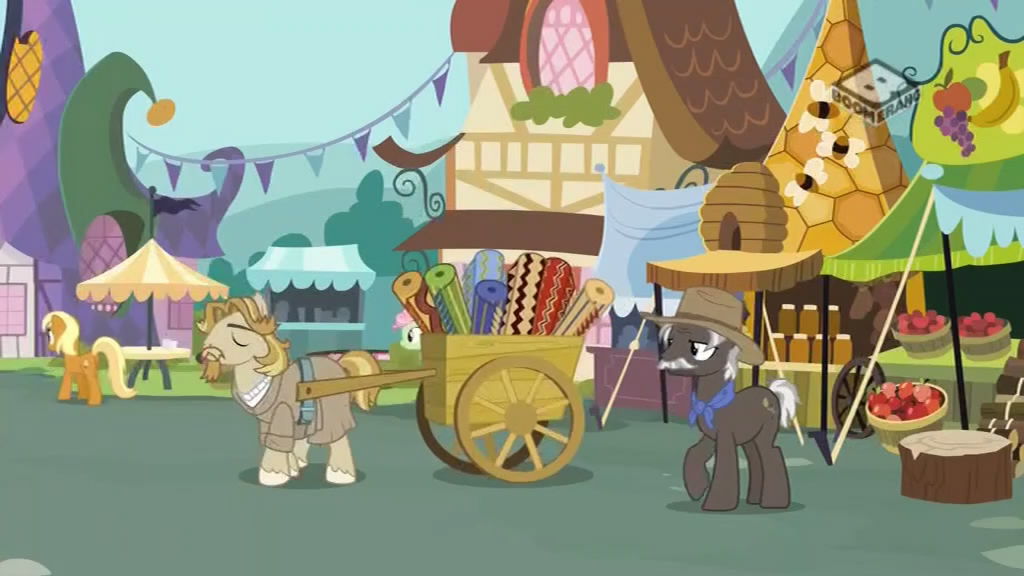
Ponyville’s iconic farmers market, a cornerstone of community commerce for decades, is facing a crisis as rising stall fees push small vendors to the brink. Interviews with over a dozen stallholders reveal a growing exodus, with many citing unsustainable costs and inadequate support from local officials. The market, once a bustling hub for fresh produce, handmade crafts, and local gossip, now risks becoming a shadow of its former self.
The conflict erupted after the Ponyville Town Council approved a 40% fee hike last month, citing “urgent infrastructure upgrades” to the market’s aging stalls and drainage systems. Council member Copper Gauge, a staunch advocate for fiscal responsibility, defended the decision during a recent town hall. “We’re not just selling stalls—we’re investing in the future of this market. Without these upgrades, we risk losing the entire operation,” Gauge said.
But for stallholders like Dusty Verdict, a 22-year veteran selling organic apples and honey, the increase feels like a cash grab. “I’ve been here since I was a filly, and now I’m being told I can’t afford to stay? This isn’t just about money—it’s about the soul of Ponyville,” Verdict said, her voice cracking. Her stall, once a favorite for its seasonal apple ciders, now sits empty, with a “For Lease” sign hanging in the window.
The fees have disproportionately affected small-scale farmers and artisanal producers, many of whom operate on slim margins. A recent survey by the Ponyville Small Business Coalition found that 68% of market vendors have either reduced their hours or paused operations entirely. “These fees don’t just eat into our profits—they force us to cut corners,” said Penny Ledger, a 34-year-old who sells handmade leather goods. “Last month, I had to skip a week of payments to keep my stall open. I’m not the only one.”
The market’s decline has ripple effects beyond the stalls. Local restaurants and shops that rely on fresh produce from the market are reporting shortages, while the town’s tourism sector faces a potential downturn. “Ponyville’s reputation as a destination for farm-to-table dining is slipping,” said Mayor Spike’s economic advisor, Glimmer Thistle. “If we don’t act, we’ll lose not just vendors, but the entire ecosystem of local commerce.”
Critics argue the council’s approach ignores the market’s role as a public good. “This isn’t just a business—it’s a gathering place, a cultural touchstone,” said activist Sable Nightshade, who organized a recent protest outside the town hall. “When we charge vendors to be part of the community, we’re eroding the very thing that makes Ponyville unique.”
The council has faced mounting pressure to revise its policy. A petition demanding a moratorium on fee hikes has garnered over 1,200 signatures, while several local businesses have threatened to withdraw sponsorships. However, council spokesperson Apple Bloom dismissed calls for immediate action, stating, “We’re in the middle of a multi-year plan to modernize the market. We can’t just pause progress because a few voices are raising concerns.”
Some stakeholders suggest alternative solutions. “A tiered fee system based on stall size or turnover could ease the burden,” proposed Rarity’s boutique owner, Velvet Seam. “Or we could redirect some of these funds to grants for small vendors instead of charging them.”
The situation has also sparked a debate about the broader implications for rural economies. With Ponyville’s market at risk, similar struggles are emerging in neighboring towns like Appleloosa and Fillydelphia, where small farmers face rising costs and dwindling support. “This isn’t just Ponyville’s problem—it’s a symptom of a larger crisis in Equestria’s rural economy,” said economist Twilight Sparkle, though she emphasized her role as a neutral observer.
As the council weighs its next steps, the fate of Ponyville’s farmers market hangs in the balance. For now, the stalls remain half-empty, and the town’s signature market square echoes with the sound of empty carts and unspoken fears. What begins as a dispute over fees could soon become a defining moment in the fight to preserve Equestria’s local economy.
---
Sources:
- Dusty Verdict, apple vendor and market stallholder
- Penny Ledger, handmade leather goods seller
- Glimmer Thistle, economic advisor to Mayor Spike
- Sable Nightshade, local activist
- Velvet Seam, boutique owner and market critic
- Twilight Sparkle, neutral economic analyst