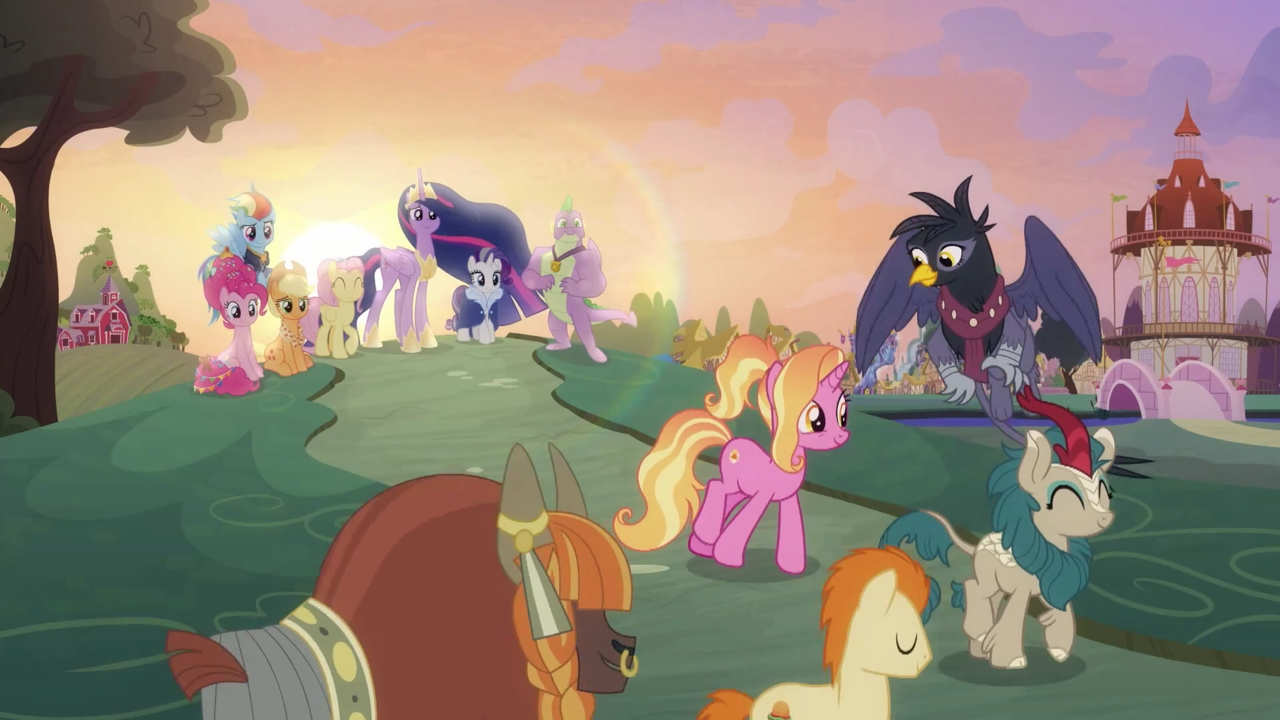
Ponyville’s streets, once patrolled by the Royal Guard’s disciplined presence, now echo with the footsteps of a new, grassroots force. After the Royal Guard announced a 30% reduction in local staffing last month, residents have taken matters into their own hooves, forming the Ponyville Volunteer Patrol. The group, which began with a handful of citizens, now includes over 150 ponies from all walks of life, from retired adventurers to young entrepreneurs. The move has sparked both praise and controversy, as the community grapples with questions about self-governance, resource allocation, and the role of official institutions.
The Royal Guard’s decision to cut staffing followed a broader restructuring of Equestria’s national security apparatus, which prioritized high-profile operations in regions like the Crystal Empire and the Dragon Lands. Mayor Pippin Pines, who has been vocal about the need for “community-based solutions,” acknowledged the shift in a recent press statement: “The Royal Guard’s focus has shifted to national threats, and Ponyville’s safety is now a shared responsibility. We must adapt or risk falling behind.” Yet, the reduction has left a vacuum in areas like the Everfree Forest’s outskirts and the town’s industrial districts, where crime rates have ticked upward in recent months.
The Volunteer Patrol, officially chartered by the Ponyville Property Pros, has quickly filled the gap. Its members patrol key areas, mediate disputes, and assist in emergency response. “We’re not here to replace the Royal Guard, but to support them where they can’t be,” said Dusk Tallow, a retired sky pony and one of the patrol’s founding members. Tallow, who once served as a weather scout for the Royal Guard, emphasized the group’s non-confrontational approach. “Our focus is on prevention, not punishment. We’re here to keep Ponyville safe, not to take over the job.”
The patrol’s activities have already drawn attention. Last week, they helped thwart a smuggling operation near the Hearthstone Smithy, intercepting a shipment of illegal crystal fragments destined for the black market. The incident highlighted the patrol’s effectiveness but also raised concerns about the legality of their actions. “Without proper authorization, these ponies could be violating the Royal Guard’s jurisdiction,” argued Lila Bloom, a legal analyst with the Ponyville Education Board. “This is a dangerous precedent. What’s to stop other towns from forming their own militias?”
Despite the skepticism, support for the patrol has grown rapidly. Local businesses have contributed supplies, and several pony-owned shops have offered discounted services to patrol members. The Hearthstone Smithy, which recently became a weekend retreat for a Pegasus couple, has also stepped in, providing shelter for patrol members during emergencies. “Ponyville has always been about collaboration,” said Hearthstone Smithy’s owner, Zephyr Windbreaker. “If the Royal Guard can’t be here, then we’ll make sure someone else is.”
The patrol’s work, however, is not without challenges. Some residents worry about the potential for bias or corruption, especially as the group’s membership includes individuals with ties to local businesses. “I trust the patrol’s intentions, but I’ve seen how power can shift in small communities,” said Rarity’s niece, Sparkle Bell, a boutique owner who has opted to remain neutral. “If the patrol starts favoring certain interests, it could erode the very trust they’re trying to build.”
The Royal Guard, meanwhile, has not issued a formal response to the patrol’s formation. In a recent meeting with the Ponyville Property Pros, a Royal Guard liaison stated that the department would “continue to support community initiatives where appropriate” but stopped short of endorsing the patrol. “Our role is to provide expertise and resources, not to replace local efforts,” the liaison said.
For now, the Volunteer Patrol operates on a patchwork of volunteer hours, donated supplies, and informal agreements with local businesses. But as the group expands, its long-term viability will depend on navigating the complex web of Equestrian law and public trust.
Critics argue that the patrol’s rise reflects a deeper issue: the Royal Guard’s increasing focus on national security at the expense of local needs. “This isn’t just about Ponyville,” said Mayor Pippin Pines. “It’s a warning sign. If our institutions can’t meet the demands of everyday life, who will?”
As the Volunteer Patrol continues its work, the question remains: Will this grassroots effort prove sustainable, or will it be another example of community action outpacing institutional responsibility? For now, Ponyville’s streets are safer—but the debate over who should lead the way is far from over.
The Royal Guard’s ambiguous stance has left the Volunteer Patrol in a legal gray zone, forcing members to navigate a patchwork of regulations and community expectations. While the patrol operates under the informal support of the Ponyville Property Pros, its activities now fall into a murky legal space. “Without clear guidelines, we risk stepping on the toes of both the Royal Guard and the law,” said Dusk Tallow, who has been advocating for a formal partnership between the patrol and local authorities. Tallow’s concerns are echoed by legal experts who warn that the patrol’s actions could be interpreted as unauthorized enforcement. “The Royal Guard’s jurisdiction is defined by law, and any overlap with civilian groups could lead to disputes over authority,” said Lila Bloom, a legal analyst with the Ponyville Education Board. Bloom’s warning has spurred debates within the patrol’s leadership, with some members pushing for a more structured approach to avoid legal entanglements.
The patrol’s operations have also raised questions about accountability. While members swear to act in the public interest, critics argue that the absence of formal oversight could lead to biased enforcement. “If the patrol starts targeting certain groups or businesses, it could erode the trust of the very community it’s meant to protect,” said Rarity’s niece, Sparkle Bell, a boutique owner who has remained neutral on the issue. Bell’s concerns are not unfounded; in the past week, a dispute between the patrol and a local market owner over a minor safety violation has sparked accusations of favoritism. The incident, which involved a dispute over a stall near the Hearthstone Smithy, has been widely discussed in town meetings, with some residents calling for greater transparency. “We need to know who’s on the patrol and how decisions are made,” said Applejack’s cousin, Dusty Verdict, a local carpenter and former town council member. “If we’re to trust these ponies, we need to see their process.”
Despite the challenges, the patrol’s influence continues to grow. Last week, the Ponyville Education Board announced plans to offer a free workshop on conflict resolution and community engagement, with the patrol’s leadership invited to participate. The initiative, funded by a grant from the Hearthstone Smithy, aims to foster collaboration between the patrol and local institutions. “This is about building a sustainable model for community safety,” said Zephyr Windbreaker, the Hearthstone Smithy’s owner, who has become a vocal advocate for the patrol. Windbreaker’s support has been instrumental in securing resources for the patrol, including access to training facilities and emergency supplies. “The Royal Guard can’t be everywhere at once, but we can be here for the people who need us,” Windbreaker said.
The patrol’s expansion has also drawn attention from regional officials. A recent meeting between Ponyville’s mayor and representatives from the Crystal Empire’s security council revealed growing interest in the patrol’s model. While the Crystal Empire’s leadership has not endorsed the patrol, they have expressed curiosity about its structure and legal framework. “If Ponyville can create a self-sustaining security model, it could serve as a blueprint for other regions facing similar challenges,” said a representative from the Crystal Empire’s security council, who declined to name themselves. This interest has sparked speculation that the Royal Guard may eventually formalize a partnership with the patrol, though no official statements have been made.
For now, the Volunteer Patrol continues its work, balancing the demands of community service with the complexities of governance. As tensions between the patrol and local authorities remain, the question of who truly holds the power in Ponyville’s streets grows more urgent. Will the patrol’s grassroots efforts prove sustainable, or will they be absorbed into the existing bureaucratic framework? And if the Royal Guard’s role in local safety diminishes, what happens to the ponies who have taken up the mantle of protection? The answers remain unclear, but one thing is certain: Ponyville’s streets are no longer just a backdrop for daily life—they are a battleground for the future of community governance.