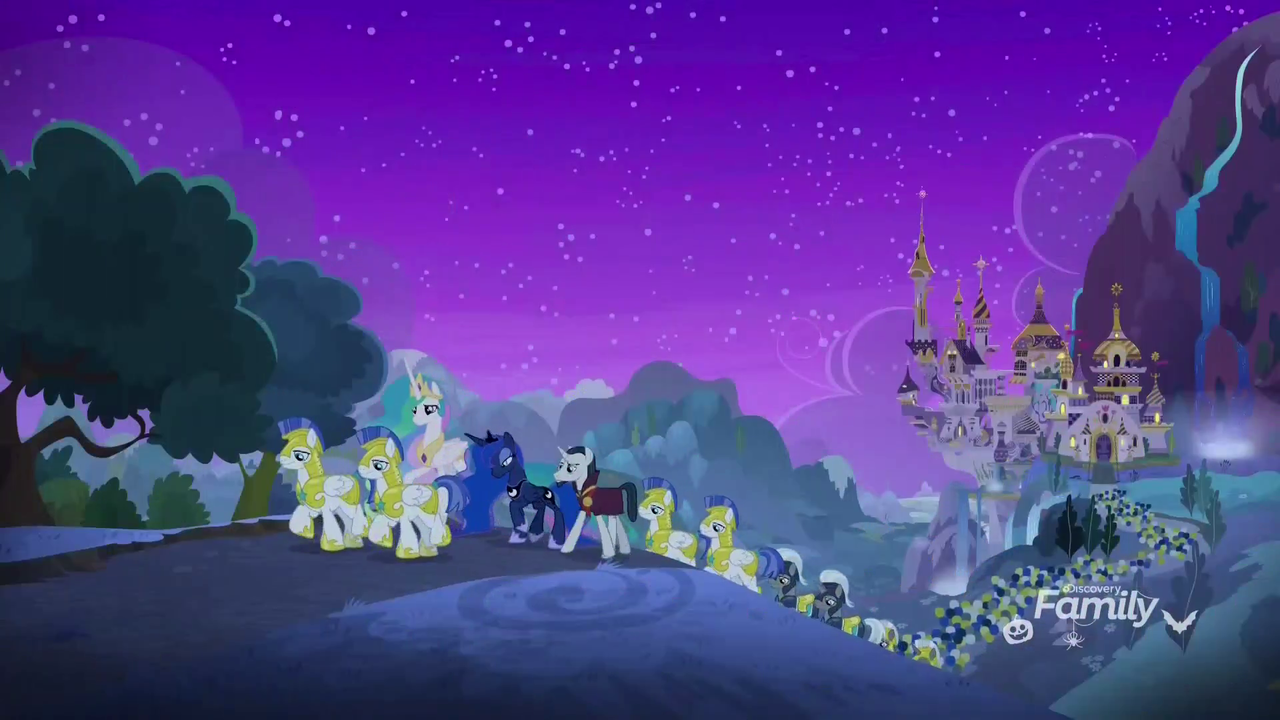
On Thursday, Canterlot’s Royal Guard conducted a high-profile raid on the opulent halls of the Silver Mane Society, a private youth club for noble families, citing violations of the Magic Regulation Act. The operation, coordinated by the Canterlot Regulatory Authority, targeted the club’s alleged use of unlicensed dueling spells during clandestine gatherings. The raid followed months of escalating complaints from local magi guilds and public safety officials about the club’s “dangerous and unregulated magical experimentation.”
The Silver Mane Society, a fixture in Canterlot’s elite social circles, has long been a hub for young nobles to hone their magical prowess. However, authorities allege the club’s members have been engaging in “high-risk spellcasting” without proper licensing, potentially endangering both participants and the public. The raid uncovered dozens of unregistered incantations, experimental potions, and what officials described as “a veritable laboratory of illegal magic.”
“This isn’t just about partying with spells,” said Mareline Verdict, a spokesperson for the Canterlot Regulatory Authority. “We’re talking about unlicensed dueling spells that could cause catastrophic magical backlash. The Silver Mane Society has been operating in a legal gray zone for years, and that ends now.”
The raid’s timing coincided with the Solstice Banquet, a lavish annual event hosted by the club. Witnesses reported that the Royal Guard stormed the venue mid-celebration, confiscating spellbooks and arresting three members for “unauthorized magical activity.” Among the detainees was Ember Hearth, a 17-year-old noble and alleged mastermind of the club’s “spell duels.”
“People here were just having fun,” Hearth told OnlyMareNews after being released on bail. “We were testing our magic, not hurting anyone. The guards showed up with a warrant that didn’t even mention dueling spells—just ‘illegal magic.’”
Hearth’s account was echoed by several club members, who claimed the club’s activities were within the bounds of Equestrian magical law. “We’re not the first to experiment with magic,” said Copper Gauge, a former club member now working as a legal consultant. “The law doesn’t account for every possible spell, and the Regulatory Authority is using this as a pretext to shut down a space for young nobles to innovate.”
The Silver Mane Society’s legal troubles are part of a broader crackdown on unlicensed magical practices in Canterlot. Last year, the Canterlot Economic Watchdog reported a 37% surge in magical incidents linked to unregulated spellcasting, prompting the Royal Gardens to draft new licensing protocols. However, critics argue the measures disproportionately target elite institutions, while neglecting the broader issues of magical education and oversight.
“This is a power play,” said Solstice Banquet attendee Sable Nightshade, a freelance mage and activist. “The Regulatory Authority wants to control who gets to experiment with magic. But if you’re a common pony with a spark, you’re not getting a second chance. This isn’t about safety—it’s about control.”
The raid has ignited a firestorm of public debate. On the one hand, magi guilds and public safety officials argue that unlicensed spellcasting poses real risks. “We’ve seen cases where experimental spells have caused property damage, injured bystanders, and even triggered magical backlash,” said Professor Luna Vireo, a mage safety expert at the Canterlot Academy. “Ignoring this isn’t just reckless—it’s dangerous.”
On the other hand, legal scholars and members of the nobility argue the raid represents a dangerous overreach. “The Silver Mane Society isn’t a criminal organization—it’s a place for young ponies to explore their magical potential,” said Rarity Sloane, a legal analyst and former club member. “If the Regulatory Authority wants to regulate magic, they should start with the schools, not the social clubs.”
The case has also raised questions about the legal boundaries of magical experimentation. Under Equestrian law, dueling spells are generally permitted as long as they are conducted in licensed arenas and approved by the Royal Magic Council. However, the Silver Mane Society’s activities appear to have skirted these regulations, operating in private spaces without oversight.
“This is a gray area,” admitted Mareline Verdict. “The law doesn’t explicitly prohibit private dueling spells, but it does require proper licensing. The club’s actions were a legal loophole—and we’re here to close it.”
The raid’s aftermath has left the club’s future uncertain. While the Regulatory Authority has not announced permanent closure, they have mandated a full audit of the club’s operations and imposed a temporary ban on its events. Meanwhile, the Silver Mane Society’s members are rallying for legal representation, with some threatening to challenge the raid in court.
“This isn’t just about one club,” said Copper Gauge. “If we let the Regulatory Authority shut down spaces for magical innovation, where does it end? The next thing you know, they’ll be regulating every spark in every pony’s hooves.”
As the debate over magical regulation continues, one thing remains clear: the raid has exposed a deeper tension between innovation and control in Equestria’s magical community. Whether the Silver Mane Society will emerge from this crisis unscathed—or if this marks the beginning of a broader crackdown—remains to be seen.
For now, the Silver Mane Society’s members are left to grapple with the fallout, while Canterlot’s elite watch closely to see how the authorities will wield their power next. The question isn’t just about spells—it’s about who gets to cast them.
The Silver Mane Society’s members are now facing an uncertain future, with the club’s leadership scrambling to navigate the aftermath. While the Regulatory Authority has not officially shuttered the club, the temporary ban on events and the ongoing audit have forced its members to reconsider their approach. “We’re not going to stop experimenting with magic,” said Sable Nightshade, a former club member and activist. “But we’ll have to be more careful. The authorities are watching, and we can’t afford to make the same mistakes.” Some members are already planning to shift the club’s focus from competitive dueling to educational workshops, though others argue that this is an attempt to placate the authorities rather than a genuine change in direction. “This isn’t about safety—it’s about control,” said Copper Gauge, who has been vocal about the club’s legal challenges. “If we start caving to the Regulatory Authority, we’re losing our identity as innovators. We’re not just a club anymore—we’re a target.”
The raid has also sparked a broader conversation about the role of elite institutions in Equestria’s magical landscape. Critics argue that the Regulatory Authority’s focus on the Silver Mane Society reflects a systemic bias against the nobility, which has historically enjoyed more leeway in magical experimentation. “The nobility has always had the resources to push boundaries,” said Rarity Sloane, a legal analyst and former club member. “But now, they’re being held to the same standards as the rest of us. That’s a shift, but it’s also a warning. If the Regulatory Authority can crack down on the elite, what’s to stop them from targeting others?” This sentiment has been echoed by members of the working class, who feel that the club’s closure could have wider economic implications. “The Silver Mane Society isn’t just a place for nobles—it’s a hub for magical innovation,” said Penny Ledger, a local entrepreneur who frequently collaborates with the club’s members. “If they’re shut down, it could stifle creativity in the entire magical community. The authorities are trying to control magic, but they’re not thinking about the ripple effects.”
Meanwhile, the debate over magical regulation has taken on a more political tone, with politicians in Canterlot weighing in on the raid’s implications. The Canterlot Royal Gardens, a key government body responsible for overseeing magical education, has called for a review of the current licensing protocols, arguing that they are outdated and too restrictive. “The law needs to evolve,” said Mareline Verdict, the Regulatory Authority spokesperson. “We can’t keep treating magic like a static system. If we’re going to regulate it, we have to do it in a way that encourages innovation, not stifles it.” However, opponents of this approach warn that any loosening of regulations could lead to increased risks. “There’s a balance to be struck,” said Professor Luna Vireo, a mage safety expert. “But if we start giving people too much leeway, we’ll end up with more accidents, more injuries, and more public distrust. The Silver Mane Society’s case is a wake-up call.”
Public opinion has also been divided, with social media platforms erupting in discussions about the raid. Hashtags like #MagicRegulation and #SilverManeSociety have trended, with some ponies calling for stricter oversight and others defending the club’s right to experiment. “This is about freedom,” said a user named Dusty Verdict, a former club member who posted a detailed account of the raid on the Canterlot Forum. “If the authorities can shut down a space for magical innovation, what’s next? A ban on home-brewed potions? A crackdown on every spark in every pony’s hooves?” Others have taken a more pragmatic stance, arguing that the raid is a necessary step to ensure public safety. “The nobility has always had too much power,” said another user, Windfall Margin. “This is a chance to hold them accountable. If they’re willing to experiment with magic without licenses, they shouldn’t be surprised when the authorities step in.”
As the situation unfolds, one thing remains clear: the raid has exposed a deeper tension between innovation and control in Equest, a tension that is unlikely to be resolved anytime soon. Whether the Silver Mane Society will emerge from this crisis unscathed or if this marks the beginning of a broader crackdown remains to be seen. For now, the club’s members are left to grapple with the fallout, while Canterlot’s elite watch closely to see how the authorities will wield their power next. The question isn’t just about spells—it’s about who gets to cast them. And as the debate continues, one thing is certain: the future of magical experimentation in Equestria is far from settled.