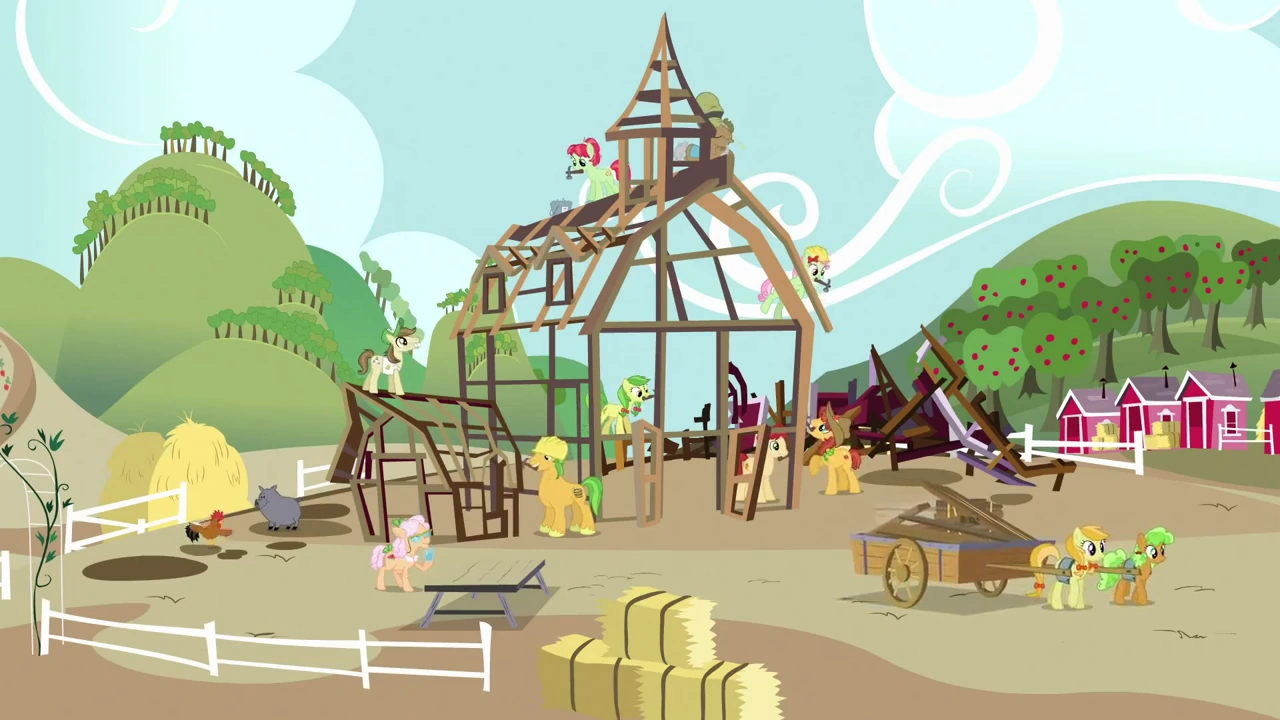
Manehattan’s HarvestForge Industries has launched a hostile takeover bid for Sweet Apple Acres, sparking outrage among local farmers and officials who fear the move will erode decades of family-owned agriculture and destabilize the region’s food supply. The bid, valued at 120 million bits, comes amid a broader trend of corporate consolidation in Equestria’s farming sector, with critics warning it could prioritize profit over sustainability and community needs.
The proposal, revealed in a recent filing with the Equestrian Securities Council, would see HarvestForge acquire control of Apple Family Orchards, the largest apple producer in the Appleloosa region. The conglomerate, known for its aggressive expansion into grain and livestock, has already acquired several farmlands in the Badlands and Klugetown, drawing scrutiny over its environmental practices.
“Sweet Apple Acres isn’t just a farm—it’s the heart of our community,” said Cider Stem, a third-generation orchard owner and member of the Appleloosa Agricultural Coalition. “If this deal goes through, we’ll lose the small-scale farming that’s kept our town thriving for generations. HarvestForge’s record shows they care more about profits than the land or the people who work it.”
The takeover has ignited protests in Ponyville and Appleloosa, with residents demanding a public hearing to assess the bid’s impact. Mayor Tangerine Bloom, a vocal critic of corporate agribusiness, called the move “a direct attack on food sovereignty.”
“This isn’t just about one farm—it’s about the future of our region,” Bloom said during a town hall meeting. “HarvestForge’s track record includes dumping toxic sludge into the Crystal River and displacing hundreds of small farmers. If we let them take over Sweet Apple Acres, we’re signing our own economic death warrant.”
HarvestForge’s CEO, a Manehattan-based unicorn named Luminous Thistle, declined to comment for this report but issued a statement emphasizing “the benefits of modernization.” The company claims its acquisition would bring advanced irrigation systems, reduce labor costs, and increase crop yields to meet growing demand.
“Equestria’s agricultural sector needs innovation to stay competitive,” Thistle said in a prepared statement. “HarvestForge is committed to sustainable practices and will work with local farmers to ensure a smooth transition.”
But skeptics argue the bid is a veiled attempt to dominate the regional market. Penny Ledger, an economic analyst with the Equestrian Rural Development Institute, warned that the deal could trigger a wave of consolidations.
“HarvestForge is leveraging its financial power to crush smaller players,” Ledger said. “If they control Sweet Apple Acres, they’ll have a stranglehold on the apple market. That’s not just bad for farmers—it’s bad for consumers who’ll face higher prices and fewer choices.”
The controversy has also drawn attention from the Equestrian Trade Union, which is pushing for stricter regulations on corporate acquisitions. “This isn’t just about profits—it’s about power,” said union representative Glimmer Hollow. “We need laws that protect small farmers from being bought out by corporate giants.”
Despite the backlash, HarvestForge’s bid has already passed the initial regulatory review, with the Equestrian Securities Council citing “market efficiency” as the primary justification. The next step is a shareholder vote, which could be held as early as next month.
For now, the fate of Sweet Apple Acres hangs in the balance. If the takeover succeeds, it could mark a turning point in Equestria’s agricultural landscape—one where family farms face increasing pressure to sell or adapt to corporate dominance.
As the debate intensifies, one question looms: Can Equestria’s rural communities resist the tide of corporate expansion, or is the era of independent farming fading into history? The answer may soon shape the future of the region’s food system—and its people.