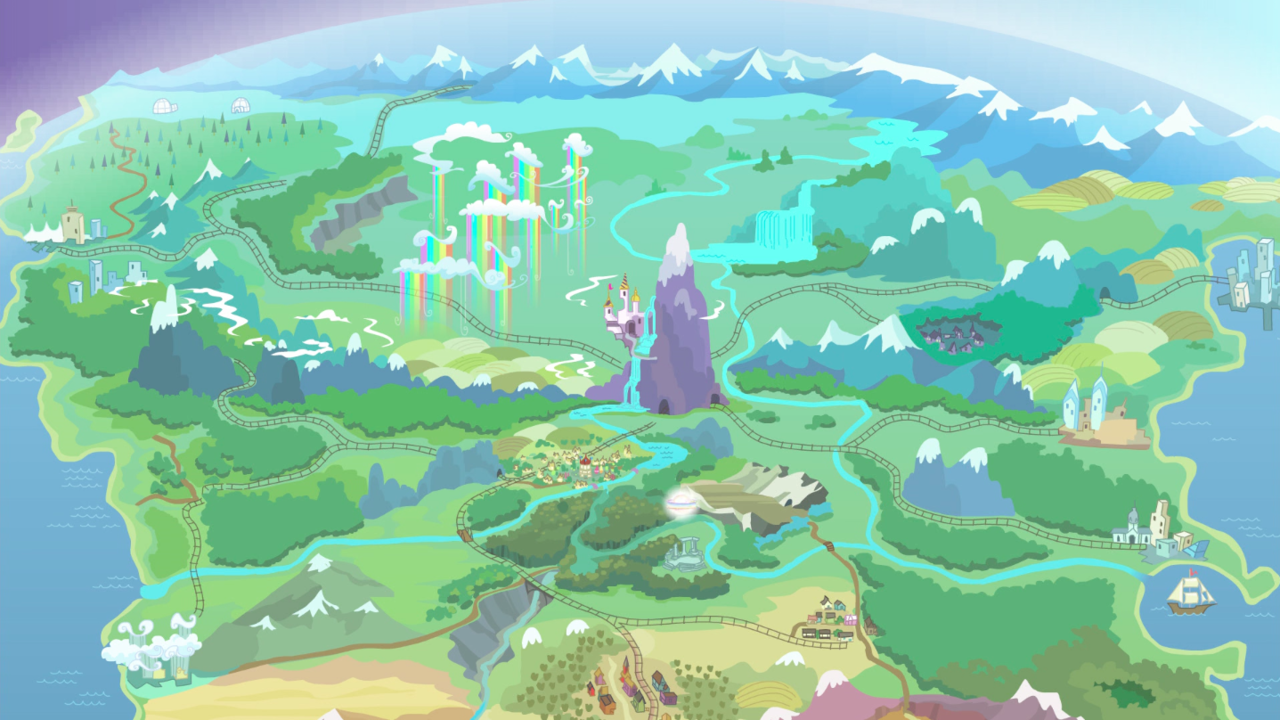
Southern Equestria’s magical communications network experienced a six-hour collapse on Thursday, plunging entire districts into darkness and disrupting critical services. The outage, which affected regions from Ponyville to Manehattan, left businesses scrambling, ponies unable to cast spells remotely, and emergency services struggling to coordinate. While officials have not yet confirmed the cause, the incident has ignited urgent debates about the fragility of Equestria’s spell-based infrastructure.
The failure began at 9:47 a.m. local time, when a surge in magical energy across the southern regions caused the network’s core nodes to overload. For six hours, ponies across the affected areas were unable to send or receive spells, rendering everything from automated mail delivery to emergency alerts inoperable. “It was like the entire town was disconnected from the grid,” said Clover Margin, a small business owner in Fillydelphia. “My shop’s automated inventory system went dark, and I couldn’t contact suppliers or customers. It was chaos.”
The outage’s impact was immediate and widespread. In Ponyville, the Crystal Empire’s magical transit system experienced delays, forcing ponies to rely on slower, non-magical transportation. Emergency responders in Manehattan reported difficulty coordinating with remote units, while the Equestrian Trade Council’s digital marketplace saw a 70% drop in transactions. “This isn’t just about convenience,” said Dusk Stripe, a tech analyst at the Canterlot Institute. “It’s about the backbone of our economy. If we can’t rely on magical communications, we’re exposing vulnerabilities that could be exploited.”
The cause of the outage remains under investigation. Preliminary reports suggest a surge in magical energy from an unregulated spellcasting event in the Everfree Forest, though officials have not officially confirmed this. “There’s no evidence of sabotage, but we’re not ruling anything out,” said Rarity Bloom, a spokesperson for the Equestrian Trade Council. “We’ve launched an emergency review of the network’s protocols to prevent future failures.”
The incident has also raised questions about the lack of redundancy in Equestria’s magical infrastructure. Unlike the physical internet, which relies on multiple, interconnected systems, the magical communications network appears to depend on a centralized core. “This is a wake-up call,” said Starlight Glimmer, a magical engineering expert. “If the core fails, the entire system goes down. We need to invest in decentralized networks, just like we do with physical data systems.”
Local businesses are already pushing for solutions. In Ponyville, a coalition of merchants has proposed a temporary backup system using enchanted scrolls and physical messengers. “We can’t wait for the government to act,” said Iron Press, a Ponyville-based entrepreneur. “If we don’t adapt, we’ll be left behind.” Meanwhile, the Canterlot Institute has announced plans to develop a prototype for a decentralized magical network, though funding remains uncertain.
The outage also highlighted the growing reliance on magical technology in everyday life. From automated farming to spell-based security systems, ponies have become dependent on a network that, until now, has been largely invisible. “This is a reminder that even the most advanced systems can fail,” said Pinkie Pie, a local activist. “We need to build resilience, not complacency.”
As officials work to understand the root cause, the incident has sparked broader discussions about the risks of over-reliance on magical infrastructure. With no clear answers yet, the question remains: how prepared is Equestria for the next outage?
---
Quotes:
- Clover Margin, Fillydelphia business owner: “It was like the entire town was disconnected from the grid. My shop’s automated inventory system went dark, and I couldn’t contact suppliers or customers. It was chaos.”
- Dusk Stripe, Canterlot Institute analyst: “This isn’t just about convenience. It’s about the backbone of our economy. If we can’t rely on magical communications, we’re exposing vulnerabilities that could be exploited.”
Implications: The outage underscores the need for redundancy in magical infrastructure and highlights the risks of centralized systems. As investigations continue, the incident has reignited calls for regulatory oversight and investment in decentralized networks. Whether Equestria can adapt to this challenge remains to be seen.
The incident has also prompted urgent calls for regulatory oversight and transparency in the management of magical infrastructure. Critics argue that the lack of public access to information about the network’s design and maintenance has left communities vulnerable. “When the grid fails, it’s not just a technical problem—it’s a governance failure,” said Spike, a former engineer turned policy advocate. “We need to know who controls these systems, how they’re maintained, and what happens when they fail. This isn’t just about backup plans; it’s about accountability.” The Equestrian Trade Council, which has historically downplayed the need for regulatory scrutiny, faces mounting pressure to address these concerns. A proposed bill by the Canterlot Institute’s tech committee aims to mandate public audits of major magical infrastructure projects, but its passage remains uncertain amid political gridlock.
Meanwhile, the outage has sparked a broader conversation about the risks of over-reliance on magical technology in daily life. From automated farming to spell-based security systems, ponies have become increasingly dependent on a network that, until now, has operated largely in the background. “This incident forced us to confront a reality we’ve ignored for too long,” said Luna, a cultural critic and columnist for The Canterlot Chronicle. “We’ve treated magical infrastructure as a given, like the physical internet, but it’s not immune to failure. The question isn’t whether the network will fail—it’s how prepared we are when it does.” This sentiment resonates with many in the affected regions, where the outage exposed the fragility of a system that underpins everything from food supply chains to emergency response.
In the wake of the collapse, local governments have begun drafting emergency protocols to mitigate future disruptions. In Ponyville, a coalition of merchants and civic leaders has proposed a temporary backup system using enchanted scrolls and physical messengers, a solution that has drawn mixed reactions. While some praise the initiative as a practical workaround, others argue it’s a stopgap measure that won’t address the systemic flaws. “Enchanted scrolls are useful, but they’re not scalable,” said Iron Press, the Ponyville entrepreneur who spearheaded the plan. “We need a network that’s resilient, not just a patchwork of temporary fixes.” The Canterlot Institute, meanwhile, has announced a pilot program to develop a decentralized magical network, though funding remains a major hurdle. “Decentralization isn’t just about redundancy—it’s about empowering local communities to manage their own systems,” said Starlight Glimmer, a key figure in the project. “But without investment, we’re just talking about ideas.”
The outage has also highlighted disparities in access to magical technology across Equestria. While major cities like Manehattan and Canterlot rely heavily on centralized magical networks, rural and underserved regions often lack the same level of infrastructure. “This outage exposed a digital divide that’s been growing for years,” said Rarity Bloom, a representative of the Equestrian Trade Council. “Ponies in the Crystal Empire or the Badlands have fewer resources to adapt to system failures. We need to ensure that no community is left behind when the grid goes down.” This disparity has fueled calls for a more equitable distribution of magical infrastructure resources, with some activists demanding a federal initiative to modernize rural spell networks.
As the investigation into the outage continues, officials are under pressure to provide clarity on the cause and prevent similar incidents in the future. The Canterlot Institute has launched an emergency task force to review the network’s protocols, but many are skeptical about its independence. “We need an independent body to investigate this, not a government agency with a vested interest in maintaining the status quo,” said Dusk Stripe, the tech analyst from the Canterlot Institute. “Otherwise, we’ll just be told the same answers we’ve heard before.” The Equestrian Trade Council, meanwhile, has announced plans to conduct a public forum on magical infrastructure reform, though the event’s timing and transparency have yet to be finalized.
For now, the focus remains on recovery. In Ponyville, the Crystal Empire’s transit system has resumed operations, and emergency services have restored basic coordination. But the incident has left a lingering sense of unease. “We can’t ignore the fact that this system is a single point of failure,” said Clover Margin, the small business owner who experienced the outage firsthand. “If it happens again, we’ll be in even worse trouble.” As Equestria grapples with the aftermath, the question remains: how prepared is a society built on magical technology to weather its own vulnerabilities? The answer, it seems, will shape the next chapter of Equestria’s technological and political landscape.
Quotes:
- Spike, former engineer and policy advocate: “When the grid fails, it’s not just a technical problem—it’s a governance failure. We need to know who controls these systems, how they’re maintained, and what happens when they fail.”
- Luna, cultural critic and columnist: “This incident forced us to confront a reality we’ve ignored for too long. We’ve treated magical infrastructure as a given, like the physical internet, but it’s not immune to failure.”