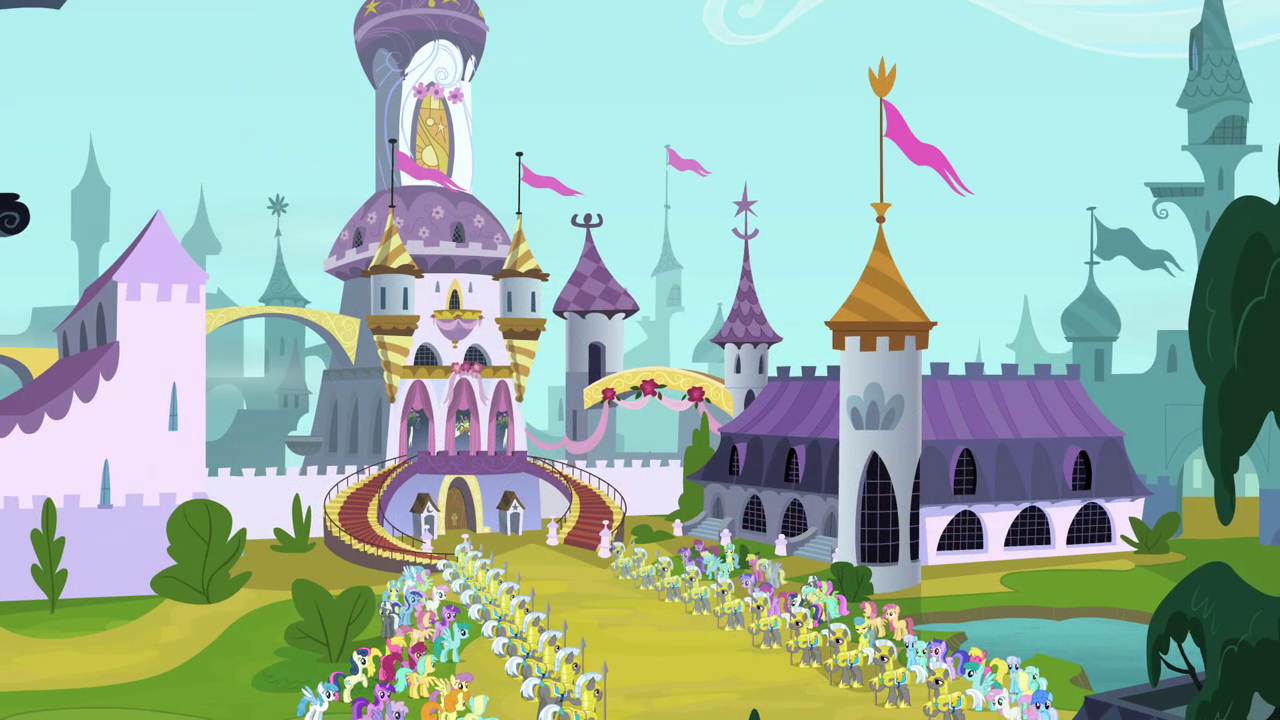
Canterlot’s glittering spires and marble halls have long been a stage for royal decrees and political theater, but this week, the city’s legislative chamber buzzed with a new kind of drama: the proposal to establish a permanent inter-species parliament. The idea, championed by a coalition of pony, dragon, and griffon representatives, aims to address escalating tensions over resource allocation, trade disputes, and voting rights. Yet as the proposal gained traction, critics warned it could deepen divisions rather than heal them.
The bill, titled the Unified Accord Framework, would create a legislative body with equal representation for each major species in Equestria—ponies, dragons, griffins, and pegasi. Proponents argue that decades of exclusive pony governance have left non-pony communities feeling sidelined. “The royal court has ignored our voices for too long,” said Mayor Sable Nightshade, a dragon mayor of the western mining town of Emberstone. “This isn’t about equality—it’s about survival. The dragon clans are running out of clean water, and the pegasi are fighting for airspace rights. We need a seat at the table, not a token gesture.”
The proposal’s momentum has been fueled by recent high-profile clashes. Last month, a griffon-led protest in Griffonstone turned violent after a group of pegasi blocked a trade route, citing territorial disputes. Meanwhile, dragon envoys have repeatedly accused pony officials of underfunding critical infrastructure in regions like Yakyakistan. “The old system is broken,” said Councilor Dusty Verdict, a pegasus advocate for inter-species reform. “We can’t keep pretending that pony-centric policies will work for everyone. The time for compromise is over—this is about real change.”
But not everyone is convinced. Opponents, including several prominent pony politicians, argue the parliament would entrench special interests and erode Canterlot’s centralized authority. “Equestria’s strength has always been its unity under one crown,” said Twilight Sparkle, a senior advisor to the royal court. “Creating a separate legislature risks fragmentation. What happens when the dragons and pegasi start passing laws that contradict the kingdom’s interests? We’ll end up with a patchwork of conflicting rules, not a stronger Equestria.”
The debate has also raised questions about representation. While the bill promises equal voting power for each species, critics argue it fails to address disparities in population size. Ponies make up over 80% of Equestria’s population, yet the proposal would grant each species the same number of seats regardless of demographic weight. “It’s a noble idea, but it’s not practical,” said Spike Tangle, a pony political analyst. “You can’t treat a species with 10 million members the same as one with 200,000. This could lead to gridlock, not governance.”
Supporters, however, counter that proportional representation is essential for legitimacy. “If we’re going to call this a democracy, we have to account for all voices,” said Pippin Feathers, a griffon activist from Griffonstone. “Ponies have dominated the political landscape for centuries. This isn’t about giving dragons more power—it’s about ensuring every species has a say in shaping the future.”
The proposal’s next steps remain uncertain. While the Canterlot Council has not yet voted on the bill, several key officials have signaled their interest. Chancellor Rarity, a staunch advocate for inter-species collaboration, has pledged to host a series of public forums to discuss the framework. Meanwhile, the royal court has called for a “thorough review” of the proposal’s implications.
For now, the debate rages on. As the sun sets over Canterlot’s legislative chamber, the air is thick with both hope and apprehension. Will the Unified Accord Framework mark a new era of unity—or become another political flashpoint? One thing is clear: the future of Equestria’s governance is no longer a question of royal decree alone. It’s a matter of survival, representation, and the will to forge a new path.
---
Quotes:
- “The royal court has ignored our voices for too long.” — Mayor Sable Nightshade, dragon mayor of Emberstone
- “You can’t treat a species with 10 million members the same as one with 200,000.” — Spike Tangle, pony political analyst
Implications: The inter-species parliament proposal could redefine Equestria’s political landscape, but its success hinges on navigating complex power dynamics and ensuring equitable representation. As tensions over resources and governance escalate, the kingdom faces a pivotal moment in its history.
The proposal’s momentum has been amplified by recent public demonstrations, with rallies in key cities like Manehattan and Baltimare drawing thousands of supporters and detractors. At a protest in Manehattan’s Central Plaza, a coalition of griffons, pegasi, and even some ponies chanted, “Equal voices, equal power!” while pony conservatives countered with signs reading, “Unity, not division.” The clash of ideologies has spilled into the media, with Equestria’s leading news outlets splitting on the issue. The Canterlot Chronicle ran a front-page editorial calling the parliament “a recipe for chaos,” while The Griffon Gazette hailed it as “a long-overdue reckoning.”
The debate over representation has also reignited old grievances. In Yakyakistan, a region with a significant dragon population, tensions have flared over resource allocation. Last week, a group of dragons staged a sit-in at the regional council, demanding immediate reforms to the current governance structure. “We’ve been told our concerns are heard, but they’re not,” said Dragon Delegate Ember Vex, a fiery orator from the eastern mining town of Flamepeak. “The current system is a façade. If we’re to be part of Equestria’s future, we need real power—not just symbolic gestures.” Meanwhile, pony representatives in Yakyakistan have accused the dragons of using the proposal as a tool to undermine pony-dominated policies. “This isn’t about fairness; it’s about control,” said Pony Councilor Luna Puddle, a vocal opponent of the bill. “We’ve already made concessions. Now we’re being asked to cede more authority to species that don’t share our values.”
The proposal’s legal and constitutional challenges are another layer of the debate. Critics argue that the Unified Accord Framework would require sweeping amendments to Equestria’s foundational laws, including the Royal Emergency Powers Act and the Treaty of the Everfree. Legal experts warn that the bill’s vague language on “equal representation” could lead to protracted court battles. “This isn’t just about politics—it’s about the rule of law,” said Professor Misty Gale, a constitutional scholar at the Canterlot University of Magic. “If we start granting different species different rights without clear legal boundaries, we risk creating a system where power is dictated by identity, not merit.” Meanwhile, supporters of the bill argue that the current legal framework is outdated and reflects a bygone era of pony-centric governance. “The law has to evolve,” said Pippin Feathers, the griffon activist. “If we don’t adapt, we’ll be left behind by the very changes we’re trying to address.”
The economic implications of the proposal are also a point of contention. Proponents argue that a more inclusive parliament could streamline trade negotiations and address regional disparities. For instance, the pegasi, who control much of Equestria’s aerial trade routes, have long demanded greater input in airspace regulations. “Right now, our policies are shaped by ponies who don’t understand the realities of flight,” said Pegasus Representative Zephyr Skies, a former commercial pilot. “A permanent parliament would give us a voice in the laws that govern our livelihoods.” However, pony business leaders warn that the proposal could lead to bureaucratic delays and increased costs. “If we start negotiating with multiple species, we’ll lose the efficiency that has made Equestria’s economy thrive,” said Pony Business Councilor Dusk Hollow, a veteran trade negotiator. “This isn’t just about politics—it’s about economic stability.”
The proposal’s potential impact on Equestria’s international standing is another factor in the debate. As tensions with neighboring kingdoms like Mount Aris and the Dragon Lands escalate, the need for a unified diplomatic strategy has become more pressing. Some argue that a permanent inter-species parliament could serve as a model for regional cooperation. “Equestria’s strength has always been its ability to unite under one banner,” said Chancellor Rarity, a staunch advocate for the proposal. “If we can create a system where all species have a say in decision-making, it could set a precedent for other regions.” However, critics point to the recent failure of Equestria’s maritime claims in the international tribunal as a cautionary tale. “We’ve already shown we can’t negotiate effectively with other kingdoms,” said Pony Diplomat Stormy Cloud. “Adding more voices to the table without clear guidelines will only complicate things further.”
As the debate rages on, one thing is clear: the Unified Accord Framework is more than a political proposal—it’s a test of Equestria’s ability to adapt to a changing world. Whether it will become a landmark in inter-species cooperation or a flashpoint for division remains to be seen. For now, the kingdom’s future is suspended in uncertainty, with each faction vying to shape the course of Equestria’s next chapter. The sun sets over Canterlot’s legislative chamber, and the air is thick with both hope and apprehension. The question is no longer whether Equestria needs a new political structure—it’s whether the kingdom can find a way to govern itself without losing its unity.