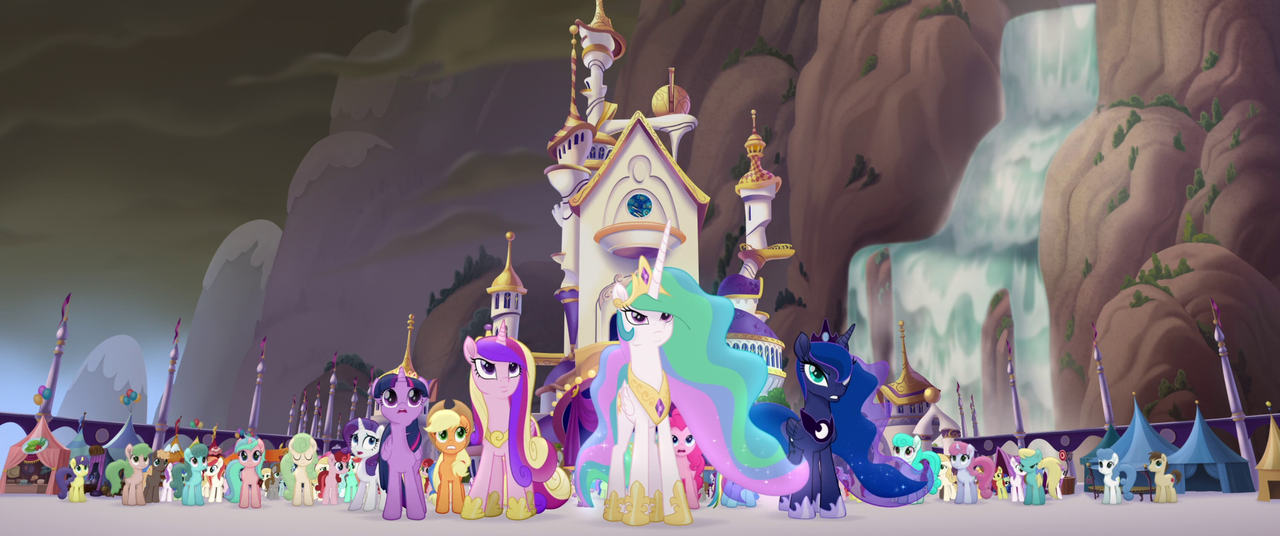
Canterlot’s city council voted Tuesday to revoke comedian Zephyr Mire’s performance permit after his recent routine mocked the royal family, igniting a firestorm of public debate over artistic freedom and royal protocol. The decision, announced at a hastily called emergency meeting, comes amid growing tensions between civic institutions and performers who push the boundaries of satire. Mire, a fixture in Canterlot’s underground comedy scene, had previously faced scrutiny for mocking the Mane Six in a 2023 bit that went viral, but his latest act—dubbed “The Crown’s Cracks”—has drawn unprecedented backlash.
The incident unfolded during Mire’s scheduled performance at the Grand Galloping Hall, a venue known for hosting both avant-garde and politically charged acts. According to eyewitnesses, Mire’s routine included a series of exaggerated sketches poking fun at Princess Celestia’s “over-enthusiastic sun-worship,” Luna’s “obsessive moon phases,” and the royal family’s “lavish tax policies.” The audience, a mix of students, critics, and royal supporters, erupted in applause during the first half but grew restless as the act progressed. By the final sketch, which depicted a fictional “royal family summit” where Celestia and Luna were forced to negotiate with a “tax-rebating dragon,” the crowd’s applause turned to murmurs of outrage.
“This isn’t just comedy—it’s a slap in the face to centuries of royal tradition,” said Mayor Clover Tusk, a longtime advocate for “cultural respect in public spaces.” Tusk, who chaired the city council’s emergency meeting, cited a 2021 ordinance that prohibits “disparaging remarks about the crown in public venues.” “We can’t allow performers to weaponize humor against institutions that uphold Equestria’s stability,” she said. “If we don’t draw the line, we risk normalizing disrespect toward our leaders.”
Mire, however, dismissed the council’s decision as an overreach. In a statement released via his Canterlot-based PR firm, he argued that satire is a cornerstone of free expression. “I’m not the first comedian to push boundaries, and I won’t be the last,” he said. “If the royal family wants to be taken seriously, they should stop clinging to outdated symbols and start engaging with the people. That’s the real joke—our leaders are out of touch.”
The controversy has already spilled into social media, where debates about censorship and artistic freedom have intensified. On the Canterlot Canter, a popular equine news aggregator, users split into two camps: those demanding stricter oversight of public performances and those condemning the council for stifling dissent.
“Artists have always used humor to critique power,” said Sable Nightshade, a cultural critic and former university professor. “Banning Mire sets a dangerous precedent. If we start policing every joke, where does it end? A pony can’t walk into a venue and say anything they want?”
But others argue that the royal family’s historical role as a unifying symbol justifies greater scrutiny. “Equestria’s stability isn’t just about magic—it’s about tradition,” said Penny Ledger, a civic planner and vocal supporter of the council’s decision. “If we let every comedian mock the crown, we risk eroding the very fabric of our society. The royal family isn’t a target for jokes; they’re a symbol of order.”
The incident has also raised questions about the role of venues in policing content. The Grand Galloping Hall’s owner, a retired show pony named Dusty Verdict, declined to comment but reportedly faces pressure from city officials to implement stricter pre-show reviews. “Venues can’t be the arbiters of free speech,” said Verdict in a recent interview. “But they also can’t ignore the backlash from their patrons. It’s a balancing act we’re all struggling with.”
Mire’s case is not isolated. Similar debates have erupted in other regions, such as Manehattan, where a recent comedy show mocking the city’s mayor sparked a citywide boycott of the venue. Meanwhile, in the Crystal Empire, activists have pushed for greater protections for performers, arguing that satire is essential to holding leaders accountable.
The council’s decision has also drawn criticism from legal experts. “This feels like a power grab by the city to silence dissent,” said Professor Gale Ironhoof, a constitutional law specialist at Celestia University. “While public figures deserve scrutiny, the council is using this as a pretext to suppress voices they disagree with. That’s not free speech—it’s censorship.”
As the debate rages, Mire has vowed to continue his work, though he’s now facing potential fines and legal action. His attorneys are considering challenging the city’s ordinance in court, arguing it violates Equestria’s Constitution’s First Amendment protections.
For now, the Grand Galloping Hall remains closed, with its doors locked and its stage stripped of props. But the controversy is far from over. As one Canterlot resident noted, “If comedy is banned for mocking the crown, what’s next? Mocking the council? Mocking the court? The line is disappearing—and that’s dangerous.”
The broader implications of this incident are clear: in an era of rapid social change, Equestria’s institutions are grappling with how to balance tradition, free expression, and public order. Whether the royal family, the city council, or the comedians will find a middle ground remains an open question—one that will shape the cultural and political landscape for years to come.