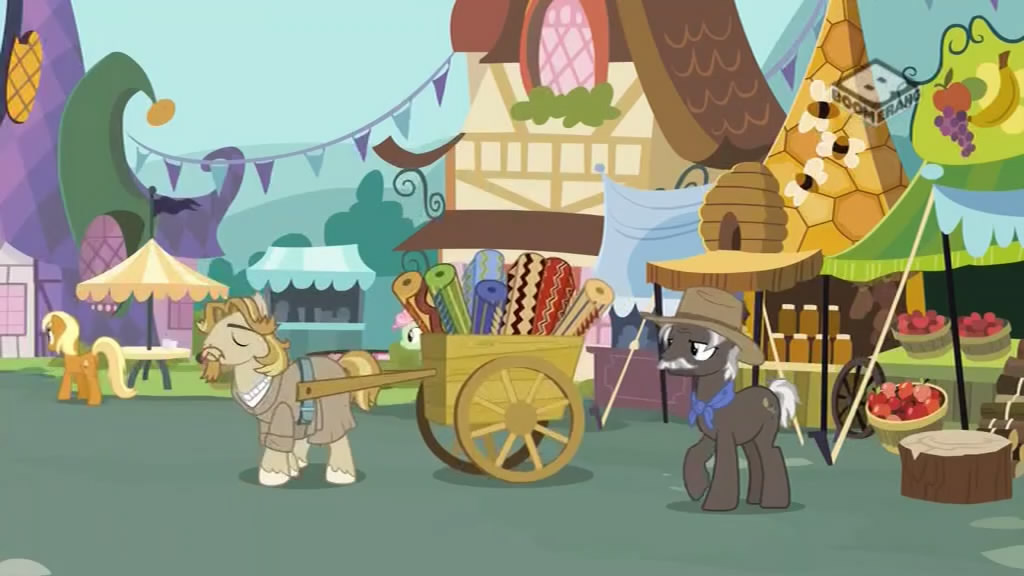
The Ponyville Cider Futures Market plunged 22% in a single day after an unseasonal frost destroyed nearly 40% of the region’s orchards, sending shockwaves through the local economy. The frost, which hit overnight, left thousands of apple trees in a critical state, with many orchards reporting 70-80% crop loss. The market’s collapse has raised urgent questions about the resilience of Equestria’s agricultural sector and the vulnerability of futures trading to climate disruptions.
Agricultural Disaster Sparks Market Chaos
The frost, which arrived two weeks earlier than historical records indicate, has left many orchard owners scrambling. At Sweet Apple Acres, Applejack, a third-generation cider farmer, reported that her trees were “in a coma,” with fruit frozen solid and branches cracked. “We’ve lost the entire harvest,” she said, her voice steady but grim. “This isn’t just about apples anymore—it’s about the livelihoods of everypony who depends on this industry.”
The impact was immediate. The Ponyville Futures Exchange, which oversees cider contracts, saw its benchmark futures price drop from 500 bits per bushel to 380 bits in a single trading session. Analysts blame the collapse on a perfect storm of factors: the frost, a lack of insurance coverage for climate-related losses, and the absence of a diversified crop portfolio in many orchards.
“We’re in uncharted territory,” said Zephyr Windbreaker, a market strategist at Hearthstone Smithy. “This isn’t just about the weather—it’s about the systemic risk of relying too heavily on a single commodity. If one season’s crop fails, the entire market can collapse.”
Local Economy Faces Unprecedented Strain
The crisis has rippled far beyond the orchards. With cider being a cornerstone of Ponyville’s economy, the downturn has already led to layoffs at processing plants and reduced orders for cider-related goods. At the Ponyville Property Pros, a local real estate firm, brokers reported a 15% drop in inquiries for agricultural land. “People are selling now, before the value plummets further,” said Rarity Mallow, a real estate analyst. “This is a perfect storm for the local economy.”
The situation has also sparked calls for government intervention. Mayor Pippin Pines, who has been vocal about climate adaptation measures, announced an emergency meeting with the Ponyville Education Board and Hearthstone Smithy to discuss potential relief packages. “We can’t let one bad season derail the entire region,” Pippin said. “We need to support farmers, stabilize the market, and invest in long-term solutions.”
Experts Warn of Broader Implications
The crisis has drawn attention from economists and agricultural experts across Equestria. At the Skyline Sprocket Research Institute, Dr. Sable Nightshade, a climate economist, warned that the event could mark a turning point in how the region approaches agricultural risk management. “We’ve been treating climate events as outliers,” she said. “But if this becomes a regular occurrence, we need to rethink everything—from insurance models to crop diversity.”
Nightshade’s research highlights a growing trend: over 60% of Ponyville’s orchards are planted with a single apple variety, leaving them vulnerable to climate shocks. “Diversification is the only way forward,” she said. “If we don’t adapt, we’ll face repeated crises like this.”
Market Uncertainty Lingers
Despite the immediate fallout, some traders remain cautiously optimistic. “This is a correction, not a crash,” said Spike Ledger, a futures broker at The Hearthstone Smithy. “The market will stabilize once the damage is assessed, but the long-term implications are clear. We need to rethink how we price risk in an era of climate uncertainty.”
The futures market’s volatility has also raised concerns about the financial stability of small-scale farmers. With many unable to afford insurance or diversify their crops, the crisis has exposed a critical gap in Equestria’s agricultural safety nets.
As the frost recedes and the damage becomes clearer, the Ponyville community faces a difficult reckoning. The question now is whether the region can rebuild its agricultural economy without repeating the same mistakes—and whether the market will recover in time to avoid a deeper crisis.
For now, the only certainty is that the cider futures market has entered uncharted waters, and the stakes have never been higher.
The crisis has also prompted a rare but urgent call for regulatory reform. At the Hearthstone Smithy, a coalition of farmers and industry representatives has demanded stricter oversight of futures contracts, arguing that the current system lacks safeguards for climate-related disruptions. “We need transparency and accountability,” said Copper Gauge, a member of the Ponyville Property Pros. “Farmers shouldn’t be left holding empty contracts when nature decides to play games with their livelihoods.” The coalition’s proposal includes a pilot program for climate insurance, funded by a portion of the futures market’s profits, which would provide financial cushions for orchards facing weather-related losses.
Meanwhile, the Ponyville Education Board has announced plans to integrate climate resilience into agricultural curricula at local colleges. “This isn’t just about apples anymore,” said Professor Gale Report, a lecturer at the Skyline Sprocket Institute. “Students need to understand how to adapt to unpredictable weather patterns, from soil management to crop rotation. If we don’t prepare the next generation, we’ll face the same crisis every year.” The board’s initiative includes partnerships with weather forecasting agencies and a grant program for orchards experimenting with drought-resistant apple varieties.
For now, the immediate focus remains on recovery. At Sweet Apple Acres, Applejack has begun mobilizing her family’s network of farmers to share resources and expertise. “We’re not going down without a fight,” she said. “Everypony in this region depends on each other. If one orchard can’t harvest, another has to step up.” Her efforts have sparked a grassroots movement among local farmers, with many volunteering to help neighbors repair damaged equipment and replant saplings.
Yet, the road to recovery is fraught with challenges. The frost has left many orchards in a state of crisis, with some trees unable to recover even with intensive care. “We’re looking at a two-year gap before we see any significant harvest,” said Rarity Mallow, a real estate analyst at Ponyville Property Pros. “That means a massive drop in income for farmers and a ripple effect across the entire supply chain.” The economic fallout could be particularly severe for small-scale orchard owners, many of whom lack the capital to invest in long-term recovery.
As the community grapples with the fallout, the broader implications of the crisis are becoming increasingly clear. The early frost has exposed a critical vulnerability in Equestria’s agricultural sector: its reliance on a single crop and a lack of adaptive infrastructure. While some argue that the market will stabilize once the damage is assessed, others warn that this event could mark the beginning of a more frequent and severe series of climate shocks. “We’ve been treating climate change as a hypothetical,” said Dr. Sable Nightshade, a climate economist at Skyline Sprocket. “But if this becomes a regular occurrence, we need to rethink everything—from insurance models to crop diversity. This isn’t just about cider anymore. It’s about the future of Equestria’s food security.”
The Ponyville Futures Exchange is now under pressure to revise its risk assessment models, incorporating climate data into its pricing algorithms. However, critics argue that such changes may come too late to prevent the next wave of losses. “The market is a reflection of reality, and right now, reality is in chaos,” said Spike Ledger, a futures broker at Hearthstone Smithy. “If we don’t adapt our systems to account for climate uncertainty, we’ll keep seeing the same pattern of panic and collapse.”
As the frost recedes and the damage becomes clearer, the Ponyville community faces a difficult reckoning. The crisis has forced a conversation about the fragility of Equestria’s agricultural economy and the need for systemic changes to protect both farmers and consumers. Whether the region can rebuild its cider industry without repeating the same mistakes remains an open question. For now, the only certainty is that the cider futures market has entered uncharted waters, and the stakes have never been higher. The next steps will determine whether this crisis becomes a turning point for Equestria’s agricultural resilience—or another warning sign of a changing climate.