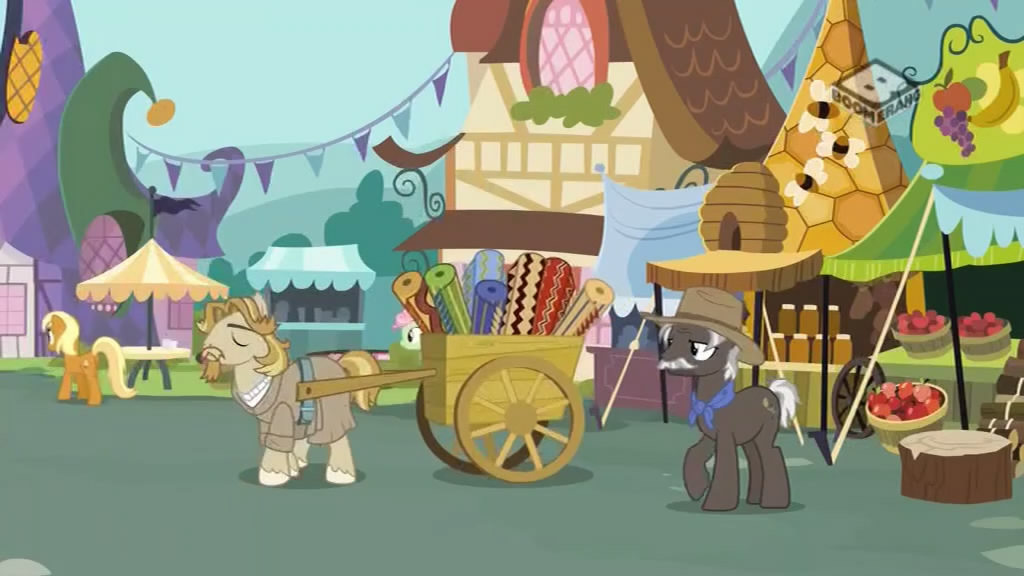
Manehattan’s housing market, once a symbol of Equestrian progress, is now a flashpoint for inter-species tension. Recent reports reveal a surge in discriminatory practices against Changeling refugees seeking residency in the city’s bustling districts, sparking fears of systemic exclusion. With over 1,200 Changelings having relocated to Manehattan since the Crystal Empire’s border tensions escalated two years ago, the demand for housing has outpaced supply—but not without friction.
Discrimination Takes New Forms
The issue has gained traction after a series of complaints to the Manehattan Housing Authority (MHA) revealed patterns of exclusion. “Landlords are refusing to rent to Changelings, citing ‘unfit living conditions’ or ‘property damage risks,’” said Dusty Verdict, a real estate agent with 15 years in the industry. “It’s not just about availability—it’s about prejudice masquerading as policy.”
Verdict’s claims align with data from the MHA, which noted a 37% increase in housing disputes involving Changelings since 2023. While the city’s magical infrastructure—such as enchanted insulation and self-repairing walls—should theoretically make Changeling homes more desirable, landlords are leveraging arcane loopholes to deny applications. “Some property owners are even requiring Changelings to prove they can ‘stabilize their magic’ before signing a lease,” added Verdict.
A Personal Struggle
For Sable Nightshade, a Changeling refugee who moved to Manehattan two years ago, the discrimination is a daily reality. “I worked three jobs to afford a small apartment in the Ironworks District, but my landlord suddenly said my ‘magic was disrupting the building’s energy grid,’” she recounted. “I had to move out within a week. Now I’m living in a tent in the back of a convenience store.”
Nightshade’s case is not isolated. According to the Changeling Integration Task Force (CITF), over 400 Changelings have been displaced in Manehattan since 2023, many forced to seek shelter in overcrowded temporary camps or abandon their jobs to pay rent. “This isn’t just about housing—it’s about being seen as a threat,” said CITF spokesperson Glimmer Spire, a former Canterlot diplomat. “Changelings are often viewed as unstable, even though their magic is a natural part of their biology.”
City Officials Acknowledge the Crisis
Mayor Apple Bloom, who has faced backlash for her handling of the refugee crisis, acknowledged the issue in a recent council meeting. “We’ve received numerous complaints and are reviewing our housing policies to ensure they’re equitable,” she said. However, critics argue the city’s response has been too slow. “They’re talking about ‘reviewing policies’ while Changelings are being turned away at the door,” said Spike, a community organizer with the Inter-Species Housing Coalition. “We need immediate action, not bureaucratic delays.”
The MHA has proposed a temporary moratorium on discrimination claims, but it faces opposition from property owners who argue it would harm the market. “We’re not against Changelings—we’re against the idea that we should subsidize their housing needs,” said Mayor Bloom. “This is a complex issue that requires balance.”
The Role of Magical Technology
The housing crisis has also highlighted the uneven distribution of magical technology. While Canterlot’s advancements in ambient magic have made luxury housing affordable for many, lower-income districts like Manehattan’s Old District lack such infrastructure. “The city’s magical grid is concentrated in wealthier areas, leaving Changelings—who often lack the resources to upgrade their homes—stranded,” explained Dr. Ember Vix, a magical engineering expert.
This disparity has led to a black market for magical upgrades, where Changelings are forced to pay exorbitant prices for basic enchantments. “Some landlords are charging 500 bits for a simple insulation spell, knowing Changelings have no choice,” said Vix. “It’s a form of exploitation disguised as service.”
Calls for Policy Reform
Advocates are pushing for stricter anti-discrimination laws and incentives for landlords to accept Changeling tenants. The CITF has proposed a “Magic-Neutral Housing Initiative,” which would require property owners to disclose any biases in rental practices. “We need transparency and accountability,” said Spire. “Changelings shouldn’t have to prove their worth to live in a city that claims to value diversity.”
However, the path to reform is fraught with challenges. With the city’s budget strained by recent infrastructure projects and rising magical energy costs, funding for new policies remains uncertain. “We’re fighting an uphill battle,” said Spike. “But if we don’t act now, we risk turning Manehattan into a city where some ponies are considered less than human.”
Looking Ahead
As the debate over housing equity intensifies, the situation in Manehattan serves as a microcosm of broader inter-species tensions. The Changeling refugee crisis has exposed deep-seated prejudices and the limits of Equestria’s commitment to inclusion. For now, the city’s residents—both Changeling and non-Changeling—are left grappling with a question that has no easy answer: How do you build a society where all ponies, regardless of biology, can thrive?
The answer, it seems, will take more than policy changes. It will require a shift in mindset—one that recognizes that magic, like humanity, is not a threat, but a part of the greater whole. Whether Manehattan can achieve that remains to be seen.