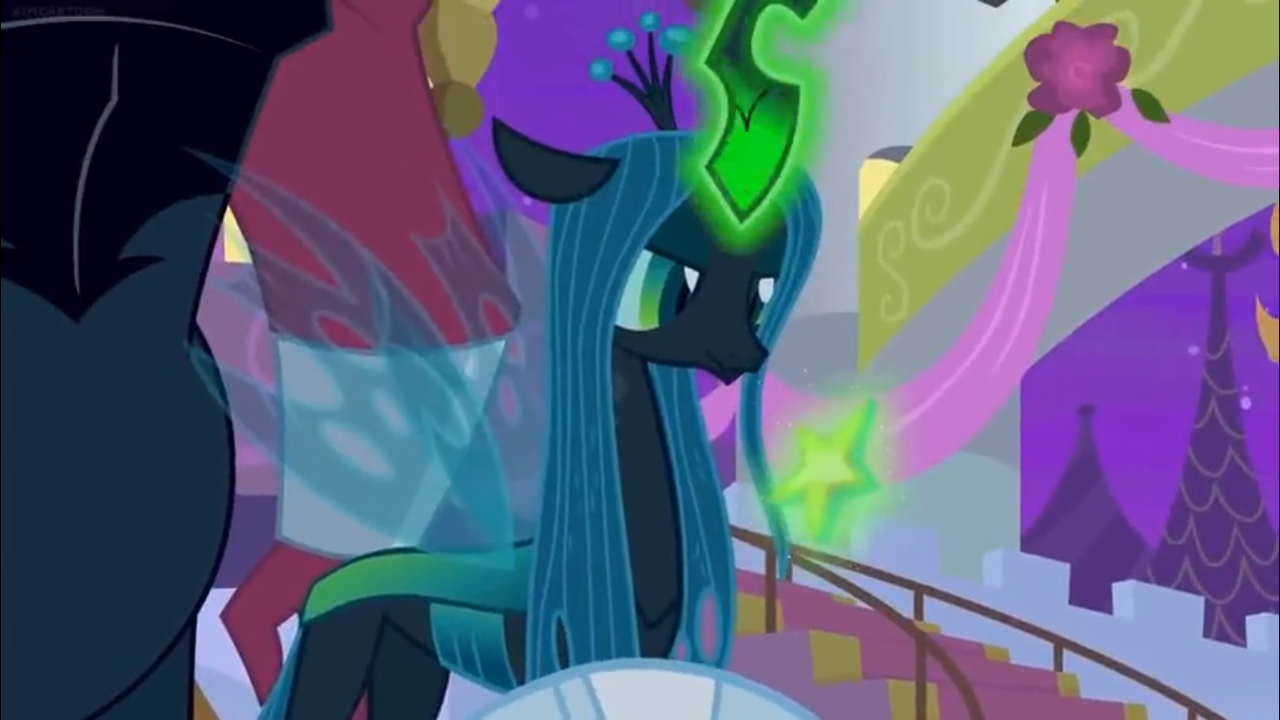
OnlyMareNews — The Changeling Integration Program, already mired in controversy over its assimilation strategies, faces a new crisis as officials scramble to address backlash against a controversial magical labor initiative. Last week, the Ministry of Inter-Species Affairs announced a temporary freeze on its latest project: the deployment of Enchanted Labor Cores—magical devices designed to automate manual tasks in rural Equestria, ostensibly to ease employment for non-native changelings. The decision follows mounting pressure from both native Equestrians and changeling advocates, who accuse the ministry of prioritizing technocratic solutions over genuine cultural reconciliation.
The Enchanted Labor Cores, developed in collaboration with Equestrian Robotics and the Ministry’s Arcane Research Division, are enchanted mechanical constructs capable of performing agricultural, construction, and mining tasks with near-human efficiency. Proponents argue the technology could alleviate labor shortages in rural areas and provide changelings with stable, non-stereotypical jobs. “This isn’t about replacing ponies—it’s about creating opportunities,” said Copper Gauge, the changeling tech mogul from Canterlot, in a statement released by the ministry. “If we can automate grueling work, we free up humans and changelings to pursue higher-skilled roles.”
But critics say the initiative has exacerbated existing tensions. In Appleloosa, a farming district with a 30% changeling population, native pony farmers have accused the ministry of “technological colonialism,” claiming the cores displace their labor and devalue their skills. “We’re not asking for charity,” said Ember Core, a 32-year-old Appleloosa farmer and vocal opponent of the program. “We’re asking for fair competition. These machines are taking our jobs, and now the ministry wants to call it ‘integration’?”
The backlash has forced the ministry to backtrack. A spokesperson for the Ministry of Inter-Species Affairs, Spike Thistle, confirmed the freeze: “We’re reviewing the ethical and socioeconomic implications of the Enchanted Labor Cores. Our priority remains fostering mutual trust, not technological paternalism.” However, the ministry’s abrupt pivot has left many changelings in limbo. Over 200 changelings had already signed contracts to operate the cores, with projects in the Badlands and the Crystal Empire set to begin next month.
A Tech-Driven Divide
The controversy mirrors broader frustrations with the integration program. As OnlyMareNews previously reported, the program’s emphasis on assimilation has left many changelings feeling marginalized, despite official metrics touting citizenship rates and employment gains. The Enchanted Labor Cores, however, have reignited debates about whether Equestria’s approach to integration is perpetuating systemic inequities.
Sable Nightshade, founder of the Cross-Species Unity Collective, called the initiative “a technocratic Band-Aid.” “Changelings aren’t just ‘laborers’—they’re citizens, artists, engineers. But the ministry keeps treating us as a problem to be solved with gadgets, not people,” she said. “If they’re serious about integration, they need to address the root causes: housing discrimination, cultural exclusion, and the fact that many changelings still live in poverty.”
Meanwhile, some native Equestrians argue the program has gone too far in its efforts to “include” changelings. In Fillydelphia, a recent protest against the cores turned violent when a group of native ponies stormed a prototype lab in Canterlot, vandalizing equipment and demanding the ministry “stop forcing magic on us.” “We’re not against changelings,” said Thorn Scale, a Fillydelphia activist and former participant in the integration program. “But we’re against being treated like a footnote in Equestria’s story. This tech is just another way the ministry tries to control our narrative.”
Investigations and Legal Challenges
The ministry’s decision to pause the Enchanted Labor Cores has not quelled the storm. Civil rights groups, including the Equestrian Civil Liberties Coalition, have launched a formal investigation into the project’s legality, alleging that the ministry violated labor laws by fast-tracking the cores without proper consultation. “This isn’t just about jobs—it’s about consent,” said Penny Ledger, a Ponyville community leader and former changeling. “If the ministry wants to use magic to reshape Equestria’s economy, they need to involve the people affected, not just bureaucrats in Canterlot.”
Legal challenges are also mounting. In the Crystal Empire, a group of native ponies has filed a class-action lawsuit against Equestrian Robotics, arguing the cores’ deployment violates anti-discrimination statutes by displacing workers without adequate retraining. The case, expected to go to trial next quarter, could set a precedent for how magical labor is regulated in Equestria.
A Fractured Path Forward
As the ministry grapples with its next steps, the integration program’s future remains uncertain. The freeze on the Enchanted Labor Cores has forced officials to confront a harsh truth: technological solutions alone cannot bridge centuries of cultural divides.
“We’re at a crossroads,” said Spike Thistle, the ministry spokesperson. “The integration program must evolve beyond token gestures. If we’re to truly build a multiculturally inclusive Equestria, we need policies that address inequality, not just gadgets.”
For now, the program’s leaders are focusing on dialogue, but the road ahead is fraught. With both native Equestrians and changelings demanding accountability, the ministry’s ability to reconcile these competing visions will determine whether integration becomes a shared journey—or another chapter of division.