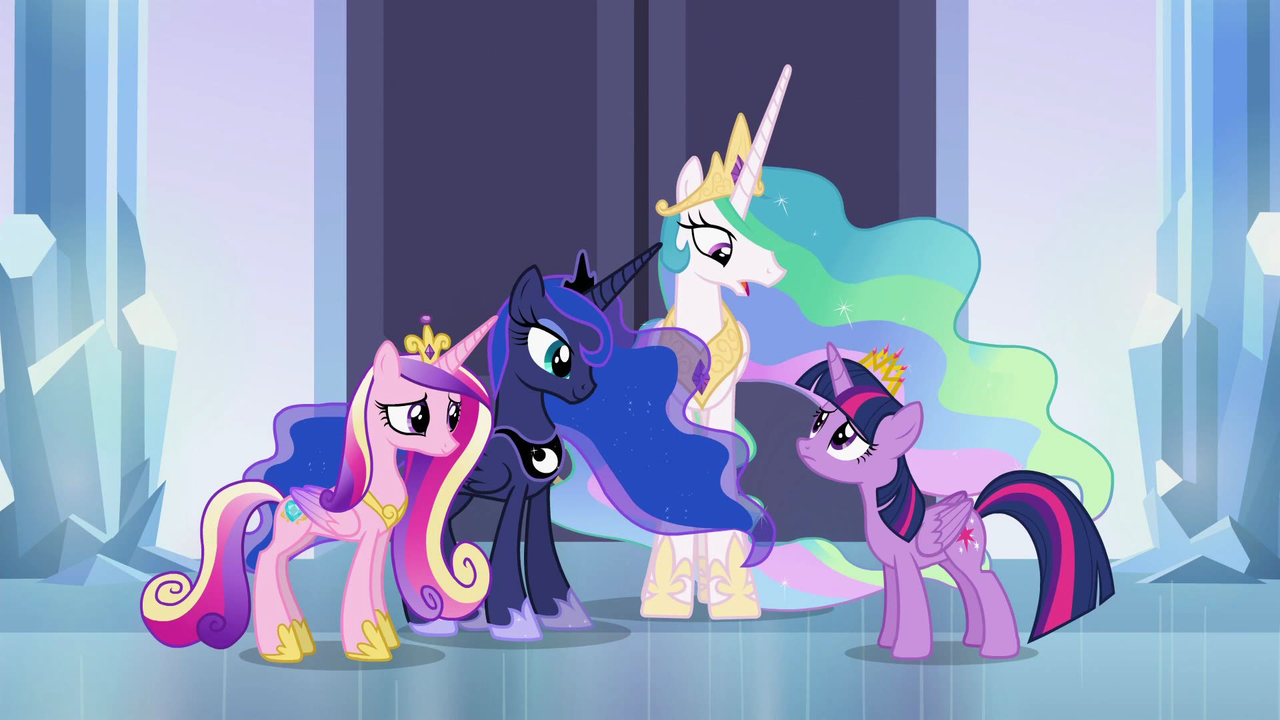
Canterlot, Equestria — In a landmark development that could redefine the boundaries of magical science, researchers at Celestia University have successfully mapped the complete magical genome of the common pony. The discovery, announced today during a press briefing at the university’s main campus, has ignited fierce debate among scientists, ethicists, and policymakers about the implications of unlocking the genetic code behind innate magical ability.
The project, led by Dr. Luna Mire, a geneticist specializing in arcane biology, involved analyzing decades of data from pony blood samples and magical energy patterns. Using advanced spell-sequencing technology, the team identified over 1,200 unique magical gene clusters, each tied to specific spellcasting abilities, physical traits, and even personality tendencies. The findings were published in the Equestrian Journal of Arcane Studies, which described the work as “a paradigm shift in understanding the biological basis of magic.”
“This isn’t just about science,” said Dr. Mire during the press briefing. “It’s about understanding the very fabric of what it means to be a pony. We’ve unlocked the blueprint of magic, but the real question is: who gets to control it?”
The announcement has already sparked tension in Canterlot’s political arena. Chancellor Thistlebrook, a vocal advocate for equitable access to magical resources, criticized the university for withholding data from rural communities. “This research could revolutionize how we teach magic to every pony, from the smallest filly to the oldest stallion,” Thistlebrook said in a statement. “Yet here we are, with a breakthrough that’s locked behind a university’s gate.”
Critics argue the discovery could deepen existing inequalities. In the Badlands, where magical energy is scarce and poverty is rampant, some ponies have already begun protesting outside Celestia University’s gates. “We’ve seen how magic can be weaponized,” said Sable Nightshade, a representative of the Badlands Coalition for Equitable Magic. “If this genome is patented, it could become a tool for exploitation, not empowerment.”
The ethical concerns are not limited to access. Some scholars warn that mapping the magical genome could lead to genetic discrimination, with employers or institutions favoring ponies with “desirable” magical traits. “This is a slippery slope,” said Professor Duskwind, a bioethicist at the University of Griffonstone. “If we start rating ponies by their magical potential, we risk creating a caste system based on DNA.”
Despite these concerns, the scientific community is buzzing with excitement about potential applications. The discovery could lead to breakthroughs in personalized magic training, disease-resistant ponies, and even new forms of renewable energy. In a separate statement, the Ministry of Science and Technology hailed the research as “a cornerstone for the next era of magical innovation.”
However, not all pony communities are celebrating. In the rural district of Windfall Margin, where traditional spellcasting practices are deeply rooted, some view the genetic mapping as an affront to centuries-old traditions. “Magic isn’t just DNA—it’s history, culture, and spirit,” said Clover Ledger, a local historian. “Reducing it to a formula feels like stripping away the soul of our kind.”
The university has defended its approach, stating that the research was conducted with strict ethical oversight and that all data will be made publicly available within the next year. “We’re not here to sell magic,” Dr. Mire emphasized. “We’re here to understand it—and to ensure it serves all ponies, not just the privileged few.”
Yet, questions remain. Will the data be accessible to every pony, or will it become another tool for corporate or political control? How will societies balance the benefits of genetic magic with the risks of inequality and exploitation? As the debate intensifies, one thing is clear: the line between science and sorcery has never been thinner.
The next steps for Celestia University—and Equestria as a whole—will determine whether this breakthrough becomes a bridge to a more equitable magical future or a catalyst for new divides. For now, the nation watches, waits, and wonders.